
24 Hour Tow Truck Help When San Diego Can’t Wait
⏱️ Read Time: 5 mins
📍 Service Area: San Diego County
⭐ By: Fast Towing San Diego
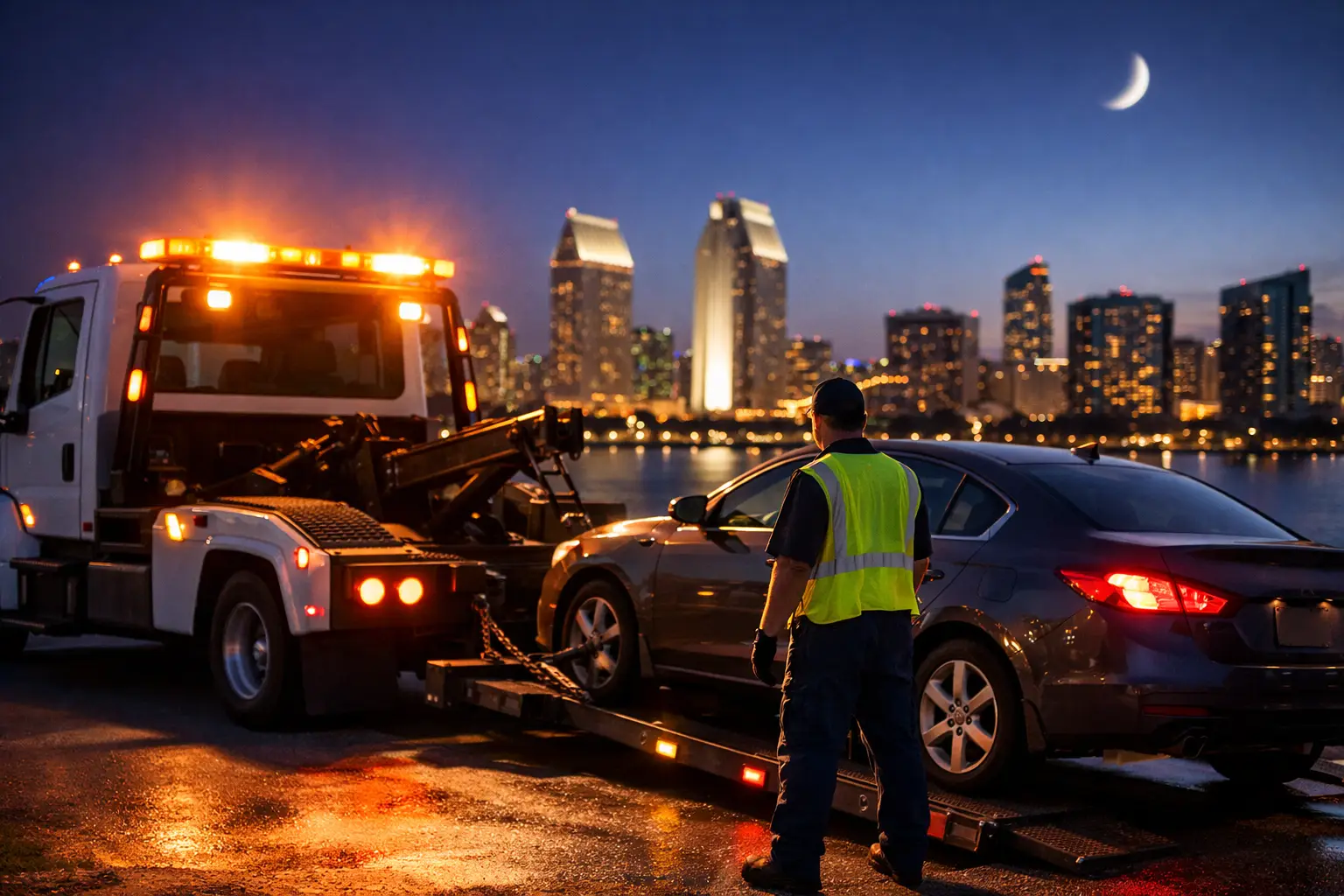
A breakdown never checks the clock. It happens on a dark freeway shoulder, outside your apartment before work, or halfway through a weekend drive with the family. When you need a 24 hour tow truck, you do not need a voicemail, a vague arrival window, or a driver who is not equipped for your vehicle. You need a real response, right now.
That is what 24/7 towing is supposed to mean: someone answers, dispatch moves fast, and the right truck arrives ready to do the job. Whether your car will not start, you have been in an accident, or your motorcycle, EV, trailer, or motorhome needs transport, the goal is simple. Get you out of a bad spot safely without adding more stress to the situation.
When to Call a 24 Hour Tow Truck
Call for a tow when driving your vehicle could cause more damage, put you in danger, or leave you stranded again a few miles later. A dead battery may only need a jump start, but an overheated engine, transmission problem, major fluid leak, collision damage, or tire that cannot be safely changed calls for more than a quick fix.
If you are on I-5, I-8, I-15, SR-163, or another busy San Diego road, do not gamble on getting the vehicle to a shop yourself. Traffic moves fast, shoulders disappear, and a car that feels barely drivable can become undrivable without warning. Pull as far from traffic as safely possible, turn on your hazard lights, and request help.
A 24-hour service is also the right call when you are locked out, have a flat with no usable spare, run out of fuel, or discover a battery failure before an early shift or late-night trip. Roadside assistance can solve many of these problems on-site. If it cannot, a tow truck is already available to take the vehicle where it needs to go.
Fast Help Is More Than a Quick Arrival
Speed matters, especially after an accident or on an unsafe roadside. But fast service only helps if the operator arrives with the right equipment and knows how to use it. The cheapest-looking option can become expensive if a vehicle is hooked incorrectly, dragged when it should be loaded, or transported without accounting for low clearance, all-wheel drive, electric drivetrains, or custom bodywork.
A professional dispatcher should ask what happened, where you are, what kind of vehicle you have, and where it needs to go. Those details are not delays. They help send the correct truck from the start.
For a standard sedan with a mechanical issue, a conventional tow may be the practical choice. For an all-wheel-drive vehicle, low-clearance exotic, EV, motorcycle, or accident-damaged car, a flatbed is often the safer move. It keeps the vehicle fully off the ground and reduces the risk of additional wear or damage during transport.
Fast Towing handles urgent calls across San Diego with knowledgeable operators and equipment for far more than everyday passenger cars. When the job is difficult, the answer should not be, “We can’t tow that.” It should be a clear plan to move it safely.
What Information Helps Dispatch Move Faster
You do not need to diagnose your car before calling. Just give the dispatcher the clearest picture you can. Your exact location matters most. If you are on a freeway, provide the direction of travel, nearest exit, mile marker, or a visible landmark. If you are in a parking lot or residential area, share the street address and any details that make your vehicle easy to find.
Explain the vehicle type and condition. Let dispatch know if it is a car, SUV, truck, EV, motorcycle, boat, trailer, motorhome, or commercial vehicle. Mention flat tires, locked wheels, collision damage, low ground clearance, or if the vehicle is parked in a garage. These details affect which truck and loading method are appropriate.
You should also decide on the destination if possible. That may be your home, a trusted mechanic, a dealership, a tire shop, or a body shop. After an accident, your insurer may have requirements, but you still need to get the vehicle out of danger first. A reliable towing company can help you understand practical options without pressuring you into a destination you did not choose.
Accident Towing Without More Chaos
After a crash, the first priority is safety. If anyone is injured, call 911. If the vehicle can be moved and authorities direct you to move it, get it out of active traffic. If it cannot be moved, stay in a safe location away from passing vehicles whenever possible.
Accident towing requires care because damage is not always obvious. A bent wheel, broken suspension part, leaking fluid, deployed airbags, or damaged bumper can change how a vehicle should be loaded. This is not a moment for shortcuts. The right operator will secure the vehicle correctly, document the pickup condition when needed, and transport it without creating a second claim.
Insurance questions can wait until you are safe, but keep your policy information, registration, and photos of the scene available. If your vehicle needs repairs, a towing provider with local repair and body shop relationships can help point you toward the next step. The choice is still yours. Good service gives you options and gets you moving again.
Specialty Vehicles Need Specialty Handling
Not every tow is a standard tow. San Diego drivers own vehicles that require a different level of planning: lowered performance cars, luxury and exotic vehicles, electric vehicles, motorcycles, lifted trucks, boats, trailers, work vans, and motorhomes.
The trade-off is straightforward. A basic tow may look less expensive at first, but the wrong equipment can cost far more in scraped bumpers, damaged wheels, drivetrain issues, or unsecured cargo. White-glove handling is not about making a job look fancy. It is about protecting the vehicle properly.
EVs deserve special attention. Their weight, tow points, battery systems, and manufacturer guidance can differ significantly from gas-powered vehicles. In many cases, they should be transported on a flatbed rather than pulled with drive wheels on the ground. The same care applies to motorcycles, which need proper restraints and a stable loading setup, not improvised tie-downs.
For boats, trailers, and motorhomes, the biggest question is often access. Tight streets, low branches, parking layouts, and the condition of the trailer itself can all affect the plan. Tell dispatch the full story upfront. A prepared crew saves time and avoids the frustrating second-trip scenario.
What to Do While You Wait
Once help is on the way, focus on staying visible and safe. Keep your hazards on. If you are in a dangerous traffic area, move away from the vehicle only when it is safe to do so. On a freeway shoulder, standing next to the driver-side door is risky. Use barriers, an embankment, or a safe area away from traffic when available.
Do not accept help from an unrequested tow operator who appears before the company you called, especially after an accident. Confirm the truck and driver through the dispatch information you received. Before the vehicle is loaded, remove valuables, take a few photos of its condition, and confirm the destination and service details.
If you are carrying children, pets, tools, or work equipment, let the dispatcher know. Towing solves the vehicle problem, but people still need a safe plan to get home, to work, or to the repair shop.
The Right Call at Any Hour
A 24 hour tow truck should give you confidence, not another problem to manage. You deserve an operator who answers quickly, shows up prepared, treats your vehicle with respect, and tells you what is happening without the runaround.
When your vehicle stops, your night does not have to stop with it. Get to a safe place, make the call, and let an experienced crew handle the hard part. Help is available – even when San Diego cannot wait.
Licensed, insured, and rapid response units on standby across all San Diego corridors.