
Table of Contents
- How to Book Professional Towing Services in San Diego
- 24/7 Emergency Roadside Assistance San Diego: When You Need Help Now
- How to Choose a Reputable Towing Company in San Diego
- Average Cost of Towing in San Diego: What to Expect
- Flatbed vs. Wheel-Lift Towing: Which Method Protects Your Vehicle
- How to Identify and Avoid Predatory Towing Scams
- Checklist: What to Do Before the Tow Truck Arrives
- Insurance Coverage for Towing: Step-by-Step Guide
- Frequently Asked Questions
Last Updated: August 3, 2026
When your vehicle breaks down on a San Diego freeway at midnight or you’re stranded after an accident, knowing how to book professional towing services san diego becomes your top priority. Fast Towing San Diego has spent over a decade helping drivers navigate emergencies with 24/7 response times and transparent service. This guide walks you through booking towing services, understanding your rights, and filing insurance claims.
How to Book Professional Towing Services in San Diego
When you call a towing dispatch center, the operator needs specific details to send the correct truck to your location. The faster you provide this information, the faster help arrives.
What Information You’ll Need Ready
Gather your exact location (GPS coordinates or nearby street signs), vehicle make/model/color, phone number, and whether anyone is injured. On freeways, note your mile marker or nearest exit. For private property, know the address and whether you have permission to be towed.
Have your insurance information available. Many policies cover towing; others require a separate rider. If you’re a AAA member or have roadside assistance through your credit card, have that membership number ready.
Document the scene with photos if safe. Capture vehicle position, damage, and surrounding conditions for insurance claims.
Keep a card in your glove compartment with your insurance company’s 24/7 roadside assistance number, agent contact info, and policy number.
The Booking Process Step by Step
Call dispatch and provide your location first so help is sent immediately. Describe your situation: breakdown, accident, lockout, or fuel delivery. The dispatcher will ask about your vehicle type and whether it’s drivable.
Reputable operators provide realistic time estimates (20-45 minutes depending on traffic and location) rather than promising unrealistic arrivals. Ask for a confirmation number and the tow truck’s license plate to track its approach.
When the truck arrives, verify the operator’s identification and confirm the company name. Before your vehicle is touched, discuss the towing method (flatbed versus wheel-lift) and confirm your destination. Ask the operator to explain the process, legitimate operators welcome questions.
24/7 Emergency Roadside Assistance San Diego: When You Need Help Now
Not every roadside problem requires a full tow. Many situations resolve with roadside assistance.
What Happens When You Call for Emergency Service
When you contact emergency dispatch, the operator assesses your situation and determines the appropriate response. A jump start takes 10-15 minutes. A lockout takes five minutes. Fuel delivery brings gas to reach a station.
The operator will confirm your location, vehicle details, and specific problem. Emergency dispatch centers maintain real-time tracking of available units, so they can honestly tell you when help will arrive.
Never accept help from unlicensed operators. Unlicensed technicians may damage your vehicle, steal valuables, or fail to properly secure your car. Always verify the company name and ask for identification.
Roadside Services Beyond Towing
Professional towing companies offer services that solve problems without a full tow: battery jump starts, tire changes, lockout services, fuel delivery, winch-out services for stuck vehicles, and mobile repair for minor mechanical issues.
According to California Highway Patrol safety data, approximately 40% of roadside calls involve services that don’t require towing, making quick dispatch of the right service type essential.
How to Choose a Reputable Towing Company in San Diego
Research companies during calm moments so you know exactly who to call during a breakdown.
Licensing and Insurance Verification
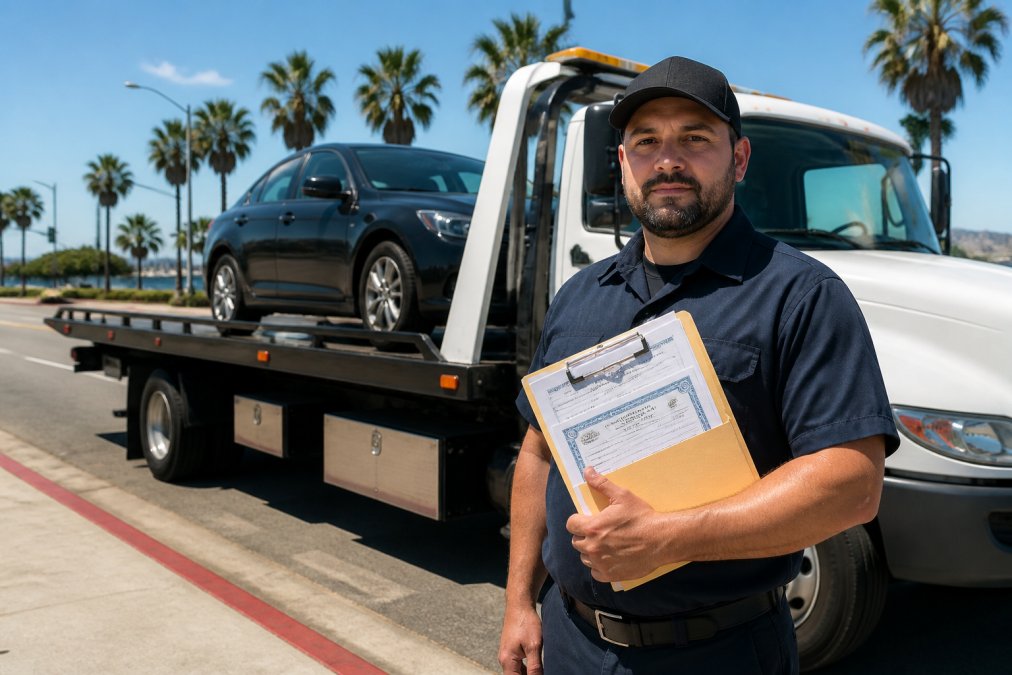
California requires all towing operators to hold a valid tow truck driver’s license and maintain proper insurance. Ask for their DMV license number and verify it through the DMV’s online system.
Confirm the company carries liability insurance protecting you if your vehicle is damaged during the tow. Ask about coverage limits, reputable companies carry at least $100,000 in liability coverage. Check whether the company is bonded, which protects customers if the operator fails to complete promised services.
Fast Towing San Diego maintains current licensing and comprehensive insurance coverage. Their team of professionally trained drivers has over 100 years of combined experience handling everything from standard sedans to exotic vehicles and boats.
Response Time and Service Area
Response time matters when stranded. Ask potential companies what their average response time is and whether it varies by location. Honest operators explain variations rather than promising unrealistic 10-minute arrivals everywhere.
Confirm the company serves your area and ask about their service area radius. Some specialize in local tows under 50 miles, while others handle multi-state relocations.
| Consideration | What to Ask | Why It Matters |
|---|---|---|
| Licensing | “What’s your DMV license number?” | Verifies legal operation and professional standards |
| Insurance | “What’s your liability coverage limit?” | Protects your vehicle if damage occurs |
| Response Time | “What’s your average response time here?” | Determines how long you’ll wait for help |
| Service Area | “Do you cover [your area]?” | Ensures they can reach you when needed |
| Availability | “Are you available 24/7?” | Matters for late-night and early-morning breakdowns |
Average Cost of Towing in San Diego: What to Expect
Understanding towing costs prevents sticker shock. Pricing varies based on distance, vehicle type, towing method, and time of service.
Factors That Affect Your Final Bill
Base towing fees typically cover the first 5-10 miles. Additional mileage charges apply for longer distances. Vehicle type affects pricing, towing a sedan costs less than towing a truck, SUV, or specialty vehicle. Exotic cars and motorcycles command higher rates due to additional care required.
Flatbed towing costs more than wheel-lift because it requires more equipment and time. Emergency tows during nights, weekends, and holidays often include surcharges.
Always ask for pricing before authorizing a tow. Reputable companies provide estimates over the phone based on your location, vehicle type, and destination.
Getting a Free Quote Before Service
Most professional towing companies offer free phone quotes. Call with your vehicle details, location, and intended destination. A dispatcher provides an estimated price range within minutes.
Ask whether the quote includes all charges or if additional fees apply. Request the quote in writing via text or email for your records. If circumstances change, call back for a revised quote before proceeding.
Fast Towing San Diego provides free quotes immediately and commits to transparent pricing without surprise fees.
Flatbed vs. Wheel-Lift Towing: Which Method Protects Your Vehicle
The towing method directly impacts your vehicle’s safety.
When Flatbed Towing Is Essential
Flatbed towing places your entire vehicle on a horizontal truck bed, eliminating road contact. This method is required for all-wheel-drive vehicles because towing them with wheels on the ground damages the drivetrain.
Low-clearance vehicles, sports cars, luxury sedans, and modified vehicles require flatbed towing to prevent undercarriage damage. Accident-damaged vehicles must be transported via flatbed to prevent additional damage. Exotic and high-value vehicles deserve flatbed treatment regardless of drivetrain type.
Wheel-Lift Towing: Cost-Effective and Fast
Wheel-lift towing raises the front or rear wheels off the ground while the other two remain in contact with the road. This method works for standard rear-wheel-drive sedans and trucks without all-wheel-drive systems and costs less than flatbed.
However, wheel-lift has limitations. Vehicles with front-end damage, low clearance, or all-wheel-drive systems cannot be safely towed this way. Always confirm the towing method with the operator before the truck arrives.
Research from National Highway Traffic Safety Administration vehicle transport guidelines emphasizes that using the correct towing method prevents an estimated 15,000 additional vehicle damages annually.
How to Identify and Avoid Predatory Towing Scams
Knowing warning signs protects you from predatory towing scams.
Red Flags to Watch For
Unsolicited towing offers are a major red flag. If you haven’t called for a tow and a truck appears offering help, decline and call your preferred company instead.
Vague pricing is another warning sign. Operators who refuse to provide estimates or claim pricing depends on “what they find” are likely planning to overcharge you. Pressure to authorize service immediately, demands for cash-only payment, and refusal to provide identification are all serious red flags.
Your Rights During Private Property Towing
California Vehicle Code Section 22658 governs private property towing. Before a vehicle is towed, the property owner must post visible signs stating that unauthorized vehicles will be towed, including the property owner’s name, address, phone number, and the towing company’s information.
When your vehicle is towed from private property, you have the right to retrieve it within 24 hours. The company must provide an itemized invoice. You can dispute charges if they exceed maximum amounts allowed under California law.
If you believe your vehicle was towed illegally, contact the San Diego Police Department’s non-emergency line to file a complaint.
Never give your vehicle keys to an unfamiliar tow truck operator. Take photos before work begins and inspect the vehicle upon delivery.
Checklist: What to Do Before the Tow Truck Arrives
Taking the right actions protects your safety and vehicle.
Immediate Safety Steps
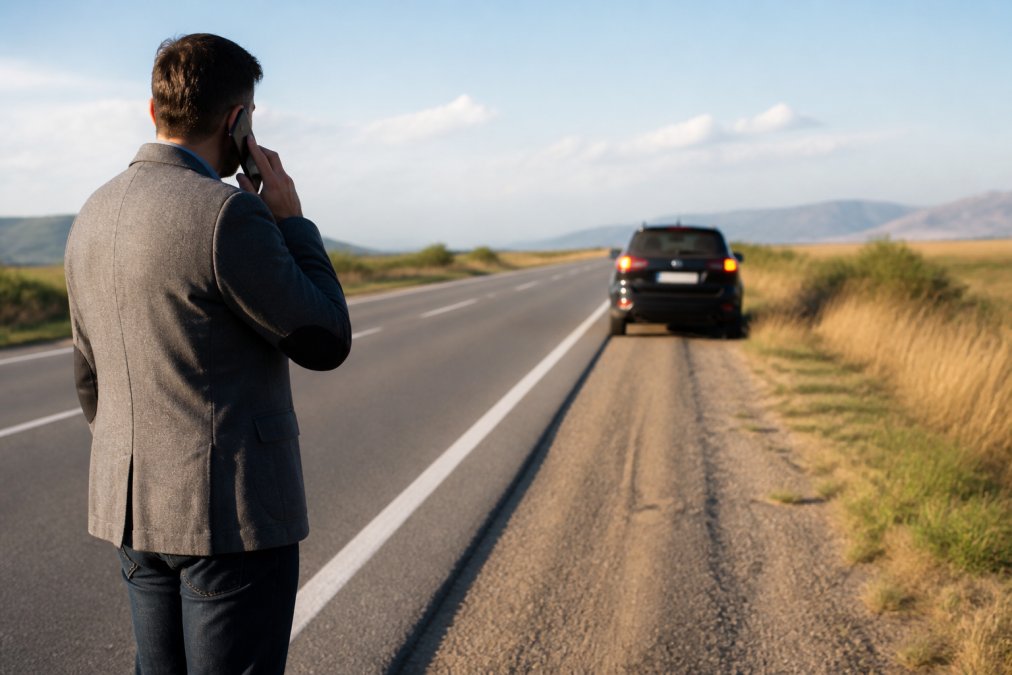
Turn on hazard lights immediately to alert other drivers. If you’re on a highway, activate them before exiting the vehicle.
Exit only if safe. On busy freeways, stay inside with seatbelts fastened until the tow truck arrives. Only exit if your vehicle is unstable, smoking, or on fire.
Call 911 if anyone is injured, if your vehicle is leaking fuel or smoking, or if traffic creates immediate danger. Put on a high-visibility vest if you have one.
Documentation and Communication
Take photos of your vehicle’s location, condition, and any damage before the tow truck arrives. Note the time you called, estimated arrival time, driver’s name, truck license plate, and company name.
Call your insurance company while you wait if the breakdown involves an accident or if you’re using roadside assistance coverage. Communicate your preferred repair shop or destination clearly to the operator.
Keep your phone charged. Portable phone chargers are inexpensive insurance against a dead phone during breakdown.
Insurance Coverage for Towing: Step-by-Step Guide
Many drivers don’t realize their insurance may cover towing costs.
Check Your Policy First
Contact your insurance agent or log into your online policy portal to review coverage. Look for “Roadside Assistance,” “Emergency Services,” or “Towing and Labor.” Your policy specifies the coverage limit (typically $50-$200 per incident), number of covered tows per year, and distance limitations.
Confirm whether coverage is through your insurance company or a third-party provider like AAA. Ask whether coverage includes non-towing services like jump starts, lockouts, fuel delivery, and tire changes.
Filing a Claim and Getting Reimbursed
Call your insurance company’s claims department immediately after calling for the tow truck. Provide your policy number, breakdown location, and vehicle details. The claims adjuster explains your coverage and confirms whether the tow is covered.
Ask whether you need to use a specific towing company or can choose any licensed operator. Some insurance companies have preferred vendor networks offering discounted rates.
After the tow is complete, request an itemized invoice from the towing company. Submit this invoice to your insurance company along with your claim form. If your coverage limit is less than the actual tow cost, you’re responsible for the difference.
Keep copies of all documentation for your records.
| Step | Action | Timeline |
|---|---|---|
| 1 | Review your insurance policy for roadside assistance coverage | Before you need it |
| 2 | Note your coverage limits and any distance restrictions | Before breakdown |
| 3 | Call insurance company immediately after calling tow truck | During breakdown |
| 4 | Confirm which towing company to use | During breakdown |
| 5 | Collect itemized invoice from towing company | After tow complete |
| 6 | Submit invoice and claim form to insurance | Within 30 days |
| 7 | Follow up if reimbursement is delayed | Within 60 days |
When you’re stranded on a San Diego freeway or facing an unexpected vehicle emergency, knowing how to book professional towing services san diego removes stress from a difficult situation. Fast Towing San Diego provides 24/7 emergency response with professionally trained drivers, comprehensive roadside assistance beyond towing, and transparent pricing. Their experience handling everything from standard vehicles to exotic cars, motorcycles, and boats means they’re equipped for any situation. Contact Fast Towing San Diego today for a free quote and join thousands of San Diego drivers who trust them for reliable, affordable emergency roadside support.
Frequently Asked Questions
How quickly can a professional towing company respond to my call in San Diego?
Response times vary by location and traffic conditions, but reputable San Diego towing services aim for arrival within 30-45 minutes in most areas. Some providers advertise faster response times in central San Diego. When you call, ask the dispatch center for an estimated arrival time specific to your location. During peak hours or accidents on major freeways, wait times may extend. Always confirm the dispatcher has your exact location and vehicle details to ensure the fastest possible dispatch.
What information do I need to provide when booking professional towing services?
Have ready your vehicle’s make, model, year, and color; your exact location (street address, freeway exit, or landmark); description of the problem (breakdown, accident, lockout); whether the vehicle is drivable; and your contact number. If you’re on a freeway, provide the direction you’re traveling and nearest exit. For accident situations, note if anyone is injured. If your car has special features (low clearance, all-wheel drive, electric vehicle), mention this when booking so dispatchers assign the right equipment and driver.
How much does towing typically cost in San Diego, and how is it calculated?
Towing costs depend on distance, vehicle type, towing method, and time of day. Base rates vary between providers, and mileage charges apply for distances beyond a local service area. Flatbed towing generally costs more than wheel-lift service because it offers better vehicle protection. Specialty services like motorcycle towing or heavy-duty recovery add to the cost. Request a free quote from your chosen provider before service begins. Most reputable companies provide transparent pricing upfront so you won’t face surprise charges.
What should I look for to verify a towing company is licensed and insured?
In California, towing operators must comply with California Vehicle Code regulations. Ask the company for proof of licensing and liability insurance before booking. Reputable providers display their business license and insurance information on their website or provide it immediately when asked. Check if they’re AAA-approved or certified by industry organizations. Verify the company name matches their legal business registration. Never book with a towing service that cannot quickly provide proof of current licensing and insurance, as this protects you if damage occurs during transport.