
Table of Contents
- What the Average Cost of Emergency Towing Really Looks Like
- Towing Service Price Factors That Drive Your Bill Higher
- Does Car Insurance Cover Towing?
- Roadside Assistance vs Private Towing: Which Costs Less
- How to Avoid Towing Scams and Hidden Charges
- Vehicle-Specific Pricing: Motorcycles, Exotic Cars, and Specialty Vehicles
- Payment, Tipping, and What Happens After Pickup
- Frequently Asked Questions
Last Updated: August 4, 2026
What the Average Cost of Emergency Towing Really Looks Like
Emergency towing costs combine base rates, distance charges, equipment fees, and time-of-day surcharges that add up quickly. At Fast Towing San Diego, we’ve handled thousands of emergency calls and learned that most drivers don’t understand what to expect. Below, we’ll break down exactly what drives these costs so you can understand your bill before you call for service.
Base rates and hook-up fees
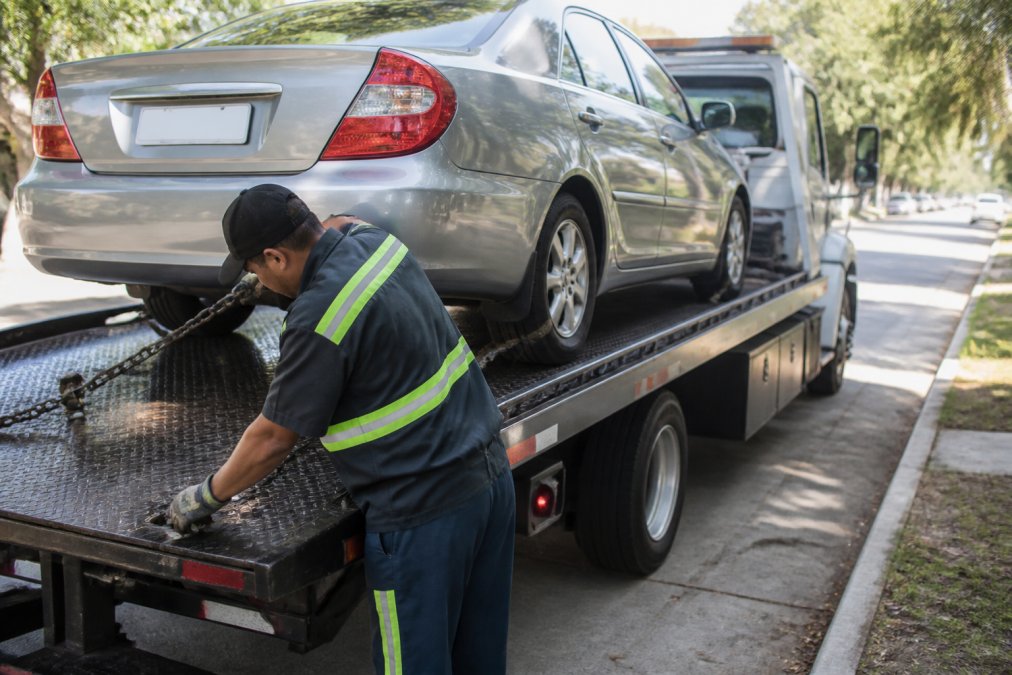
Every towing company charges a base rate, the minimum fee to dispatch a tow truck to your location. This hook-up fee covers getting a professional operator to your vehicle, connecting it safely, and preparing it for transport. Base rates in the San Diego area reflect the company’s overhead, insurance, and equipment maintenance.
The hook-up fee ensures your vehicle is secured properly, a critical safety step that takes time and expertise. A professional operator must inspect your vehicle, determine the best connection points, secure it with appropriate straps or chains, and verify everything is safe before moving.
Mileage rates and distance pricing
Once your vehicle is hooked up, you pay a per-mile rate for the distance traveled. This is where the bulk of your emergency towing cost often comes from. Distance pricing exists because towing consumes fuel, causes wear on the tow truck, ties up equipment and labor, and creates liability exposure. Some towing services charge one flat rate per mile regardless of distance, while others use tiered pricing, lower rates for the first 10 miles, higher rates beyond that.
Long-distance towing, say from San Diego to Los Angeles or beyond, often qualifies for different pricing structures entirely. Some companies offer flat rates for long hauls rather than per-mile charges.
Towing Service Price Factors That Drive Your Bill Higher
Several variables beyond the base rate and mileage can significantly increase what you pay.
Vehicle type and weight
Not all vehicles cost the same to tow. A standard sedan is cheaper to tow than a full-size pickup truck. Vehicle weight matters because heavier vehicles require more powerful tow trucks, consume more fuel, and create greater wear on equipment. All-wheel-drive cars require special handling to prevent transmission damage and may need flatbed towing, which increases the cost. Modern electric vehicles sometimes require flatbed towing exclusively to protect their battery systems.
Time of day and emergency surcharges
Calling for towing at 3 AM costs more than calling at 3 PM. After-hours service, evenings, nights, weekends, and holidays, incurs additional charges because it requires paying operators premium wages and disrupting normal business flow. These surcharges are real operational costs. A tow operator working the graveyard shift expects higher pay, and maintaining 24/7 availability costs money.
Holiday surcharges reflect the same principle. Towing someone’s vehicle on Christmas Day requires paying employees premium holiday rates. If your breakdown happens during business hours on a weekday, you’ll pay the lowest rate. If it happens at 2 AM on a Sunday, expect to pay significantly more, potentially 50% to 100% more than the base rate.
Equipment and service type
The type of towing equipment used affects your cost. Wheel-lift towing, where the front or rear wheels are lifted onto the truck, costs less than flatbed towing, where the entire vehicle is lifted onto a flat platform. Flatbed towing is gentler on vehicles, required for all-wheel-drive cars and low-clearance vehicles, and costs more because it requires specialized equipment and more operator skill.
Winch-out services, recovering a vehicle stuck in a ditch or ravine, cost substantially more than standard towing because they require additional equipment, longer setup time, and higher risk.
Does Car Insurance Cover Towing?
Insurance coverage for towing depends entirely on your policy. Some comprehensive or collision policies include towing and roadside assistance as standard benefits; others require you to add it as an optional rider. Many policies cover towing only when damage is caused by a covered incident, collision, theft, or weather damage, but not for mechanical breakdown.
Reading your insurance policy or calling your agent is the only way to know for certain. Some policies cover up to a specific amount, like $100 or $200 per incident, which may or may not cover your actual towing bill. Others have distance limits. If your policy doesn’t include towing coverage, many insurance companies allow you to add roadside assistance for a small additional premium.
Roadside Assistance vs Private Towing: Which Costs Less
Roadside assistance programs offer a different cost structure than calling a private towing company directly.
Motor club memberships and what they cover
Motor club memberships like AAA offer roadside assistance benefits, including towing, for an annual membership fee. Members typically receive a certain number of free towing miles per year, often 100 miles, with additional distance charged at reduced rates. The advantage is predictability and potential savings if you use the service multiple times annually. The disadvantage is paying for coverage you might never use.
Motor clubs negotiate rates with affiliated towing companies, which means members sometimes get lower per-mile rates than non-members. However, you’re limited to calling affiliated providers, which might not be the closest or fastest option in your area.
When to call private tow companies instead
If you don’t have roadside assistance coverage and need a tow immediately, calling a private towing company directly is your only option. You’ll pay full rates without membership discounts, but you get to choose the company based on proximity, reputation, and availability.
Private towing companies often respond faster because they’re local and don’t need to coordinate through a membership organization. For one-time towing needs, comparing the cost of a private tow to the cost of a motor club membership usually favors the private tow.
How to Avoid Towing Scams and Hidden Charges
Not all towing services operate with transparency and integrity. Knowing how to protect yourself prevents surprise charges.
Red flags before you call
Before you need towing, research companies in your area. Check online reviews, verify they’re licensed and insured, and note their stated pricing structure. When you call, ask specific questions: What’s your base rate? What’s your per-mile charge? Are there additional fees for after-hours service? Be wary of companies that won’t quote prices over the phone or give vague answers about costs.
During an emergency, you’re vulnerable to pressure. A tow operator might suggest unnecessary services to increase the bill. Stick to what you actually need: safe transport of your vehicle.
Price transparency and getting a quote upfront
Always ask for a written estimate before authorizing service. A reputable company will provide a detailed breakdown: base rate, per-mile charge, any surcharges, and estimated total cost. If the final bill differs substantially from the estimate, question it and ask for an itemized invoice.
Some towing companies inflate mileage claims to increase charges. If you know the distance is 10 miles, don’t accept a bill charging for 15 miles. Ask to see the odometer reading or GPS data supporting the distance claim.
If a towing company arrives and immediately demands cash payment before transporting your vehicle, that’s a major red flag. Legitimate companies accept credit cards, debit cards, and other payment methods. Demanding cash-only payment is a common tactic of predatory operators.
Impound fees and other surprise costs
If your vehicle is towed to an impound lot, additional charges apply. Impound fees and daily storage charges begin accumulating immediately. Some impound lots charge per-day fees ranging from modest amounts to surprisingly high rates, especially in urban areas. Understand the difference between a towing company’s impound lot and a city or police impound facility. City impounds have set fee schedules and are often cheaper than private lots.
Before authorizing transport to an impound lot, ask about daily storage rates. Other hidden charges include administrative fees, gate fees, or “drop-off” charges. Ask about all potential charges before agreeing to service.
Vehicle-Specific Pricing: Motorcycles, Exotic Cars, and Specialty Vehicles
Different vehicles require different handling, and pricing reflects this reality.
Motorcycles require specialized equipment, a motorcycle-specific tow dolly or flatbed with proper securing points. Not all towing companies handle motorcycles, and those that do often charge premium rates.
Exotic sports cars, luxury vehicles, and vintage cars demand premium handling. These vehicles often have low clearance, delicate undercarriages, or valuable paint that can’t be damaged. Flatbed towing is mandatory, and operators must have experience with high-value vehicles. Expect to pay significantly more than standard towing rates.
All-wheel-drive vehicles present a specific challenge: towing with wheels on the ground can damage the transmission. These vehicles often require flatbed towing exclusively, which costs more than wheel-lift towing.
When calling for towing, be specific about your vehicle type and any special features. Tell the dispatcher if you have all-wheel drive, low clearance, or a specialized vehicle. This ensures they dispatch appropriate equipment and can provide accurate pricing over the phone.
Payment, Tipping, and What Happens After Pickup
Most towing companies accept credit cards, debit cards, and checks. Some accept digital payment methods like Venmo or PayPal. Before the tow truck arrives, ask what payment methods are accepted so you can be prepared.
Advance quotes allow you to authorize payment before the tow truck arrives, which is convenient and protects you from surprise charges. A reputable company provides quotes over the phone and allows you to authorize service with a credit card before dispatch.
Tipping etiquette for tow operators follows the same general principle as tipping other service professionals. If the operator provided good service, was professional, and handled your vehicle with care, a 15-20% tip is appropriate.
After your vehicle is towed, ask the tow operator for the destination address, phone number, and any access information you’ll need. If your vehicle is being impounded, get the impound lot’s location, hours, and phone number. Ask about the process for retrieving your vehicle, what documents you’ll need, and what fees you’ll owe.
Some towing companies, including Fast Towing San Diego, provide assistance beyond just moving your vehicle. They can help you find a reputable repair shop, connect you with insurance claims adjusters, or arrange alternative transportation.
Emergency towing is stressful enough without worrying about hidden charges and predatory pricing. Knowing what to expect, base rates, distance pricing, equipment costs, and surcharges, helps you make informed decisions when you need help. Fast Towing San Diego offers transparent pricing, 24/7 availability, and professional handling of everything from standard tows to specialty vehicle transport. With over 100 years of combined team experience and a commitment to affordable, reliable service, we’ve helped thousands of San Diego drivers navigate breakdowns and accidents. When you need towing, call a company that prioritizes your vehicle’s safety and your peace of mind.
Frequently Asked Questions
What factors have the biggest impact on emergency towing costs?
The primary cost drivers are distance traveled, vehicle weight and type, and time of service. A standard car towed 5 miles costs far less than a heavy truck towed 50 miles. After-hours and holiday emergency services add significant surcharges, sometimes 50% or more above daytime rates. Equipment type matters too: flatbed towing costs more than wheel-lift, and winch-out services for stuck vehicles add recovery fees. Always ask about the base rate, mileage rate, and any surcharges before authorizing the tow.
Does car insurance cover emergency towing costs?
Coverage depends on your policy. Comprehensive or collision coverage may include towing, but many policies require a separate roadside assistance rider. Check your declarations page or call your insurer to confirm what’s covered and your maximum benefit per incident. Some insurers cover only towing to their preferred repair facility, not to a shop of your choice. If you lack coverage, roadside assistance memberships or private tow companies become your only options.
Is roadside assistance cheaper than calling a private tow company?
Roadside assistance programs typically offer better value if you use them regularly. AAA and motor club memberships provide free or low-cost towing within a service radius, usually 5-7 miles, with additional mileage at reduced rates. Private tow companies charge full rates from the start but may offer competitive pricing for longer distances or specialized services. Compare your annual membership cost against how often you’d need towing. For a single emergency, a private provider might cost less; for frequent drivers, membership pays off.
How can I avoid hidden towing charges and scams?
Request a price estimate before authorizing the tow and confirm what’s included: hook-up fee, mileage rate, and any surcharges. Verify the company is licensed and insured. Avoid operators who pressure you into immediate payment or refuse to provide a written quote. Watch for impound fees if your car is towed to a lot, and ask whether you can choose the destination shop. Get the operator’s name, company, and confirmation number. If charges seem excessive, ask for an itemized receipt and contact your state’s consumer protection office or attorney general.