
Table of Contents
- Why You Need Quick Tow Alternatives
- Professional Towing and Roadside Assistance Services
- Auto Transport vs Towing: Pros and Cons
- Cheapest Way to Ship a Car Long Distance
- Flatbed Trailer Rental for Cars and Equipment
- DIY Tire Repairs and Emergency Roadside Fixes
- Comparison Table: Tow Alternatives at a Glance
- How to Choose the Right Tow Alternative for Your Situation
- Frequently Asked Questions
Last Updated: August 10, 2026
When your vehicle breaks down on the freeway at midnight, or you need to move a car across state lines, you have more options than calling a traditional tow truck. Today’s vehicle owners can choose from professional roadside assistance, DIY equipment rental, and specialized shipping services. Each carries different costs, risks, and timelines. Understanding which alternative fits your situation can save you money, protect your vehicle, and get you moving faster.
Fast Towing San Diego has spent over 100 years in the transport business. This guide breaks down the real alternatives to traditional towing, when each makes sense, and what you need to know before committing to one.
Why You Need Quick Tow Alternatives
Not every vehicle problem requires a full tow truck. Not every long-distance move demands a professional carrier. The right alternative depends on your specific situation: the type of vehicle, the distance, the urgency, and your budget.
A flat tire on a highway doesn’t require a tow truck if you have a tire repair kit and 15 minutes. A vehicle that needs to move across the country doesn’t require a local tow service when specialized auto transport brokers exist.
The best tow alternative depends on three factors: what’s wrong with your vehicle, how far it needs to go, and how quickly you need it moved. Different situations have dramatically different optimal solutions.
Professional Towing and Roadside Assistance Services
When your vehicle can’t move under its own power, professional towing is the only option. “Professional towing” now includes several distinct services, each with different response times, coverage areas, and pricing models.
Fast Towing San Diego: 24/7 Professional Support
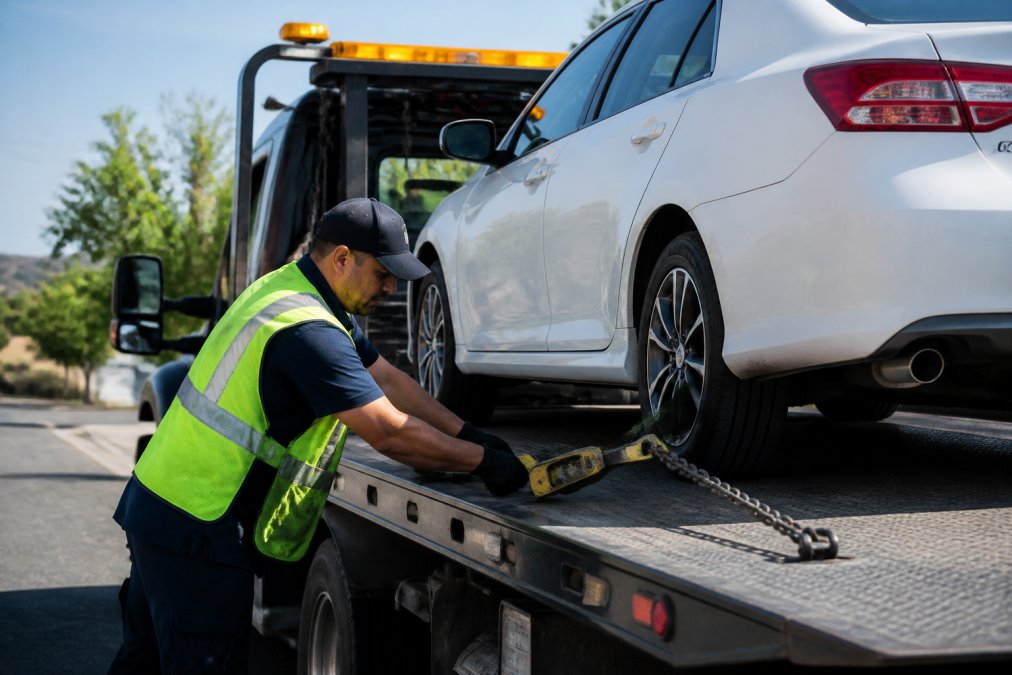
Fast Towing San Diego operates around the clock across San Diego and beyond, handling everything from accident recovery to specialty vehicle transport. The team brings over 100 years of combined experience with professionally trained drivers who understand how to secure motorcycles, exotic cars, boats, and motorhomes.
The service includes jump starts, tire changes, fuel delivery, and accident recovery with connections to trusted repair shops. First responders, military personnel, and fleet managers get special discounts. Response time is the metric that separates professional towing from the rest.
:::pro
The difference between a good towing service and a mediocre one often comes down to how they handle the aftermath. Getting connected to a reliable repair shop immediately after an accident saves hours of phone calls and research when you’re already stressed.
:::
HONK: Pay-Per-Use Roadside Help
HONK operates as a digital marketplace connecting drivers with local service providers. There’s no membership or annual fee, you pay only when you need service. The app shows transparent pricing upfront, eliminating anxiety about unexpected bills. The network includes over 75,000 licensed and insured providers nationwide, with average arrival times of 15-30 minutes. Services include towing, flat tire repair, fuel delivery, battery jump-starts, lockouts, and ditch extraction. HONK service charges begin at $49 and vary by the level of service needed. If you need roadside assistance once a year, HONK makes sense. If you’re managing a fleet or have an older vehicle prone to breakdowns, an annual membership service becomes more economical.
AAA Mobile: Membership-Based Coverage
AAA’s mobile app gives members access to a comprehensive roadside assistance network available 24/7. The service includes towing, fuel delivery, battery jump-starts, flat tire assistance, and lockout help. Beyond roadside services, AAA membership includes travel discounts and trip planning tools. The membership model means you’re paying an annual fee regardless of whether you use the service. For drivers who want predictable costs and comprehensive coverage, this structure makes sense. Response times and service quality vary depending on your location and the specific provider in your area.
Auto Transport vs Towing: Pros and Cons
Towing is for emergencies and short distances. Auto transport is for planned relocations and long-distance moves. They solve different problems.
Towing moves a vehicle that can’t operate under its own power from point A to point B, usually within a local service area. It’s reactive.
Auto transport moves a vehicle that’s perfectly functional from one location to another, usually across state lines or long distances. It’s planned and scheduled.
Using a tow truck for a long-distance move is like using an ambulance as a taxi. The pros of professional auto transport: your vehicle is handled by specialists, it arrives in the same condition it left, insurance covers damage, and the cost is often lower than you’d expect. The cons: it takes longer than driving yourself, you lose access to your vehicle during transit, and you’re dependent on the carrier’s schedule.
Cheapest Way to Ship a Car Long Distance
If you’re moving a vehicle across the country, the cheapest option is usually an open-air auto transport broker. These services move multiple vehicles on the same trailer, spreading costs across several customers.
Montway Auto Transport
Montway operates as a broker connecting customers with a network of carriers across all 50 states, including Alaska and Hawaii. The average cost for 1,400 miles is around $1,108, though pricing varies based on distance, vehicle type, and whether you choose open or enclosed transport. The service includes an online estimate tool that lets you compare costs and services before committing. Open transport is cheaper because your vehicle shares trailer space with others. Enclosed transport costs more but protects against weather and road debris. For a standard sedan, open transport is usually sufficient. For classic cars, exotic vehicles, or high-value imports, enclosed transport is worth the extra cost.
RunBuggy: Technology-Driven Shipping
RunBuggy uses an app-based platform to connect shippers and haulers directly. Digital documents eliminate paperwork, automated tracking provides real-time updates, and payments happen electronically. The platform connects individuals, dealerships, auctions, and transport companies. The main advantage is transparency and direct connection. You’re matching directly with available haulers rather than working through a broker’s network. Pricing is quote-based, varying by route and availability. RunBuggy customers only pay for the cost of transporting each car, with no integration, subscription, set-up, maintenance or other fees.
Technology-driven platforms depend on network density. RunBuggy works great on high-traffic routes like California to Texas. On less common routes, you might find limited options or higher prices than traditional brokers.
DIY Transport for Specialty Vehicles
DIY Transport specializes in moving classic cars, exotic vehicles, and high-value imports. They understand the specific requirements of specialty vehicles and offer both open and enclosed transport, with expedited shipping available. The service costs more than general auto transport because it’s specialized. For standard vehicles, a general broker makes more economic sense.
Flatbed Trailer Rental for Cars and Equipment
When you need to move a vehicle short distance and you have a suitable towing vehicle, flatbed or tow dolly rental can be economical. You control the timeline and the rental cost is often under $100 per day.
EZ-Haul Tow Dolly: Safer Vehicle Transport
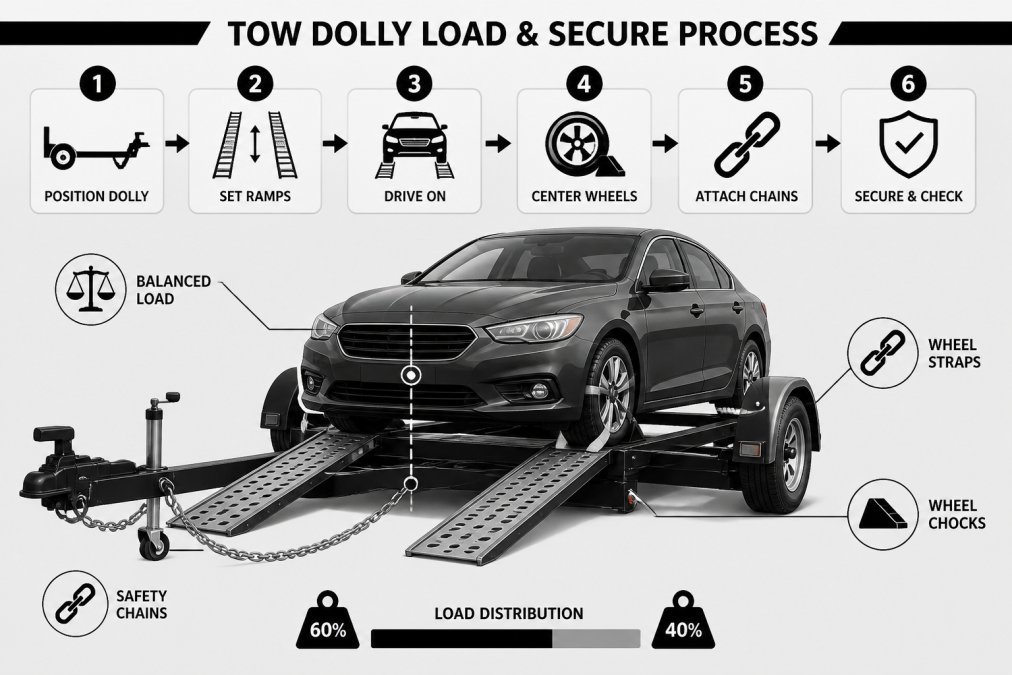
The EZ-Haul tow dolly with hydraulic brakes is designed for safer towing than flat-towing a vehicle behind an RV. The dolly supports vehicles up to 5,000 lbs curb weight and up to 79 inches wide. Self-adjusting hydraulic brakes mean you don’t need a separate brake controller. The lightweight design (380 lbs) makes it easier to maneuver than heavier trailers.
The main limitation: this dolly isn’t suitable for all-wheel drive or four-wheel drive vehicles. The front wheels lift off the ground, which can damage AWD drivetrains. For standard rear-wheel drive vehicles, this is a solid solution for long trips.
Harbor Freight Vehicle Dollies: Budget-Friendly Short-Distance Moves
Harbor Freight sells vehicle dollies starting at around $64.99 for a 1,500 lb capacity two-piece set. These are designed for moving disabled vehicles short distances within a garage, driveway, or shop, not for highway transport.
The key distinction: these are positioning tools for confined spaces, not transport equipment for highways. Using them on public roads creates liability and safety risks.
DIY Tire Repairs and Emergency Roadside Fixes
Not every breakdown requires professional help. A flat tire can often be repaired in 15 minutes with the right equipment.
The Rhino USA 86-piece tire repair kit includes plugs, patches, a T-handle insert tool, and a rasp tool in a portable carrying case. It’s suitable for cars, motorcycles, ATVs, UTVs, RVs, trailers, and tractors. The repair is temporary, but it gets you moving immediately.
The Slime flat tire repair kit uses a sealant that repairs and inflates tires with the push of a button in about 15 minutes. It works for punctures up to 1/4 inch, which covers most common road punctures.
Both are temporary solutions. Neither replaces a proper tire repair or replacement. But both eliminate the scenario where a small puncture strands you on the side of the road waiting hours for help.
Keep a tire repair kit in your vehicle. The cost is minimal, and the time saved if you get a flat is significant. Most punctures are repairable on the spot with the right tools.
Comparison Table: Tow Alternatives at a Glance
| Service/Option | Best For | Response Time | Cost Model | Key Limitation |
|---|---|---|---|---|
| Fast Towing San Diego | Emergency breakdowns, accidents, specialty vehicles | Per-incident pricing | Local service area | |
| HONK | One-time roadside assistance | 15-30 minutes | $49-$129 per service | Costs add up with frequent use |
| AAA Mobile | Regular drivers wanting predictable coverage | Varies by location | Annual membership | Service quality varies by area |
| Montway Auto Transport | Long-distance vehicle relocation | 5-7 days | ~$1,108 for 1,400 miles | Requires scheduling in advance |
| RunBuggy | Direct shipper-hauler matching | Varies by route | Quote-based | Limited on less common routes |
| DIY Transport | Specialty and exotic vehicles | 7-10 days | Premium pricing | Higher cost than general transport |
| EZ-Haul Tow Dolly | RV owners moving standard vehicles | Immediate (after rental) | ~$1,549 purchase | Not for AWD/4WD vehicles |
| Harbor Freight Dollies | Shop movement, short distances | Immediate (after purchase) | $64.99+ | Not for highway transport |
| Tire Repair Kits | Flat tire emergencies | Immediate | $10.98-$35.99 | Temporary fix only |
How to Choose the Right Tow Alternative for Your Situation
The decision tree is straightforward once you answer three questions:
What’s the problem? If your vehicle can’t move under its own power, you need towing or roadside assistance. If it’s a flat tire and you’re mechanically inclined, a repair kit might work. If your vehicle is fine but needs to relocate, you need auto transport.
How far does it need to go? Local breakdowns call for professional towing. Long-distance relocations call for auto transport brokers. Short-distance moves might justify trailer rental.
How quickly do you need it resolved? Emergencies demand professional towing with fast response times. Planned relocations allow time for scheduling auto transport, which is usually cheaper. DIY solutions work only if you have time and mechanical confidence.
For emergency breakdowns in San Diego, Fast Towing San Diego’s 24/7 availability and fast response times eliminate uncertainty. The team handles everything from standard vehicles to motorcycles, boats, and exotic cars, and they connect you with repair shops afterward.
For long-distance moves, a broker like Montway or a technology platform like RunBuggy typically costs less than any alternative and protects your vehicle in transit.
For planned short-distance moves where you have a suitable towing vehicle, trailer rental is economical and gives you control.
For tire emergencies, a repair kit in your vehicle eliminates the need for roadside assistance in most cases.
The goal isn’t to find the cheapest option universally, it’s to find the right option for your specific situation, which almost always turns out to be both faster and cheaper than the default choice.
When you’re stranded on the side of the road or facing a long-distance vehicle relocation, the pressure to make a quick decision is real. Fast Towing San Diego eliminates that pressure by offering 24/7 professional support with fast response times, experienced drivers trained to handle any vehicle type, and the connection to trusted repair shops after accidents. For San Diego drivers managing emergencies, that reliability matters. Get started with Fast Towing San Diego and turn a stressful breakdown into a solved problem.
Frequently Asked Questions
What is the cheapest way to ship a car long distance?
Professional auto transport brokers like Montway typically offer the most cost-effective long-distance shipping, with average costs around $1,108 for 1,400 miles using open carrier transport. Technology platforms like RunBuggy can connect you directly with haulers, potentially reducing broker markups. For specialty vehicles, DIY Transport offers enclosed options for higher-value cars. Pricing depends on distance, vehicle type, and transport method, always request quotes from multiple providers to compare.
Is it cheaper to tow a car or use an auto transport service?
Auto transport services are generally cheaper for long distances. Towing incurs fuel costs, potential vehicle wear and tear, and driver time. Professional auto transport spreads costs across multiple vehicles per trip. However, for short distances under 100 miles, local towing may be more affordable. Consider the hidden costs of DIY towing: fuel consumption on the towing vehicle, transmission stress on the towed vehicle, and potential drivetrain damage depending on the vehicle’s compatibility with towing methods.
What should I know about flatbed trailer rental for cars?
Flatbed trailers and tow dollies are ideal for protecting vehicles during transport. The EZ-Haul Tow Dolly supports vehicles up to 5,000 lbs and features hydraulic brakes for safer towing, costing around $1,549. Tow dollies reduce wear compared to flat towing but aren’t suitable for all-wheel drive vehicles. Harbor Freight offers budget vehicle dollies starting at $64.99 for short-distance moves. Ensure your towing vehicle has a Class II or higher hitch and verify curb weight compatibility before renting any trailer.
How quickly can professional towing services respond in San Diego?
Fast Towing San Diego operates 24/7/365 with professionally trained drivers backed by over 100 years of combined experience, prioritizing fast response times for emergency breakdowns and accidents. HONK, a pay-per-use app, averages 15-30 minute arrival times nationwide. Response times depend on your location, current demand, and traffic conditions. For guaranteed availability and specialized vehicle handling (motorcycles, exotic cars, boats), contact Fast Towing San Diego directly for their current response commitments.
What are the main risks of DIY towing versus professional transport?
DIY towing risks include transmission damage on front-wheel drive vehicles, excessive wear on towed vehicle tires and brakes, potential hitch failure, and improper load distribution causing instability. Professional auto transport services use flatbed trailers that eliminate drivetrain stress and provide load securement expertise. Long-distance towing strains both vehicles and increases accident risk. Professional haulers carry transport insurance, handle load distribution correctly, and have trained drivers, reducing liability and vehicle damage compared to DIY methods.