
Table of Contents
- Towing Alternatives: What Your Options Are
- How to Choose a Roadside Assistance Plan
- Membership-Based Roadside Assistance Plans
- On-Demand Towing Services Without Membership
- Cost of Emergency Towing Services Explained
- AAA vs Private Towing Companies
- Specialized Towing for Motorcycles, RVs, and Exotic Vehicles
- Conclusion
- Frequently Asked Questions
Last Updated: August 13, 2026
Towing Alternatives: What Your Options Are
When your vehicle breaks down, understanding your options for roadside assistance makes a real difference in both cost and peace of mind. Towing alternatives fall into distinct categories, traditional auto clubs, on-demand services, membership plans from insurance companies, and specialized providers, each with different trade-offs around cost, coverage limits, response time, and vehicle types. Choosing the right option depends on your situation: Do you need unlimited towing coverage? Do you own specialized vehicles like motorcycles or RVs? Are you avoiding recurring fees?
This guide breaks down the major towing alternatives available today and shows you what to watch for in the fine print.
How to Choose a Roadside Assistance Plan
Selecting the right roadside assistance plan requires understanding four core variables: coverage scope, mileage limits, response time, and cost structure.
Start by defining what “emergency” means in your life. If you rarely venture more than 20 miles from home, a basic plan with short towing radius works fine. If you’re a road-tripper or your nearest reliable repair shop is 50 miles away, you’ll need something different. Vehicle type matters too, a standard sedan has very different towing requirements than a motorcycle, RV, or exotic car.
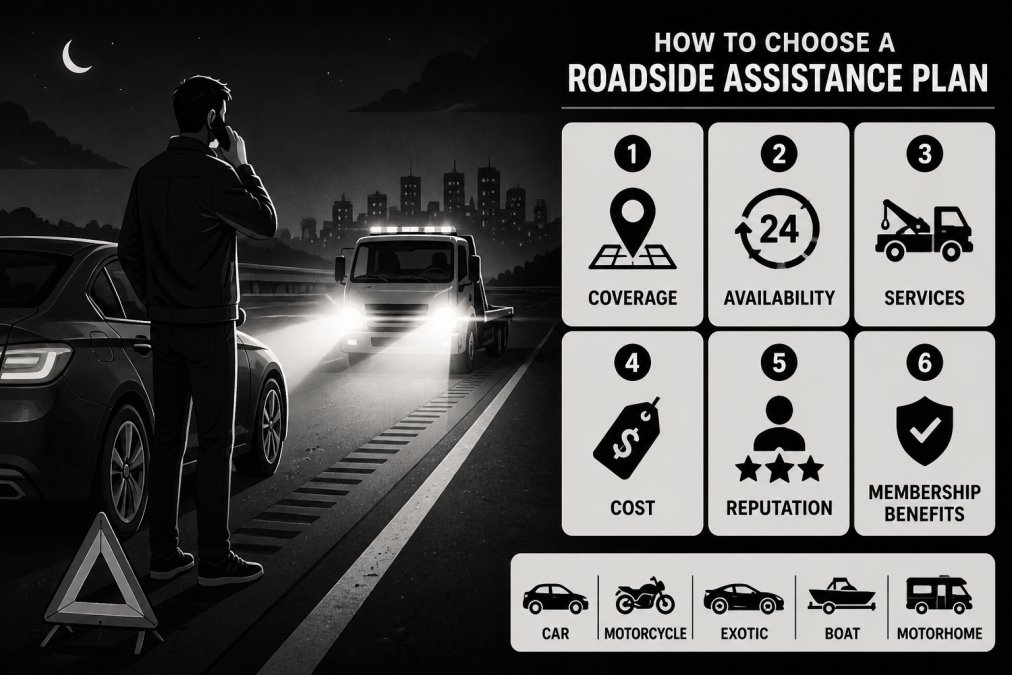
Examine mileage limits carefully. Many plans advertise “towing to the nearest repair facility,” but some cap that distance at 5 miles, others at 25 or 100 miles. If the nearest qualified shop is 75 miles away and your plan maxes out at 50 miles, you’re paying out-of-pocket for the remainder. Some providers, like Good Sam, offer unlimited towing to the nearest service center, eliminating this uncertainty.
Response time is where membership-based plans often deliver value. Traditional auto clubs typically guarantee arrival within 30-60 minutes in most areas. On-demand services like HONK and Blink Roadside sometimes beat that, but availability varies by location. In rural areas, membership plans with established networks tend to perform more reliably than app-based services.
Cost structure matters more than headline price. A $50 annual membership covering unlimited basic services costs far less per incident than a $100 pay-per-use fee. However, if you use roadside assistance once every five years, the annual plan is waste. The math changes based on your actual usage patterns.
Before committing to any plan, call their dispatch line during off-hours and ask about typical wait times in your area. Published response time guarantees mean nothing if your location sits at the edge of their service network.
Membership-Based Roadside Assistance Plans
Membership plans dominate the market because they offer predictable costs and comprehensive coverage. You pay an annual or monthly fee for unlimited calls on covered services. The trade-off is the upfront commitment and waiting periods most plans impose before coverage activates.
AAA Roadside Assistance
AAA remains the largest roadside assistance provider, with tiered plans ranging from basic to comprehensive. The Classic plan starts at $64.99 per year and includes towing up to 5 miles, battery service, flat tire changes, and fuel delivery.
AAA’s real strength is ancillary benefits. Members get discounts on hotels, rental cars, travel packages, and restaurants. These discounts often offset membership cost for frequent travelers. AAA also covers you as a passenger in someone else’s vehicle and provides coverage when driving a rental car.
The critical limitation: AAA imposes a 48-hour waiting period after purchase before roadside assistance activates. If you sign up Friday expecting weekend coverage, you won’t be covered until Sunday.
The 48-hour waiting period is a real trap. Many people purchase AAA after a breakdown, only to discover they can’t use it for that emergency. Buy it well before you need it.
Good Sam Roadside Assistance
Good Sam specializes in recreational vehicle coverage, making it the standout choice for RV owners, trailer users, and non-standard vehicles. The Platinum Auto Plan starts at $49.95 per year and provides unlimited towing to the nearest service center with no distance cap. The plan covers spouse and dependent children.
Good Sam excels at handling specialized vehicles. Their network includes shops equipped for motorhomes, fifth wheels, and travel trailers. Standard towing services often struggle with RVs because weight and equipment requirements exceed typical wrecker capacity. Good Sam’s contractor network is pre-vetted for this capability.
Allstate and AARP Plans
Allstate offers standalone roadside assistance without requiring an Allstate insurance policy. The Roadside Assist plan costs $59 per year (first year) and includes towing up to a specified distance, jump-starts, tire changes, lockout service, and fuel delivery.
AARP members can access Allstate’s plans at a discount, paying as little as $5.50 per month for basic coverage. This makes it one of the most affordable options for people over 50. Coverage extends to any vehicle you drive, including rentals and borrowed cars.
The catch is that renewal rates jump significantly after the first year. The $59 introductory rate often becomes $100+ on renewal. Additionally, towing limits on the base plan typically max out at 10-25 miles, which may prove insufficient for longer distances.
For AARP members specifically, the discounted Allstate plan offers excellent value in year one. Plan to reassess at renewal time, as costs can increase substantially.
On-Demand Towing Services Without Membership
App-based roadside assistance has disrupted the traditional membership model. Services like HONK and Blink Roadside operate on a pay-per-use basis, eliminating annual commitments while offering transparent pricing upfront.
HONK and Blink Roadside
HONK launched with transparent pricing, no membership fees, and fast dispatch through a mobile app. Basic services like jump-starts and tire changes start around $49. Towing costs vary based on distance but are quoted before you confirm the service, eliminating surprise bills.
Response times with HONK are competitive, often 30 minutes or less in urban and suburban areas. The company maintains a network of over 45,000 partner trucks nationwide. Blink Roadside operates similarly, covering 99% of U.S. zip codes with pay-per-use pricing. A basic jump-start or tire change runs around $65, while towing up to 5 miles costs $99.
The fundamental trade-off is predictability. If you need roadside assistance twice per year, you might spend $200-300 total with HONK or Blink. If you need it five times per year, you’re spending $500+, which exceeds many annual memberships. These services work best for people who rarely need help and want to avoid paying for unused coverage.
Cost of Emergency Towing Services Explained
Understanding what drives towing costs helps you evaluate whether a membership plan or pay-per-use service makes financial sense.
Distance is the primary cost driver. Local towing within 5-10 miles costs significantly less than long-distance transport. A 100-mile tow can easily cost $300-500 with a private towing company, depending on vehicle type and local market rates. Membership plans with unlimited towing to the nearest service center eliminate this variability.
Vehicle type affects pricing substantially. Standard sedans are cheapest to tow. Luxury vehicles, exotic cars, motorcycles, and RVs require specialized flatbed services or enclosed transport, commanding premium rates. Some providers refuse certain vehicle types because they lack proper equipment.
Time of day and location matter too. Emergency towing at 3 AM on a holiday weekend costs more than daytime tows on weekdays. Rural locations often carry surcharges because fewer service providers operate there.
Hook-up fees, mileage surcharges, and wait-time charges hide in the fine print of many towing contracts. Membership plans typically include these fees, protecting you from surprise charges.
Always ask about hidden fees before authorizing towing. Some independent operators quote a base rate, then add hook-up, mileage, and wait-time charges that triple the final bill. Membership plans protect you, coverage typically includes all ancillary costs.
AAA vs Private Towing Companies
The choice between AAA and independent towing companies comes down to reliability, cost, and coverage scope.
AAA provides consistency. When you call AAA roadside assistance, you’re connecting with a dispatch center coordinating a vetted network. Response times are generally predictable, and service quality is standardized. This reliability has real value when you’re stranded.
Private towing companies, particularly local operators, often deliver faster response times and more personalized service. A family-owned business in your community might arrive in 15 minutes because they’re nearby. They may also offer services AAA won’t, like specialized vehicle transport.
The cost comparison depends on usage. If you need towing once every three years, AAA’s $65 annual membership costs roughly $195 total, or $65 per incident. A private company charging $150 per call is cheaper in this scenario. However, if you need towing three times per year, AAA’s membership ($65 annually) is dramatically cheaper than paying $150 per incident ($450 total).
Coverage scope differs significantly. AAA membership includes battery jump-starts, tire changes, lockout assistance, and fuel delivery. Private companies typically charge separately for each service. However, private companies often handle specialized vehicles and long-distance transport more flexibly than AAA’s distance limits allow.
For vehicle owners in San Diego, Fast Towing San Diego offers 24/7 availability, fast response times from local operators, and comprehensive coverage for standard and specialized vehicles. There’s no waiting period and no membership commitment required.
| Roadside Assistance Option | Best For | Cost Model | Coverage Limits |
|---|---|---|---|
| AAA Membership | Frequent travelers, multi-vehicle households | $65-120/year | 5-200 miles depending on tier |
| Good Sam | RV owners, specialized vehicles | $50-80/year | Unlimited to nearest service center |
| Allstate/AARP | AARP members, budget-conscious | $60-100/year (first year) | 10-25 miles typically |
| HONK/Blink | Occasional users, transparency seekers | Pay-per-use ($49-99+) | Varies by distance |
| Private Towing (Local) | Speed and specialization priority | Per-call ($100-300+) | Negotiable |
Specialized Towing for Motorcycles, RVs, and Exotic Vehicles
Standard roadside assistance plans often fail when you own anything outside the typical sedan category. Motorcycles, RVs, vintage cars, and exotic vehicles require specialized equipment and expertise that most general-purpose towing services don’t possess.
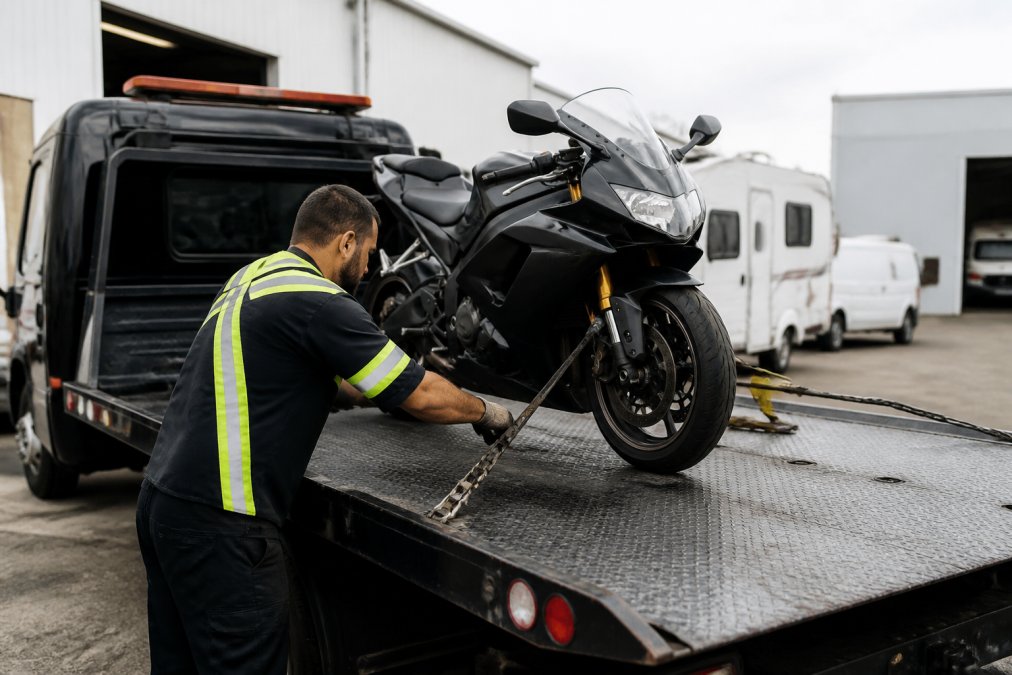
Motorcycles present a specific challenge because improper towing causes thousands of dollars in damage. A standard wrecker operator who hooks a motorcycle by the frame and drags it onto a flatbed can bend the frame, damage suspension, and crack engine cases. Proper motorcycle towing requires a specialized cradle or wheel lift that secures the bike without frame stress. Most AAA-affiliated services don’t have this equipment.
RVs and motorhomes exceed standard tow truck weight capacity. A 35-foot motorhome can weigh 30,000+ pounds, requiring heavy-duty wrecker equipment and experienced operators. RVs often need specialized RV service centers, not general repair shops. Good Sam’s specialization becomes valuable here, with a network equipped for RV recovery.
Exotic and luxury vehicles demand careful handling to avoid damage to expensive paint, bodywork, and undercarriage. A Ferrari or Lamborghini shouldn’t be towed by standard hook, it requires flatbed or wheel-lift systems that protect the vehicle. Some exotic owners specifically require enclosed transport to prevent weather damage.
If you own a specialized vehicle, calling a general roadside assistance service is risky. You’re better off joining a plan designed for your vehicle type (like Good Sam for RVs) or establishing a relationship with a local provider who has the right equipment. Fast Towing San Diego maintains specialized equipment and expertise to handle motorcycles, exotic vehicles, boats, and RVs safely, addressing a gap left by national membership plans.
If you own a motorcycle, RV, or exotic vehicle, verify the towing provider’s specific experience before you need it. Ask whether they have the right equipment on hand and how many times they’ve towed your specific vehicle type.
Conclusion
The best towing alternative depends on your specific situation: how frequently you travel, what type of vehicle you own, how far you typically venture from home, and whether you prefer predictable membership fees or flexible pay-per-use services. AAA works well for frequent travelers wanting comprehensive coverage and member discounts. Good Sam is the clear choice for RV owners. On-demand services like HONK and Blink make sense for people who rarely need help and want to avoid annual commitments.
For vehicle owners in San Diego experiencing emergency breakdowns, accidents, or needing specialized transport for motorcycles, exotic vehicles, or boats, Fast Towing San Diego offers 24/7 professional assistance with fast response times and connections to trusted repair shops. With over 100 years of combined experience and professionally trained drivers, the service handles situations where standard roadside assistance plans fall short, particularly for specialized vehicles and complex recoveries. Get started with Fast Towing San Diego today and ensure you’re covered when emergencies happen.
Frequently Asked Questions
What makes one towing alternative better than another?
The best towing alternative depends on your situation. Membership plans like AAA offer comprehensive coverage and travel discounts but require an annual commitment. On-demand services like HONK provide flexibility and transparent pricing without membership fees. For specialized vehicles like motorcycles or RVs, Good Sam offers dedicated coverage. Consider your vehicle type, how often you travel, and whether you want predictable annual costs or pay-per-use flexibility when choosing towing alternatives.
How do I choose a roadside assistance plan that fits my budget?
Start by calculating your annual roadside assistance needs. Basic membership plans start around $50-65 per year and cover standard services like jump-starts and tire changes. If you need frequent towing, unlimited plans run $100+ annually. On-demand services charge $49-99 per service, making them cheaper if you rarely need help but expensive if you use them multiple times yearly. Factor in whether you want additional benefits like travel discounts or coverage for family members when comparing total value.
What’s the difference between AAA and private towing companies?
AAA offers a nationwide network, travel discounts, and standardized service but requires membership and has towing mileage limits (typically 5-200 miles depending on plan). Private towing companies provide direct relationships, often faster local response times, and can specialize in specific vehicle types like motorcycles or exotics. Private services may offer unlimited towing to the nearest facility and specialized equipment. AAA works better for nationwide travel; private companies excel for local emergencies and specialized needs.
Are there hidden fees I should watch for in towing service contracts?
Yes. Common hidden costs include hook-up fees, service call charges, mileage overage fees beyond your plan’s limit, and fuel surcharges for fuel delivery. Some membership plans charge renewal fees higher than the initial year. On-demand services may quote a base price that increases if your vehicle requires special equipment or if you need service in remote areas. Always ask about the total cost upfront, including any fees beyond the advertised price, before authorizing service.