
Table of Contents
- What Mobile Mechanic Services for Highway Breakdowns Include
- 24/7 Emergency Breakdown Assistance and Fast Response Times
- Common Highway Breakdown Repairs You Can Get On-Site
- How to Stay Safe During a Highway Breakdown
- Mobile Mechanic Hourly Rates and Pricing Models
- What to Do When Stranded: Step-by-Step Breakdown Response
- On-Site Diagnostic Services and When You Need a Tow
- Frequently Asked Questions
Last Updated: August 18, 2026
What Mobile Mechanic Services for Highway Breakdowns Include
When your car dies on the highway, you need help that comes to you. Mobile mechanic services for highway breakdowns bring certified technicians directly to your location with diagnostic equipment and common repair tools, eliminating the need for a tow truck in many situations. This saves time, reduces stress, and often costs less than traditional roadside assistance.
Fast Towing San Diego specializes in immediate response. Core services include jump starts for dead batteries, flat tire changes, fuel delivery, vehicle lockouts, and on-site diagnostics to determine whether you can safely drive or need a tow. For many scenarios, a dead battery, punctured tire, or empty fuel tank, a mobile mechanic can get you road-ready in 30 minutes or less.
The key advantage is accessibility. You call when the problem happens, and a technician arrives with tools to assess and often fix the issue on the spot. This is especially valuable at night, on weekends, or in remote highway stretches where the nearest repair shop is miles away.
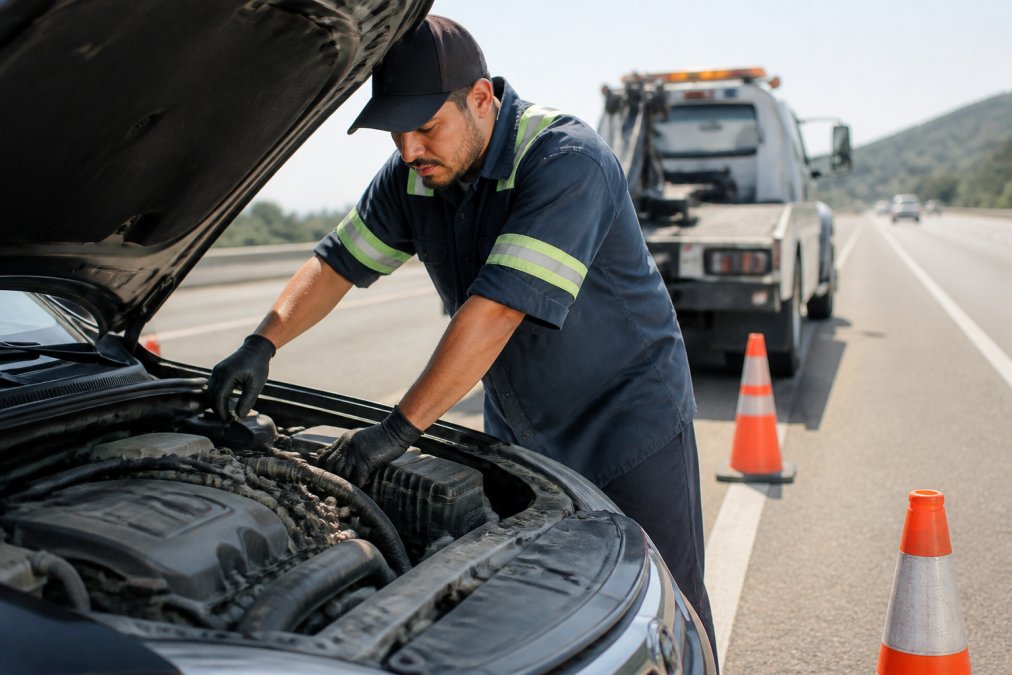
Most mobile mechanic services operate 24/7/365. The service truck carries batteries, tire repair supplies, fuel cans, and diagnostic scanners. If repair is beyond roadside capability, transmission failure, major engine damage, or structural issues, the technician arranges a tow to a trusted repair shop.
24/7 Emergency Breakdown Assistance and Fast Response Times
Real 24/7 emergency breakdown assistance means a technician is dispatched when you call at 3 AM, not when the office opens at 8 AM. Fast Towing San Diego maintains round-the-clock coverage because breakdowns don’t follow business hours.
Response time is critical. A 45-minute wait on a busy highway shoulder feels endless. Fast response times mean dispatchers prioritize your location, route the nearest available technician, and track arrival in real time. Many mobile mechanic services promise 15-30 minute response windows, though actual times depend on traffic, weather, and location remoteness.
The infrastructure supporting fast response includes GPS-enabled service vehicles, real-time dispatch systems, and technicians stationed across service areas rather than clustered at a central shop.
Fast Towing San Diego’s team brings over 100 years of combined experience to emergency situations, translating to faster problem-solving. An experienced technician diagnoses a no-start condition in minutes because they’ve seen hundreds of similar issues.
Professional mobile mechanic services account for weather and traffic in dispatch logic. During heavy rain or rush hour, experienced dispatchers adjust routing and set realistic expectations rather than promising impossible times.
Common Highway Breakdown Repairs You Can Get On-Site
Not every breakdown requires a tow. Dead batteries, flat tires, fuel delivery, and lockouts can be resolved on-site by a mobile mechanic in under an hour.
Jump Starts and Battery Replacement
A dead battery is the most common roadside breakdown. Mobile mechanic services carry heavy-duty jump-start equipment and replacement batteries. A jump start takes 10-15 minutes and costs considerably less than a tow followed by shop labor.
Battery replacement on-site is standard. If the battery is beyond recovery, the technician installs a new battery while you wait. You drive away with a functioning vehicle and a warranty receipt.
If the battery dies immediately after replacement, the issue is likely the alternator or charging system, requiring shop diagnostics. A mobile mechanic identifies this and recommends a tow.
Flat Tire Changes and Roadside Tire Repair
Flat tires are the second-most common breakdown. A mobile mechanic arrives with tire repair supplies and a jack. If the puncture is small and in the tread, a plug-and-patch repair takes 15-20 minutes. If the tire is damaged beyond repair, the technician can install a spare or mount a new tire on-site.
Roadside tire repair has limits. A blowout at highway speed creates safety risks that no roadside repair fully addresses. The mobile mechanic assesses whether the vehicle can safely reach a tire shop or needs a tow.
Fuel Delivery and Lockout Services
Running out of fuel is easily solved. A technician brings a fuel can and tops you up enough to reach the nearest gas station, taking 10 minutes and costing less than a tow.
Vehicle lockouts happen when keys are locked inside, lost, or the key fob battery dies. A mobile mechanic with the right tools can open most vehicles without damage, though some luxury or newer vehicles require dealer involvement.
How to Stay Safe During a Highway Breakdown
When your vehicle behaves abnormally on a highway, burning smell, grinding noise, warning light, or loss of power, your priority shifts to safety. Highway breakdowns happen in high-speed traffic zones where stopped vehicles face serious risk.
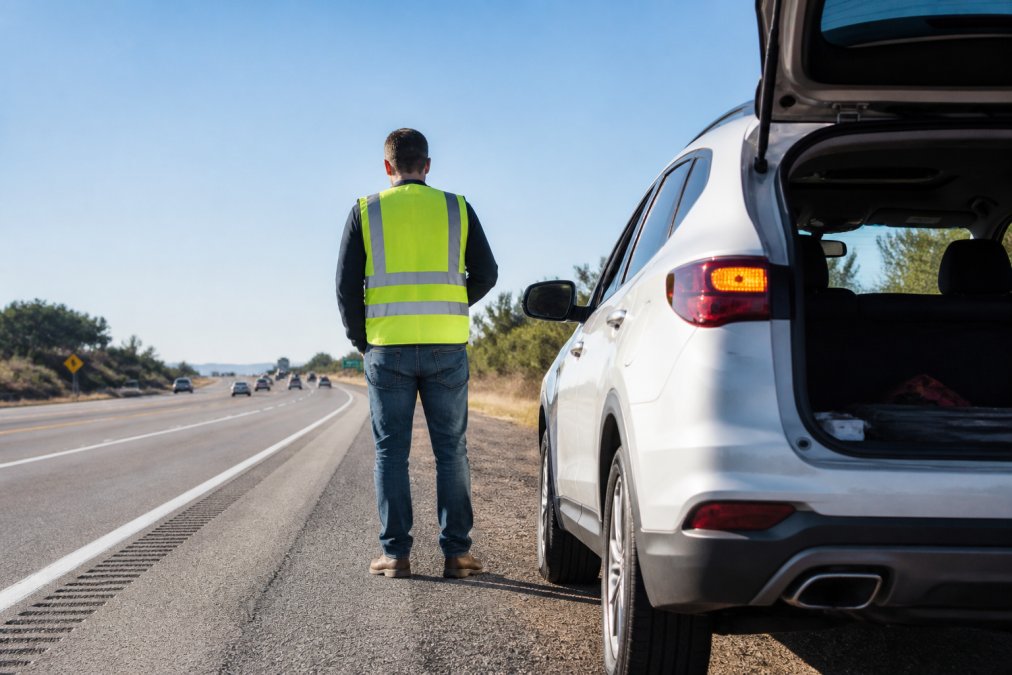
First, move off the roadway completely if the vehicle is still mobile. If it won’t move, turn on hazard lights immediately and stay inside with your seatbelt on until the roadway is clear.
Once stopped, activate hazard lights and, if safe, place reflective triangles or flares 100-300 feet behind your vehicle. Stay in the vehicle with doors locked on a busy highway. Getting out exposes you to passing traffic, the leading cause of secondary accidents during breakdowns.
When calling for help, provide your exact location, mile marker, highway name, and direction of travel. Tell the dispatcher if you’re on the shoulder, partially in a lane, or in a dangerous location.
Never attempt repairs yourself on an active highway. A mobile mechanic arrives equipped and trained for roadside work. Let them handle the repair while you remain safely in the vehicle or at a safe distance from traffic.
In darkness, poor weather, or heavy traffic, professional mobile mechanic services are far safer than DIY repairs.
Mobile Mechanic Hourly Rates and Pricing Models
Pricing for mobile mechanic services varies based on service type, location, and time of day. Most services charge either a flat rate per service (jump start, tire change, lockout) or an hourly rate for diagnostics and repairs. Flat rates are predictable; hourly rates apply when troubleshooting is needed.
Service calls often include a dispatch fee or trip charge, covering the technician’s travel to your location. This varies by distance from the service center.
For specific pricing on mobile mechanic services for highway breakdowns, contact Fast Towing San Diego directly. Pricing depends on the exact service needed, your location, and current demand.
Time of day affects pricing. Overnight emergency calls (midnight to 6 AM) often include a surcharge because technicians are called out during off-hours. Weekend and holiday pricing may also be higher.
Compare the cost of a mobile mechanic visit against alternatives: a tow to a shop, waiting time, shop labor rates, and inconvenience. A roadside battery replacement often costs less and takes less time than a tow plus shop labor.
What to Do When Stranded: Step-by-Step Breakdown Response
When your vehicle breaks down on a highway, the sequence of actions determines your safety and how quickly you get back on the road.
Step 1: Recognize the problem and assess safety (Time: 1-2 minutes)
The moment you notice something wrong, warning light, unusual noise, loss of power, acknowledge it. Safely move to the shoulder or exit if possible. Activate hazard lights immediately.
Step 2: Move completely off the roadway (Time: 2-5 minutes)
If the vehicle is still mobile, drive fully onto the shoulder, away from traffic. Stop in a location with good visibility, avoiding curves or hills. Turn off the engine.
Step 3: Activate hazard lights and safety signals (Time: 1-2 minutes)
Turn on hazard lights before exiting. If you have reflective triangles, place them 100-300 feet behind the vehicle. In darkness, use a flashlight to signal your location.
Step 4: Assess your safety and decide: stay in or exit the vehicle (Time: 1-2 minutes)
On a busy highway, stay in the vehicle with doors locked. On a quiet road or well-lit area, you can exit and stand at a safe distance. Never stand between your vehicle and oncoming traffic.
Step 5: Call for mobile mechanic services for highway breakdowns (Time: 2-5 minutes)
Provide the dispatcher with: exact location (highway name, mile marker, direction), vehicle type, problem nature, and whether anyone is injured. Stay on the line until the dispatcher confirms your location and provides an estimated arrival time.
Step 6: Wait safely and monitor for the technician (Time: variable, typically 15-45 minutes)
Stay in the vehicle unless instructed otherwise. Keep your phone charged. Some services send real-time tracking so you can see the technician’s approach. Verify credentials when they arrive.
Step 7: Communicate clearly with the technician (Time: 5-10 minutes)
Explain what happened: “The engine started making a grinding noise, then the warning light came on.” Describe any sounds, smells, or symptoms. Ask questions about the repair and what caused the breakdown.
Step 8: Decide next steps based on the repair outcome (Time: 5-30 minutes)
If the repair is successful and the vehicle is safe to drive, the technician advises on limitations. If the vehicle needs a tow, the technician arranges it. Get a receipt and documentation of any work performed.
On-Site Diagnostic Services and When You Need a Tow
Not every breakdown can be fixed roadside. Accurate diagnostics determine whether a mobile mechanic visit solves the problem or leads to a tow.
On-site diagnostics involve a technician using a diagnostic scanner to read engine codes, test battery voltage, and assess charging system function. For a no-start condition, the technician determines whether the issue is the battery, alternator, starter, or fuel system. This directs the repair: if the battery is fine but the alternator is failing, a roadside jump start is temporary, and a tow is necessary.
Some issues are immediately obvious. A flat tire with a sidewall puncture can’t be safely repaired roadside. A transmission that won’t shift needs shop diagnostics. An overheating engine may need a tow to prevent damage.
Other issues fall into a gray zone. A check engine light with a non-critical code might allow careful driving to a shop, or it might indicate a worsening problem. The mobile mechanic’s assessment determines the safest course.
Fast Towing San Diego combines mobile mechanic diagnostics with towing capability, so if on-site assessment determines a tow is needed, the same provider coordinates it. One call, one response, one resolution.
A diagnostic visit that determines your vehicle is safe to drive saves a tow fee. Even if diagnostics lead to a tow, you’ve confirmed the problem and can explain it to the repair shop, accelerating the actual repair.
When a breakdown happens on the highway, every minute matters. Fast Towing San Diego provides mobile mechanic services for highway breakdowns that get you moving again quickly. With 24/7 availability, professionally trained technicians, and the ability to diagnose and repair common issues on-site, you’re not left hoping for the best. You get a realistic assessment and a clear path forward, whether that’s a quick roadside fix or a coordinated tow to a trusted repair facility. Call Fast Towing San Diego when you break down, and you’ll see why fast response times and experienced technicians make the difference between a crisis and a solved problem.
Frequently Asked Questions
What types of repairs can a mobile mechanic perform on the highway?
Mobile mechanics can handle most common roadside repairs on the spot, including jump starts, flat tire changes, battery replacement, fuel delivery, and lockout assistance. They perform on-site diagnostics to identify mechanical failures and can often fix issues without towing. More complex repairs requiring specialized shop equipment or extensive work typically need towing to a repair facility. Mobile mechanic services for highway breakdowns focus on getting you road-ready quickly.
How much does a mobile mechanic cost per hour?
Mobile mechanic hourly rates vary depending on the service type, vehicle, and complexity of the repair. Diagnostic visits, jump starts, and simple repairs typically cost less than major mechanical work. Most mobile mechanics provide upfront quotes before starting work to ensure transparency. For exact pricing on mobile mechanic hourly rates, contact your local service provider directly for a quote based on your specific breakdown situation.
How quickly will a mobile mechanic arrive if I break down on the highway?
Response times for mobile mechanic services typically range from 15 to 45 minutes depending on traffic, location, and current demand. Professional services prioritize emergency calls and maintain multiple service units to ensure fast arrival. Real-time tracking allows you to monitor your technician’s location. Fast response times are critical during highway breakdowns, so choosing a provider with proven availability and local coverage is essential for your safety and peace of mind.
Is it safer to wait for a mobile mechanic or get towed after a highway breakdown?
If your vehicle can be safely repaired on-site, a mobile mechanic is often the faster and safer option, keeping you off busy highways. However, if your vehicle has serious mechanical failure, structural damage, or creates a traffic hazard, towing to a repair facility is the safer choice. Stay inside your vehicle with hazard lights on while waiting. A professional technician can assess whether on-site repair or towing is appropriate for your specific breakdown situation.