
Table of Contents
- Speed vs Cost: The Core Trade-Off in Emergency Roadside Assistance
- Average Roadside Assistance Response Time: What to Expect
- Emergency Towing Cost Breakdown: Where Your Money Goes
- How to Choose a Reliable Towing Company
- Comparing Top Roadside Assistance Providers
- The Hidden Cost of Slow Response Times
- Cost-Benefit Analysis: On-Demand vs Subscription Models
- Frequently Asked Questions
Last Updated: September 10, 2026
Speed vs Cost: The Core Trade-Off in Emergency Roadside Assistance
When your car dies on the shoulder of I-5 at 11 p.m., the only two questions that matter are how fast someone can reach you and whether affordable roadside assistance is even on the table. Fast response times vs affordable pricing for emergency roadside assistance is the central tension in every dispatch decision, and most drivers only discover which side their provider favors after the truck arrives. At Fast Towing San Diego, we believe you shouldn’t have to pick one, but the wider industry rarely works that way.
Emergency roadside assistance is a paid service that dispatches a tow truck or mobile technician to your disabled vehicle to handle breakdowns, flat tires, dead batteries, lockouts, or fuel shortages. The two dominant pricing models are membership plans, which spread cost across a year, and on-demand service calls, which bill you per incident.
That definition matters because it frames the trade-off. A membership plan rewards you for planning ahead; an on-demand call rewards you for needing help right now. The Federal Highway Administration’s guidance on incident response notes that every minute a disabled vehicle sits in a travel lane raises secondary-crash risk, which is why response time is not a luxury feature.
Below, we break down what drives response times, where your money actually goes, and how to decide between a subscription and pay-per-call without getting burned.
Average Roadside Assistance Response Time: What to Expect
The average roadside assistance response time in most urban areas runs between 30 and 60 minutes, with rural calls stretching longer (aaa.com). Metropolitan coverage zones with dense provider networks sit at the faster end; remote stretches and peak-demand windows push toward the slower end.
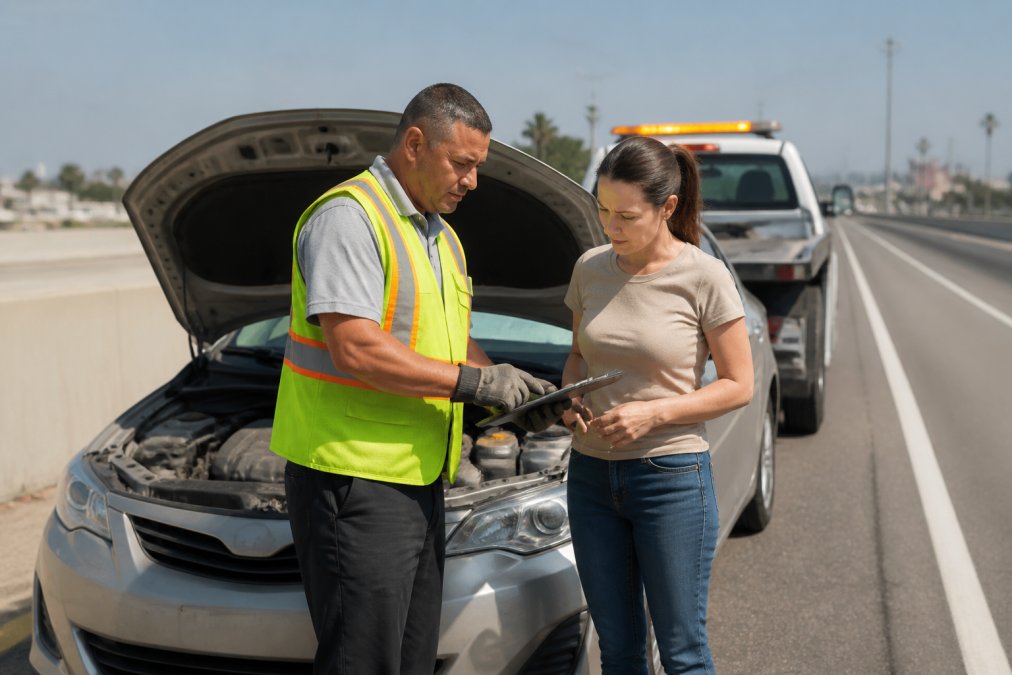
Factors That Affect How Fast Help Arrives
Several variables determine your wait time, and understanding them helps you set realistic expectations when you call.
- Geographic coverage: A provider with trucks staged across a metro area dispatches faster than one routing from a single depot.
- Dispatch routing and automated dispatch: Modern providers use location-based services to assign the nearest available truck.
- Peak hours and business hours: Rush hour, severe weather, and holiday weekends flood dispatch queues.
- Service type: A battery jump start or lockout service often resolves faster than a full vehicle recovery requiring a flatbed.
- Real-time tracking: Providers offering live tracking tend to have tighter, more accountable ETAs.
Ask the dispatcher for a specific ETA in minutes, not a vague window. A provider confident in its dispatch routing will give you a number and a tracking link; one that won’t is telling you something.
Emergency Towing Cost Breakdown: Where Your Money Goes
Emergency towing costs vary widely by distance, vehicle type, and time of day, so treat any single “average price” you see online with suspicion. What you can control is understanding the components that make up a bill.
A typical service call factors in a base hook-up fee, a per-mile rate beyond a set radius, after-hours surcharges, and specialty handling for motorcycles, boats, or exotic cars. Out-of-pocket expenses climb fastest when you call an unfamiliar provider during peak hours and discover the per-mile rate only after the truck is loaded.
Membership vs On-Demand: Two Ways to Pay
The two payment structures behave very differently, and the right one depends on how you use your vehicle.
| Model | How You Pay | Best For | Watch Out For |
|---|---|---|---|
| Membership plan | Annual subscription, fixed fee | Frequent drivers, older vehicles | Response times can vary by location |
| On-demand service | Per-incident service call | Occasional drivers, newer cars | Unpredictable out-of-pocket expenses |
| Insurance add-on | Low annual premium on policy | Existing policyholders | Requires active coverage |
| Fleet contract | Negotiated annual terms | Government and business fleets | Contractual obligations to review |
Membership plans trade a known annual cost for coverage you may never use. On-demand service keeps your baseline cost at zero until you need help, then charges a premium for immediacy. Neither is universally cheaper; the math depends on how often you break down.
The most common mistake is buying the cheapest membership and assuming fast response times are included. Many budget plans route you to the lowest-bid provider in the network, which is exactly how a 30-minute promise becomes a two-hour wait on the shoulder.
How to Choose a Reliable Towing Company
Choosing a reliable towing company comes down to verifying capability and response commitments before you’re stranded, not after. The drivers who get burned are almost always the ones who picked a provider in a panic.
Start with these checks:
- Confirm 24/7 availability. A provider that is genuinely open around the clock will say so plainly and staff a live dispatcher overnight.
- Ask about vehicle range. If you own a motorcycle, boat, or motorhome, confirm the provider can actually handle it before you need a tow.
- Request a service level agreement. For fleets and commercial accounts, a written SLA with response benchmarks protects you.
- Check safety protocols. Professionally trained drivers follow loading and securing procedures that protect your vehicle.
- Get the rate structure upfront. A reputable provider explains base fees, mileage, and surcharges before dispatch.
Verifying Service Quality Before You Need It
Verification is the step most drivers skip, and it’s the one that separates a smooth recovery from a roadside nightmare. Save a provider’s number before you need it, and do a two-minute check while you’re calm.
Look for evidence of real experience: how long the company has operated, whether its drivers are trained, and whether it handles the specific vehicle type you drive. A provider backed by decades of combined experience and a broad vehicle range is far less likely to turn you away when it matters. This is the approach we take at Fast Towing San Diego, where our team brings more than 100 years of combined experience and handles everything from sedans to boats and exotic cars.
The best time to verify a towing provider is a sunny afternoon with a full tank, not a rainy night on the freeway. Save the number, confirm the vehicle range, and read the rate structure once, calmly.
Comparing Top Roadside Assistance Providers
Provider choice splits into two camps: membership networks and insurance add-ons. Each covers the same core emergencies, but they differ in cost structure and how much control you have over who shows up.
| Provider | Pricing Model | Key Strength | Best For |
|---|---|---|---|
| Fast Towing San Diego | Per-call and fleet accounts | 24/7 dispatch, broad vehicle range | Drivers needing fast, flexible help |
| AAA | Annual membership from $33.50 | Nationwide provider network | Drivers wanting an established brand |
| Geico Roadside Assistance | Policy add-on from $15/year | Low-cost, integrated with insurance | Existing Geico policyholders |
| Best Roadside Service | Membership | 45-minute response target | Drivers prioritizing speed |
| Five Star Roadside | Membership | EV expertise, AI-driven routing | Tech-savvy and EV owners |
AAA remains the most recognized membership option, with a nationwide network and towing included in its plans, though response times vary by location and demand (aaa.com). Geico’s add-on is the cheapest entry point for existing policyholders but requires an active auto policy. Best Roadside Service markets a 45-minute response benchmark, which appeals to drivers who value speed over the lowest price. Five Star Roadside leans into technology, using AI-driven routing and offering specific support for electric vehicles.
For our own operation, the priority is flexibility: 24/7 dispatch, and the range to handle a motorcycle, a trailer, or an exotic car.
The Hidden Cost of Slow Response Times
A slow response time costs far more than the tow itself, and this is the part most pricing guides ignore. Every extra minute on the shoulder compounds risk, inconvenience, and money.
Consider what a two-hour wait actually costs. You lose work hours or miss commitments. Your vehicle sits exposed to traffic, weather, and secondary collisions. If you’re in an emergency situation, delay can turn a manageable breakdown into an accident. For fleet managers, a single slow recovery can idle a vehicle, disrupt a route, and cascade into missed service obligations.
The hidden cost also shows up in your bill. A provider that arrives late often does so because it overbooked, and overbooked providers are more likely to add surcharges or upsell services once they finally arrive. Speed and predictability are worth paying for precisely because the alternative is expensive in ways the invoice never shows.
Cost-Benefit Analysis: On-Demand vs Subscription Models
The on-demand versus subscription decision is a straightforward cost-benefit analysis once you know your breakdown frequency. Neither model wins outright; the winner is the one that matches your driving reality.
Choose a subscription if: you drive an older or high-mileage vehicle, you take long trips, or you want a predictable annual cost and don’t mind that response times vary by location and demand. Membership plans shine when you use the service more than once or twice a year.
Choose on-demand if: your vehicle is newer and reliable, you drive locally, or you’d rather not pay for coverage you rarely use. On-demand keeps your baseline cost at zero, but you accept that out-of-pocket expenses on the day of a breakdown will be higher and less predictable.
Choose a fleet contract if: you manage multiple vehicles for a business or government agency. Negotiated terms, priority dispatch, and a service level agreement usually beat both consumer models on cost per incident.
The break-even point for affordable roadside assistance is simple to estimate: divide your annual membership cost by the typical per-call price in your area. If you expect to need service more often than that ratio suggests, the subscription wins. If not, on-demand is cheaper over the year.
Drivers who want fast response times without locking into an annual membership, and fleet or government accounts that need priority dispatch and a written service level agreement.
Frequently Asked Questions
What is the average response time for roadside assistance?
Average roadside assistance response time varies by provider, location, and demand. Some services target 45 minutes or less, while others may take longer during peak hours or in remote areas. Urban areas typically see faster arrivals than rural locations. When comparing providers, ask about their typical response window and whether they offer real-time tracking so you know when help will arrive.
How much does emergency roadside assistance cost?
Emergency towing cost breakdown depends on distance, vehicle type, time of day, and whether you have a membership. On-demand service calls often cost more per incident than annual subscriptions. Insurance add-ons may start around $15 annually, while standalone memberships vary. Fast Towing San Diego offers affordable pricing, and you can request a quote on their website for your specific situation.
Is it better to prioritize speed or cost during a breakdown?
Safety comes first. A fast response matters most when you are stranded on a freeway or in an unsafe location. If you are in a safe area, waiting for a more affordable option may be reasonable. Many drivers find that a membership plan balances both: predictable pricing and priority dispatch. Evaluate your typical driving conditions and risk tolerance when deciding.
How can I verify a towing company is reliable before I call?
Check online reviews, ask about licensing and insurance, and confirm they provide a written estimate before starting work. A reliable provider will answer questions about response times, pricing, and what happens after your vehicle is towed. Fast Towing San Diego has over 100 years of combined experience and connects drivers with trusted repair shops, which adds accountability.
What factors influence the total cost of emergency roadside assistance?
Key factors include towing distance, vehicle type (motorcycles, boats, and exotic cars may cost more), time of day, and whether it is a holiday or peak hours. Additional services like jump starts, lockout help, or fuel delivery may carry separate fees. Membership plans often bundle these services for a flat annual rate, which can reduce out-of-pocket expenses during an emergency.
Breakdowns don’t schedule themselves, and the provider you call at 2 a.m. shouldn’t be a gamble. Fast Towing San Diego offers 24/7/365 dispatch, professionally trained drivers, and the range to handle everything from a flat tire to a boat or exotic car, with special discounts for first responders, military, and fleet accounts. Get started with Fast Towing San Diego and get fast, affordable help when you need it most.