
Table of Contents
- What Makes a Classic Car Towing Service Reliable
- Flatbed vs. Wheel-Lift Towing for Classic Cars
- Questions to Ask a Towing Company Before Hiring
- How to Prepare Your Car for Long Distance Towing
- Understanding the Cost to Tow a Classic Car
- Verifying Credentials and Reading Customer Reviews
- Enclosed vs. Open Transport: Choosing the Right Option
- Frequently Asked Questions
Last Updated: October 1, 2026
What Makes a Classic Car Towing Service Reliable
Your vintage vehicle represents years of investment and emotional value. A standard tow truck driver trained on modern cars won’t cut it. You need a team that understands the unique demands of classic car towing services and knows how to handle your vehicle without causing damage.
Reliability means three things: specialized equipment, proper insurance coverage, and knowledgeable technicians. At Fast Towing San Diego, our team brings over 100 years of combined experience handling everything from rare motorcycles to exotic cars.
Specialized Equipment and Training
Classic cars require different handling than modern vehicles. Their frames are often more delicate, suspension geometry differs, and paint finishes are frequently original and irreplaceable. A standard wheel-lift towing setup can damage vintage undercarriages, suspension components, or bumpers.
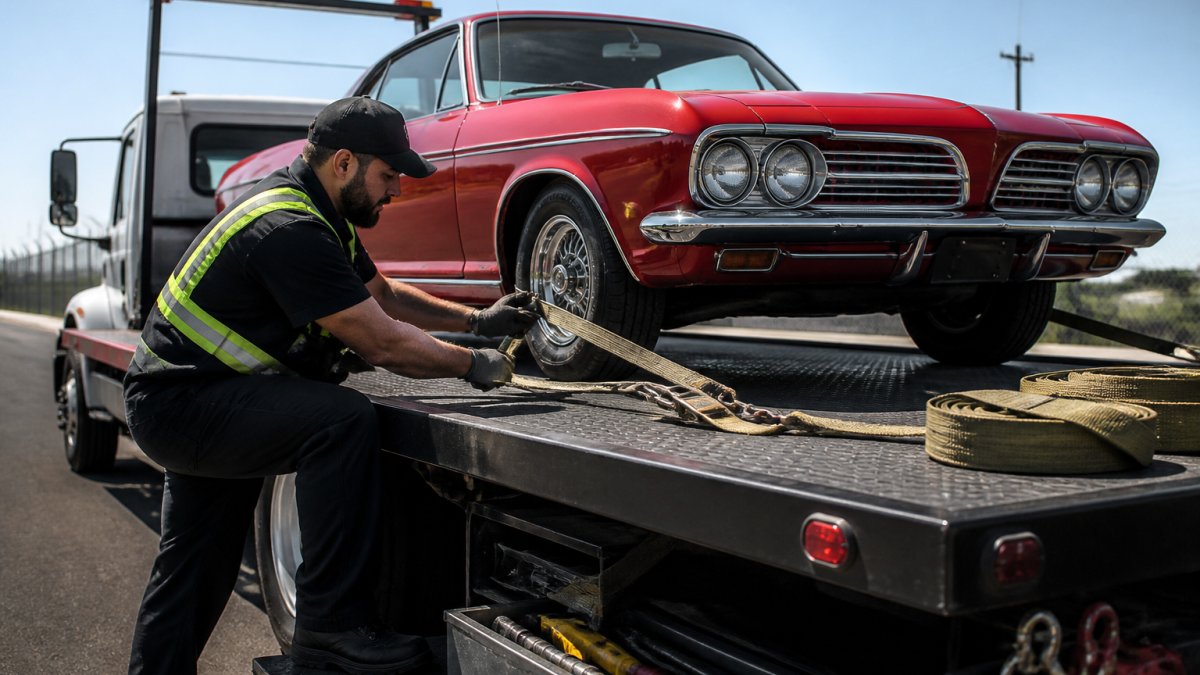
The right towing company invests in flatbed equipment specifically designed for classic vehicles. Flatbed towing keeps all four wheels off the ground, eliminating suspension stress. The vehicle sits secured on a flat platform rather than being dragged by its frame or axles.
Professional towing technicians complete formal training programs and must understand how to properly secure vehicles with different frame designs, apply tie-down procedures that won’t damage original finishes, handle low ground clearance vehicles safely, and recognize when specialized recovery equipment is needed. This knowledge is developed through dedicated study and hands-on experience.
Insurance and Liability Coverage
Many people call the cheapest option available and assume they’re covered. They’re usually not.
Proper liability coverage protects both you and the towing company. If damage occurs during transport, you need clear documentation of what’s covered. A reliable classic car towing service carries comprehensive cargo insurance specifically designed for high-value vehicles.
Ask directly: What’s the maximum liability coverage per vehicle? Does the policy cover classic cars specifically? Are there exclusions? Is supplemental insurance available? Legitimate companies have detailed insurance policies they can explain in writing. If a towing service gets vague about coverage details, keep looking.
Flatbed vs. Wheel-Lift Towing for Classic Cars
This decision fundamentally affects your vehicle’s safety during transport.
Flatbed towing lifts your entire vehicle onto a flat platform. All four wheels clear the ground. Your car sits secured with tie-downs at multiple points. This method eliminates stress on the suspension, steering, and frame. For classic cars, flatbed is almost always the right choice.
Wheel-lift towing uses a hydraulic arm that lifts the front or rear wheels while the other two remain on the road, dragging the vehicle at an angle. This creates stress on the towed axle, suspension components, and frame alignment, risking serious damage to vintage vehicles with delicate suspensions or low ground clearance.
A 1960s sports car with a low front bumper could suffer frame damage from wheel-lift towing. A low-slung exotic car requires flatbed towing.
Flatbed typically costs more than wheel-lift, but the price difference disappears if wheel-lift towing damages your vehicle’s alignment, suspension, or frame.
Questions to Ask a Towing Company Before Hiring
Before committing to any service, ask specific questions that reveal whether a company truly understands classic car transport.
Ask: “How long have you been handling classic car towing services?” Legitimate specialists can point to years of experience and name specific vehicle types they’ve transported.
Ask: “What type of tow truck will you use for my vehicle?” The answer should be flatbed for most classic cars. If they suggest wheel-lift, their reasoning reveals whether they’ve thought this through.
Verifying Credentials and Certifications
Professional towing operators hold industry certifications, indicating they’ve completed formal training and passed competency assessments.
Look for TROA certification, ATA membership, state-level licenses, and specialized certifications for classic vehicle transport. Ask directly: “What certifications do your drivers hold?” Professional operations provide documentation. If a company gets defensive or vague about credentials, that’s a red flag.
Ask about ongoing training. Do their technicians attend industry conferences or complete continuing education? The best operators invest in keeping their team current.
Checking Insurance and Liability Details
Request a Certificate of Insurance before you need the service. This document shows exactly what the company covers and the limits of that coverage. A reliable operation provides this without hesitation.
Ask: “What’s your cargo liability limit per vehicle?” “Does your policy specifically cover classic cars?” “Are there exclusions?” “Can you provide supplemental coverage?” Document everything in writing and email confirmations to yourself.
Many people assume their personal auto insurance covers transport damage. It usually doesn’t. Transport damage falls under cargo liability, not collision coverage. Verify your own insurance and the towing company’s coverage before transport.
How to Prepare Your Car for Long Distance Towing
Proper preparation before transport prevents problems during transit.
Document your vehicle’s current condition with photos from multiple angles, noting any existing damage. This creates proof of pre-transport condition.
Communicate special requirements to your towing company: low front end, custom wheels, or mechanical damage that affects loading.
Pre-Towing Inspection Checklist
Before the tow truck arrives, complete this checklist:
- Check all fluid levels (oil, coolant, brake fluid, power steering fluid)
- Verify tire pressure and condition
- Test all lights (headlights, brake lights, turn signals)
- Ensure the fuel tank is no more than one-quarter full
- Remove or secure any loose items inside the vehicle
- Disable any aftermarket alarms that might trigger during transport
- Leave the car in neutral with the parking brake off
- Provide gate codes or access instructions if needed
- Have keys ready for the towing technician
Fluid levels matter because movement during transport can cause spillage. A full fuel tank adds unnecessary weight and creates spill risks.
Handling Low Ground Clearance Vehicles
Low ground clearance creates special challenges during towing. If your classic car sits close to the ground, the loading angle becomes critical.
Communicate your vehicle’s ground clearance in inches before arrival. This helps them position the flatbed correctly during loading.
Watch the loading process. A properly trained technician will angle the flatbed gradually and use ramps to minimize the angle. If the driver winches aggressively at a steep angle, ask about their approach.
Professional operators anticipate common low-clearance issues: bumpers catching, undercarriage dragging, suspension bottoming out, and body panels scraping.
Understanding the Cost to Tow a Classic Car
Understanding what drives transport costs helps you evaluate quotes and avoid surprise bills.
Factors That Affect Transport Pricing
Distance is the primary cost driver. Most services charge per mile for long-distance transport.
Emergency transport typically costs more than scheduled moves.
Getting Accurate Quotes and Avoiding Hidden Fees
Provide complete information: exact locations, vehicle details, current condition, ground clearance, preferred transport method, and desired pickup date. A professional operation provides a detailed quote specifying base transport fee, mileage charges, specialty equipment fees, insurance costs, and total estimated cost.
Ask specifically about fuel surcharges, equipment fees, and after-hours charges. Some companies add these automatically. Understanding the full cost structure prevents surprises.
Verifying Credentials and Reading Customer Reviews
Before committing to any towing service, verify their legitimacy and reputation. Online reviews provide insights into real customer experiences.
Check review platforms:
- Google Business reviews
- Better Business Bureau (BBB) ratings
- Yelp for towing services
- Industry-specific review sites
Red Flags in Contracts and Service Agreements
Before signing anything, read the entire agreement. Don’t just skim it. Look specifically for these clauses:
- Liability limitations: Does the contract cap their liability at a specific amount? Is it reasonable for your vehicle’s value?
- Damage exclusions: What types of damage aren’t covered? Are these exclusions reasonable?
- Cancellation policies: Can you cancel without penalty? What’s their policy if they cancel?
- Payment terms: When is payment due? What payment methods do they accept?
- Insurance requirements: Does the contract require you to carry specific insurance?
Enclosed vs. Open Transport: Choosing the Right Option
Your choice between enclosed and open transport depends on your vehicle’s value, the distance, and weather conditions.
For classic cars, enclosed transport makes sense when:
- The vehicle has original or freshly restored paint
- You’re transporting a high-value classic (over $50,000)
- The journey crosses multiple states with varying weather
- The vehicle has a delicate or recently restored interior
Open transport is reasonable when:
- The vehicle is a project car or currently being restored
- The distance is short (under 200 miles)
- Weather forecasts show clear conditions
- You’re prioritizing cost savings
Frequently Asked Questions
How do I verify if a towing company is properly insured for high-value vehicles?
Ask the towing company for proof of cargo insurance and liability coverage specific to classic cars. Request their insurance certificate and verify the coverage limits match your vehicle’s value. Check that they carry general liability insurance and that their policy explicitly covers high-value or specialty vehicles. Contact their insurance provider directly if needed to confirm active coverage. Legitimate providers will provide this information without hesitation.
What is the difference between flatbed towing and wheel-lift towing for classic cars?
Flatbed towing uses a hydraulic platform that fully supports all four wheels, offering maximum protection for classic cars. Wheel-lift towing lifts the front or rear wheels while the other two remain on the ground, which can stress suspension and cause damage to low ground clearance vehicles. For classic cars, flatbed is the safer choice as it minimizes movement and protects the vehicle’s undercarriage and suspension system.
What should I include in a pre-towing inspection checklist for my classic car?
Document your vehicle’s current condition with photos from multiple angles, note any existing damage, check tire pressure and condition, ensure fluids are topped off, disable any alarms, remove or secure loose items inside, and verify that doors and windows lock properly. Record the odometer reading and fuel level. Take photos of the vehicle’s interior and exterior before the towing company arrives. This protects you in case of disputes about damage that occurred during transport.
What questions should I ask a towing company before they hook up my classic car?
Ask about their experience with classic vehicles, what type of equipment they’ll use, whether they offer flatbed or enclosed transport, their insurance coverage limits, how they secure the vehicle, what happens if damage occurs, and whether they provide a written contract. Ask if the driver is trained in specialty vehicle handling and whether they’ve transported similar vehicles before.