
Table of Contents
- Why Your Car Is Stuck in an Underground Parking Garage
- Assess Your Situation: Can You Drive Out Safely?
- Dead Battery in Underground Parking Garage: What to Do
- Car Won’t Start in Parking Garage: Troubleshooting Steps
- How to Tow a Car From a Parking Garage Safely
- Low-Clearance Parking Garage Towing: What You Need to Know
- Prepare Your Garage and Communicate With Recovery Operators
- What to Do While Waiting for Professional Recovery
- Frequently Asked Questions
Last Updated: October 4, 2026
Why Your Car Is Stuck in an Underground Parking Garage
A car stuck in an underground parking garage is either mechanical (won’t start) or structural (can’t exit safely). Identifying which one determines your next move.
Mechanical Issues vs. Access Problems
Mechanical problems: won’t start, won’t crank, or dead battery. Access problems: ceiling too low, ramp too narrow, or obstacles blocking the way.
Mechanical problems need a mechanic or jump start; access problems need planning and recovery equipment. The first step is identifying which you have.
Low-Clearance Height Restrictions
Underground parking garages post maximum clearance heights (typically 6-7 feet). Sedans are 4.5-5.5 feet; SUVs and trucks are 6-7+ feet. Roof racks add height. Many drivers don’t check the sign before parking and discover the problem when metal scrapes concrete, damaging both vehicle and garage.
Assess Your Situation: Can You Drive Out Safely?
Before calling for help, assess whether your car can exit safely. This five-minute check saves money.
Check Ceiling Clearance and Ramp Width
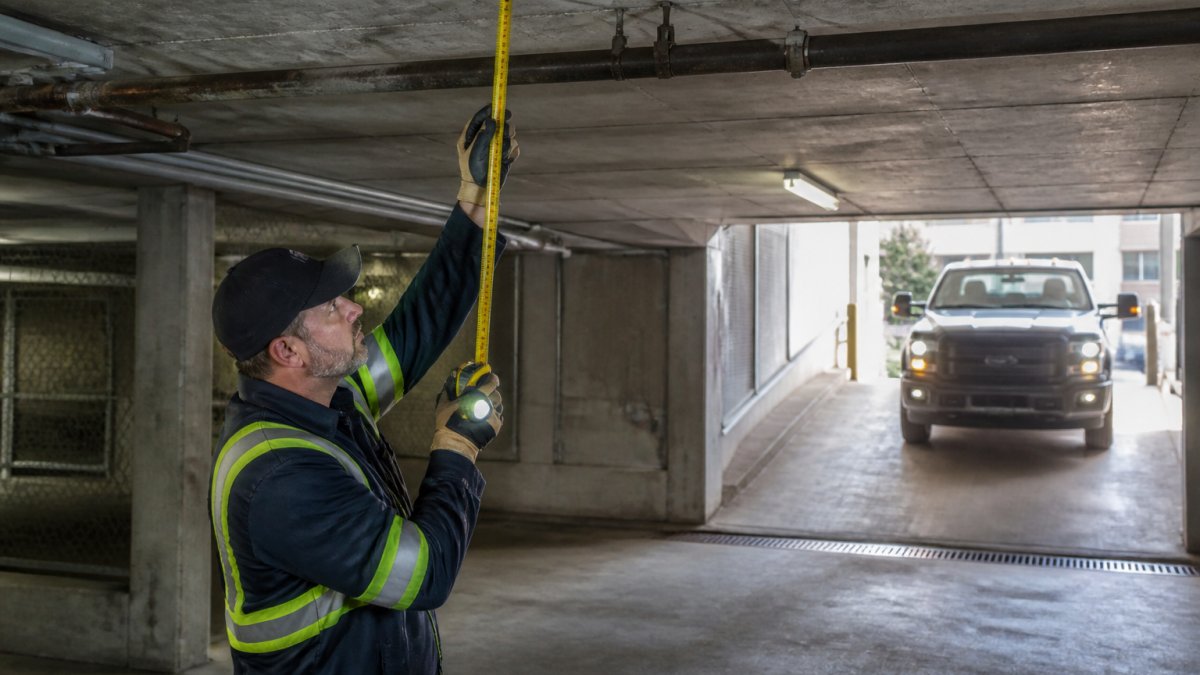
Note the clearance sign height. Measure your vehicle from ground to its highest point (roof or rack). If your vehicle exceeds the clearance, do not attempt to drive out.
Walk the ramp from your spot to the exit. Check for sharp 90-degree turns, pillars, parked cars, debris, and narrow sections.
Test Your Vehicle’s Mechanical Condition
Test your car: turn on ignition and listen. A cranking engine that won’t start differs from complete silence (dead battery/electrical) or cranking without firing (fuel/ignition issue). Try starting three times maximum; repeated attempts drain the battery.
Dead Battery in Underground Parking Garage: What to Do
A dead battery is the most common cause and often fixable without a tow truck.
Quick Fixes Before Calling for Help
If lights come on but the engine won’t crank, you likely have a dead or weak battery.
- Call someone with jumper cables and another vehicle
- Park the other car close to yours (engines facing each other, but not touching)
- Connect the positive (red) cable to your dead battery’s positive terminal
- Connect the other end of the red cable to the good battery’s positive terminal
- Connect the negative (black) cable to the good battery’s negative terminal
- Connect the other end of the black cable to an unpainted metal surface on your car’s engine (not the battery itself)
- Start the working vehicle and let it run for 2-3 minutes
- Try starting your car
- If it starts, let both cars run for a few minutes
- Remove cables in reverse order
- Drive your car for at least 20 minutes to recharge the battery
Jump-starting works about 70% of the time. If you’re alone, call a friend or rideshare service for jumper cables. If unavailable, call professional recovery.
When a Jump Start Won’t Work
If jump-starting fails, the battery is dead, the alternator is failing, or the problem is non-electrical. Signs: slow cranking, no cranking, rapid clicking, dim lights, or burning smell. You need professional recovery.
Car Won’t Start in Parking Garage: Troubleshooting Steps
Not every car that won’t start has a dead battery. Sometimes it’s something else. Walk through these checks to narrow down the problem.
Engine Cranks But Won’t Turn Over
Engine cranks but won’t fire usually means fuel or ignition. Check fuel level, listen for fuel pump humming, and consider spark plug or ignition failure. If you’ve tried starting repeatedly, the engine may be flooded, wait 10 minutes and try again. None of these are quick fixes; you need a mechanic or tow.
No Lights, No Sound, No Response
Complete electrical failure usually means a dead battery or broken connection. Pop the hood and check battery terminals for corrosion, looseness, or disconnection. Clean corroded terminals with a wire brush, tighten loose cables, or reconnect disconnected ones. If terminals are clean and tight but nothing happens, the battery is dead and may need replacement.
How to Tow a Car From a Parking Garage Safely
Once you’ve decided to tow, the recovery process matters. Underground garages are tight; wrong equipment or technique damages your vehicle.
Choosing the Right Recovery Equipment
Flatbed tow trucks are safest for underground parking, the car is fully lifted and transported. Wheel-lift trucks work if clearance allows but risk scraping in tight spaces. Low-clearance recovery uses heavy-duty dollies, air cushions, low-profile tow bars, and winches. The towing company should ask about garage dimensions and vehicle height before arriving.
Protecting Your Vehicle From Damage
Protect your vehicle by communicating all obstacles and dimensions to the towing company, watching the process and speaking up if something looks wrong, ensuring the service uses padding and straps, choosing flatbed towing when possible, and photographing your car before towing begins.
Low-Clearance Parking Garage Towing: What You Need to Know
Low-clearance situations require special planning. The standard tow truck approach doesn’t work.
Measuring and Communicating Garage Dimensions
Before the tow truck arrives, gather this information:
- Ceiling height at the entrance: This is the critical measurement. It’s usually posted on a sign. Write it down exactly.
- Ceiling height on the ramp: Some garages have lower ceilings on the ramp than at the entrance. Walk the ramp and note the lowest point.
- Ramp width: Measure the narrowest section of the ramp. Tight ramps need low-profile equipment.
- Turning radius: Note any sharp corners or 90-degree turns. These limit which vehicles can navigate the space.
- Obstacles: Pillars, parked cars, debris, or structural supports in the path.
When you call the towing company, provide all this information upfront. A professional dispatcher will ask for it. They’ll determine which equipment can safely work in that space.
Specialized Equipment for Tight Spaces
Standard tow trucks are built tall. Their cabs and booms exceed 12 feet. They can’t fit in many underground garages.
Low-clearance recovery uses:
- Low-profile flatbeds: Designed with lower deck heights to fit tight garages.
- Heavy-duty dollies: Lift the vehicle’s wheels to reduce its height.
- Air bags and cushions: Inflate under the vehicle to lift it slightly, reducing effective height.
- Winches: Pull the vehicle horizontally rather than lifting it, useful when vertical clearance is critical.
- Tow bars: Attach to the frame and allow towing at unusual angles to navigate tight ramps.
The towing company should explain which equipment they’re using and why. If they show up with a standard tow truck and act surprised by the tight space, they’re not prepared.
Prepare Your Garage and Communicate With Recovery Operators
The smoother the recovery process, the less chance of damage. Preparation on your end makes a huge difference.
Clear the Area and Note Obstacles
Before the tow truck arrives, do this:
- Move other cars: If possible, move any vehicles parked near yours. This gives the tow truck more maneuvering room.
- Clear the path: Remove any debris, boxes, or obstacles from the ramp between your car and the garage exit.
- Note low points: Mark the lowest ceiling sections with tape or a sign so the towing operator sees them immediately.
- Identify obstacles: Point out pillars, structural supports, or parked cars the operator needs to avoid.
- Clear the garage entrance: Make sure the garage exit is clear and accessible. No gates locked, no vehicles blocking the exit.
- Inform building management: If you’re in a multi-unit building, tell management a tow truck is coming. They might need to open gates or move barriers.
Information to Provide to the Towing Company
When you call for service, have this ready:
- Your location: Building address, garage level, parking spot number
- Garage dimensions: Ceiling height, ramp width, turning radius
- Vehicle info: Make, model, year, color, license plate
- Vehicle height: Measured from ground to roof
- Problem description: Won’t start, mechanical issue, or access problem
The more detail you provide, the faster and safer the recovery.
What to Do While Waiting for Professional Recovery
Once you’ve called for help, what’s next? Don’t just sit in your car and wait.
Safety Precautions in Confined Spaces
Underground garages have hazards. Take these precautions:
- Stay in your vehicle with doors locked until the tow truck arrives. This is safest.
- Keep your phone charged. You need it to communicate with the towing company.
- Turn off the engine. Running the engine in a confined space produces carbon monoxide, which is deadly (the CDC). Ventilation in underground garages is often poor.
- Turn on hazard lights. This makes your vehicle visible to other drivers in the garage.
- Stay alert. Other vehicles will be moving around. Watch for approaching cars.
If you’re waiting more than 15-20 minutes, call the towing company again. Ask for an updated ETA. Confirm they have the right address and garage level.
Documenting Damage and Insurance
Document everything for insurance purposes:
- Take photos before towing: Wide shots of your car, close-ups of the condition, photos of the garage entrance and ramp.
- Take photos during towing: If you’re present, photograph the equipment being used and how your car is positioned.
- Take photos after towing: Document the final condition of your vehicle.
- Get a receipt: The towing company should provide an itemized receipt showing what was done.
- Get the tow truck info: Driver name, company name, truck number, time of arrival and departure.
- Note any damage: If scrapes, dents, or other damage occurred, document it immediately and report it to the towing company in writing.
If damage occurs during towing, the towing company’s insurance should cover it. Report the damage within 24 hours. Provide photos and a written description of what happened.
Getting a car out of an underground parking garage isn’t always straightforward, but it’s manageable with the right approach.
If you’re facing this situation and need professional help, Fast Towing San Diego has the equipment and experience to safely extract your vehicle from even the tightest underground garages.
| Situation | First Step | Best Solution |
|---|---|---|
| Car won’t start | Test battery connections | Jump start or professional recovery |
| Ceiling too low | Measure vehicle height vs. clearance | Professional low-clearance towing |
| Ramp too narrow | Walk the route and assess | Flatbed or low-profile tow truck |
| Engine cranks but won’t fire | Check fuel level | Mechanic or tow to repair shop |
| Complete electrical failure | Inspect battery terminals | Battery replacement or jump start |
Frequently Asked Questions
How do I get a car out of an underground parking garage if it won’t start?
First, try a jump start if you have access to jumper cables and another vehicle. If the battery is completely dead or the engine won’t turn over, call a professional towing service immediately. Do not attempt to push the car or use other vehicles to extract it, confined garage spaces create zero margin for error, and improper extraction can damage your vehicle and the garage structure. Professional operators understand low-clearance restrictions and have the right equipment for safe recovery.
What should I tell the towing company about my underground parking garage?
Provide the garage’s ceiling height, ramp width, the number of turns on the access route, any low-clearance signs, and your vehicle’s exact dimensions (length, width, height). Note whether the ramp is steep, narrow, or has tight corners. If your car won’t start, explain whether the engine cranks, whether lights come on, and any sounds you hear. This information helps the operator select the right recovery vehicle and plan the safest extraction route.
Can a tow truck enter an underground parking garage?
Most standard tow trucks cannot fit through low-clearance garage entrances. Professional recovery operators use smaller, specialized towing vehicles designed for confined spaces, or they use winches and pulling equipment to extract your car from the garage entrance. Always confirm with the towing company that they can access your specific garage before they arrive, this prevents delays and ensures safe recovery.
Is it safe to run my car engine in an underground parking garage?
No. Running an engine in a confined, underground space produces carbon monoxide, which accumulates quickly and is deadly. Even brief engine operation in a basement or underground garage poses a serious health risk. If your car won’t start, do not attempt to run the engine repeatedly to diagnose the problem. Instead, turn off the engine, exit the garage, and call for professional help.