
Table of Contents
- Does Standard Auto Insurance Cover Towing?
- Understanding Towing and Labor Coverage
- Insurance Towing Mileage Limits and Distance Caps
- Towing After an Accident vs. Mechanical Breakdown
- How to Get a Tow Through Your Insurance
- Towing Reimbursement from Insurance
- Roadside Assistance vs. Towing Coverage
- What to Do Immediately After a Breakdown or Accident
- Frequently Asked Questions
Last Updated: October 13, 2026
Does Standard Auto Insurance Cover Towing?
Most auto insurance policies do not include insurance cover towing by default. You need to add it as an optional endorsement to your policy. This means if your vehicle breaks down or gets damaged in an accident, your standard liability and collision coverage won’t pay for the tow truck.
Here’s what matters: whether your insurance will cover towing depends entirely on what you’ve added to your policy. Many drivers assume they’re covered only to discover during a breakdown that they’re not.
The key difference is between what comes standard and what you can buy. Standard policies cover damage and liability. They don’t cover getting your car from point A to point B when it can’t drive. You have to specifically request towing and labor coverage or roadside assistance to add that protection.
Check your current policy documents or call your insurer directly to confirm whether you have towing coverage. Don’t wait until you break down to find out. The coverage limit and distance allowed vary widely by insurer.
Understanding Towing and Labor Coverage
Towing and labor coverage is an optional add-on that pays for a tow truck to transport your disabled vehicle. It also covers roadside labor like jump starts, lockouts, and tire changes without requiring a full tow.
This coverage works differently from roadside assistance. Towing coverage specifically pays for the truck and driver to move your vehicle. Labor coverage handles smaller fixes right on the spot. Together, they create a safety net when your car breaks down or gets stuck.
The coverage typically includes:
- Towing to a repair facility of your choice
- Jump starts and battery service
- Tire changes and patching
- Lockout assistance
- Fuel delivery if you run out of gas
- Winch-outs if your car is stuck
Coverage limits matter significantly. Some policies cover up to 100 miles, others cap it at 15 or 25 miles. The per-tow limit also varies. You might have a $500 maximum per tow, or $1,000, or no stated limit at all. Always check your policy for these specifics before you need help.
The real value of towing coverage is knowing exactly what you’ll pay when your car breaks down. Without it, a 50-mile tow could cost hundreds of dollars out of your pocket.
Insurance Towing Mileage Limits and Distance Caps
Every insurance policy that includes towing coverage sets a distance limit. This is one of the most important details to understand because it directly affects whether your policy will cover your specific situation.
Common mileage limits range from 15 miles to 100 miles per tow. Some insurers offer unlimited distance, but that’s rare and typically costs more. The limit is measured from the breakdown location to the repair facility, not as a round trip.
Here’s what you need to know about distance caps:
- A 15-mile limit covers breakdowns near your home or regular driving area
- A 50-mile limit gives you more flexibility for longer commutes or highway situations
- A 100-mile limit covers most regional towing needs
- Distance limits reset with each new claim
The “nearest repair facility” clause matters too. Some policies will only cover a tow to the closest shop, even if you prefer a different mechanic. Others let you choose your destination. Check your policy language carefully.
If your tow exceeds the mileage limit, you’ll pay the overage cost yourself. If you need a 75-mile tow but your policy covers only 50 miles, you’re responsible for that extra 25 miles. This is why knowing your limit before an emergency happens is critical.
Many drivers don’t realize their mileage limit until they need it. A breakdown on the highway 60 miles from home with a 50-mile limit means you’re paying out of pocket for the extra distance. Always ask your insurer: “What’s my towing distance limit and does it cover my regular commute?”
Towing After an Accident vs. Mechanical Breakdown
Insurance handles towing differently depending on what caused the problem. An accident tow and a breakdown tow may be covered under different parts of your policy.
Mechanical breakdown towing is covered through towing and labor coverage or roadside assistance. Your car stops working, and your policy pays to move it to a repair shop. This is straightforward coverage.
Accident towing is more complicated. If you’re in a collision and your vehicle is undrivable, you might be covered through:
- Comprehensive coverage (if the damage is from weather, theft, or non-collision events)
- Collision coverage (if you hit another car or object)
- Towing and labor coverage (if you added it)
- Roadside assistance (if you added it)
The distinction matters because collision and comprehensive coverage already pay to fix the vehicle. The towing part is separate. Your insurer might cover the tow as part of processing the damage claim, or they might require you to have a towing endorsement.
After an accident, the police or first responders may call a tow truck for you. That initial tow might be covered differently than a tow you arrange yourself. Some policies cover the first tow from an accident scene automatically, while others don’t.
After an accident, ask the police or emergency responder which tow service they’re calling. Then contact your insurance company immediately to confirm coverage before the truck arrives. This prevents disputes about who pays later.
How to Get a Tow Through Your Insurance
When you need a tow, follow these steps to make sure your insurance covers it and you get reimbursed properly.
Step 1: Call your insurance company first. Most insurers have a 24/7 claims line. Tell them you need a tow and ask whether your policy covers it. They’ll confirm your coverage limit and mileage cap.
Step 2: Ask about approved tow services. Many insurers have partnerships with specific towing companies. Using an approved service often means the tow company bills your insurer directly, so you don’t pay upfront.
Step 3: Arrange the tow. If your insurer approves a specific service, they’ll dispatch it for you. If you choose your own tow company, make sure to tell them you have insurance coverage.
Step 4: Document everything. Take photos of your vehicle’s condition, note the time and location of the breakdown, and keep all receipts and paperwork. Your insurer will need this for the claim.
Step 5: File the claim. If you paid for the tow yourself, submit the receipt to your insurer with your claim. Include the distance towed and the destination repair facility. The insurer will reimburse you up to your policy limit.
This process takes minutes if your insurer pre-approves the tow, or days if you arrange it yourself and claim reimbursement later.
Towing Reimbursement from Insurance
When you pay for a tow out of pocket, you can claim reimbursement from your insurance company. Understanding how this works helps you avoid disputes and get paid back promptly.
How reimbursement works:
Your insurer will pay up to your policy limit for the tow service. If your limit is $500 and the tow costs $350, you get $350 back. If the tow costs $650, you pay the extra $150 yourself.
Mileage limits also apply to reimbursement claims. If you towed 75 miles but your policy covers 50 miles, the insurer calculates what 50 miles should cost and reimburses that amount. You pay for the overage distance.
Timeline for reimbursement:
Most insurers process towing claims within 5 to 10 business days. You’ll need to submit:
- Receipt from the tow company
- Proof of the tow distance
- Photos of the vehicle condition
- Your policy number and claim details
Submit these documents through your insurer’s online portal, by email, or by phone. Keep copies for your records.
What slows down reimbursement:
Missing documentation is the biggest delay. If your receipt doesn’t show the distance or destination, the insurer will ask for clarification. If the tow distance exceeds your policy limit significantly, they may request additional information about why you chose that destination.
Fast Towing San Diego provides detailed receipts that make reimbursement claims straightforward. Every receipt includes the pickup location, destination, distance, and service date so you have everything your insurer needs.
Always get a detailed receipt from your tow service. The more information on that receipt, the faster your insurance company processes reimbursement.
Roadside Assistance vs. Towing Coverage
These two services sound similar but work differently. Understanding the distinction helps you choose the right coverage for your needs.
Roadside assistance is a broader service that includes multiple types of help:
- Jump starts for dead batteries
- Tire changes and repairs
- Lockout service
- Fuel delivery
- Winch-outs for stuck vehicles
- Towing (within distance limits)
Roadside assistance is often bundled with insurance or offered as a standalone membership. It covers quick fixes you can handle on the roadside without moving the vehicle.
Towing coverage is specifically for transporting your vehicle when it can’t be driven. It focuses on the tow service itself and labor to get your car mobile again. Towing coverage doesn’t typically include things like fuel delivery or lockout service.
The key difference: roadside assistance tries to fix the problem where your car sits. Towing coverage moves the vehicle when it can’t be fixed on-site.
Which should you choose?
If you drive an older vehicle or have a long commute, roadside assistance plus towing coverage gives you the most protection. If you drive a newer, reliable car and stay near home, roadside assistance alone might be enough. If you drive far from home regularly, make sure your towing coverage has a high mileage limit.
Many drivers benefit from both. Roadside assistance handles minor issues quickly. Towing coverage kicks in when the vehicle needs to move to a repair shop.
What to Do Immediately After a Breakdown or Accident
Your first moments after a breakdown or accident determine whether your insurance will cover the tow and how smoothly the process goes.
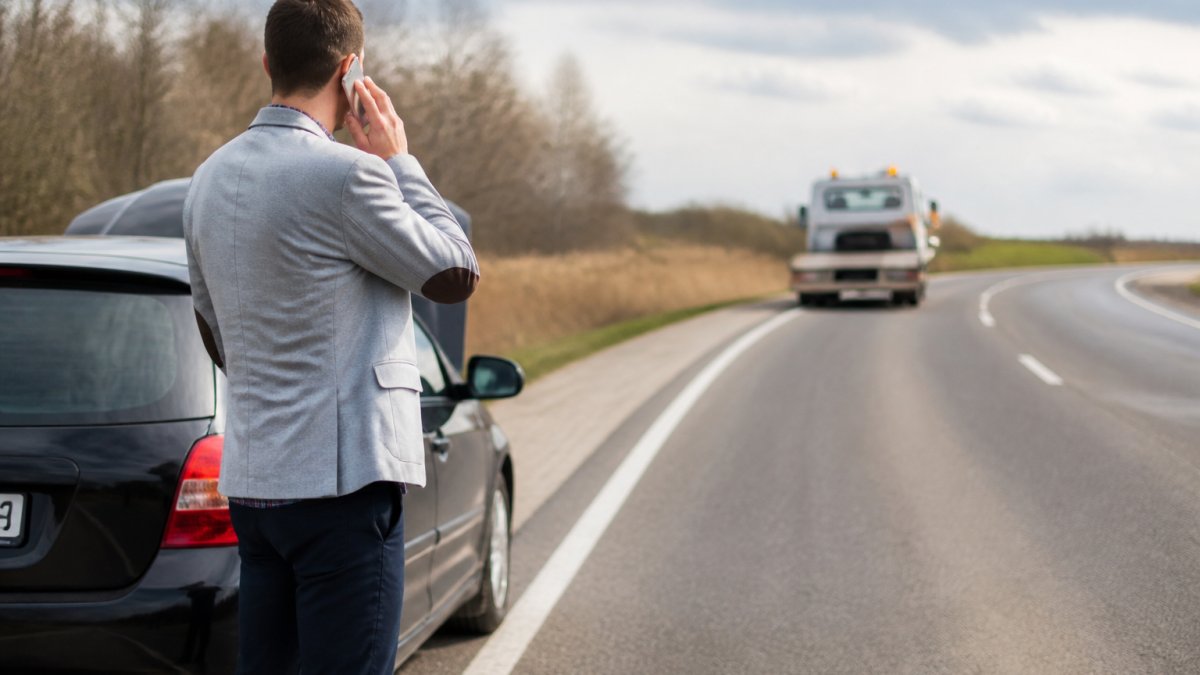
Step 1: Move to safety. If you’re on a highway or busy road, turn on your hazard lights and move away from traffic.
Step 2: Call your insurance company. Don’t arrange a tow first. Call your insurer’s claims line immediately.
Step 3: Tell the insurer your situation. Explain where you are, what happened, and whether your vehicle can be driven.
Step 4: Call a tow service if needed. If your insurer approves a specific service, they’ll dispatch it. If you choose your own, use a reputable local company.
Step 5: Document the situation. Take photos of your vehicle, the surrounding area, and any damage. Note the time, location, and weather conditions. This documentation supports your claim.
Step 6: Get contact information. When the tow arrives, get the driver’s name, company name, phone number, and a detailed receipt. Ask where they’re taking your vehicle.
Step 7: Follow up with your insurer. Within 24 hours, submit your receipt and photos to your insurance company.
This sequence ensures your insurance covers the tow and you have all the documentation you need for reimbursement.
Whether your insurance covers towing depends on what you’ve added to your policy and the specific situation.
Frequently Asked Questions
How many miles does insurance cover for towing?
Towing distance limits vary by insurer and policy. Common limits range from 15 to 100 miles, though some policies allow towing to the nearest repair facility regardless of distance. Check your policy documents or contact your insurance company to confirm your specific mileage limit. If you need a tow beyond your coverage limit, you’ll typically pay the difference out of pocket.
Does collision or comprehensive insurance cover towing after an accident?
Collision and comprehensive coverage may help pay for towing after an accident, but coverage depends on your specific policy. Some insurers include towing automatically with these coverages, while others require you to add it as an optional endorsement. The best approach is to contact your insurer immediately after an accident to confirm whether your tow is covered and what the process is for arranging one.
Can I choose my own towing company and get reimbursed by insurance?
Many insurers allow you to arrange your own tow and submit a claim for reimbursement, though some require you to use a network provider. If you choose your own towing company, get a detailed receipt and itemized invoice showing the tow distance and any labor costs. Submit these documents with your claim. Keep in mind that reimbursement is typically limited to your policy’s per-tow maximum and distance cap.
What should I check in my policy before requesting a tow?
Review your policy for these key details: whether towing is included or must be added as an optional endorsement, the per-tow coverage limit, the maximum towing distance or mileage cap, whether you can choose your own towing company, and any exclusions (such as towing for commercial use or towing a trailer). Call your insurance agent or check your policy documents online to confirm these terms before you need roadside help.