
Table of Contents
- Compare San Diego Heavy Equipment Transport Options
- 1. Fast Towing San Diego: 24/7 Local Heavy-Duty Response
- 2. Heavy Haulers: Specialists in Oversize Permits
- 3. RD Reed Heavy Hauling: Regional Flatbed Network
- 4. uShip: Compare Bids for the Best Freight Rate
- 5. A-1 Auto Transport: BBB-Accredited Nationwide Hauling
- 6. Logi Transports: Secure Local Machinery Moving
- 7. Transition Towing: Local Heavy-Duty Towing Experts
- How to Prepare Heavy Equipment for Transport
- Oversized Load Transport Requirements
- How to Request a Shipping Quote
- Which Heavy Equipment Transport Service Should You Choose?
- Frequently Asked Questions
Last Updated: September 6, 2026
Moving a 40-ton excavator or a fleet of construction loaders across San Diego County is a different discipline than towing a sedan. The stakes involve oversize permits, escort vehicles, and cargo insurance, and choosing the wrong heavy equipment transport service can stall a project for days. At Fast Towing San Diego, we’ve spent over 100 years of combined experience moving everything from exotic cars to heavy machinery, so we know exactly what separates a smooth haul from a logistical headache.
Heavy equipment transport is the process of moving large, heavy machinery, such as excavators, bulldozers, and industrial presses, from one location to another using specialized trailers and trucks. The seven services below represent options in the San Diego market, ranging from local 24/7 responders to national permit specialists. We’ve outlined them based on equipment type handled, permit expertise, and response speed so you can match the right provider to your specific load.
Compare San Diego Heavy Equipment Transport Options
Choosing the right hauler comes down to three variables: the size of your equipment, your timeline, and whether you need local or long-distance movement. A local move of a mini excavator between job sites demands a different skill set than shipping a shipping container cross-country, so the providers on this list split between regional heavy haulers and national logistics networks.
The table below summarizes the core differences between the seven transport services covered in this guide. Use it to narrow your options before requesting quotes.
| Service | Best For | Equipment Focus | Pricing Model | Key Differentiator |
|---|---|---|---|---|
| Fast Towing San Diego | Emergency & local heavy moves | Versatile: boats, trailers, heavy machinery | Service-based, quote required | 24/7 response, 100+ years experience |
| Heavy Haulers | Oversize industrial loads | Shipping containers, oversize machinery | Quote-based | Complex permit expertise |
| RD Reed Heavy Hauling | Regional construction hauling | Flatbed and heavy haul loads | Quote-based | San Diego + Fontana terminal network |
| uShip | Cost comparison | Any heavy equipment | Marketplace bidding ($2-$4/mile avg) | Competitive quote transparency |
| A-1 Auto Transport | Nationwide accredited hauling | Oversize loads with permits | Quote-based ($2-$5.50/mile) | BBB accredited since 1989 |
| Logi Transports | Secure local machinery moves | Construction equipment | Quote-based | Specialized secure transport protocols |
| Transition Towing | Local heavy-duty towing | Heavy equipment, vehicles | Service-based | Locally owned, responsive dispatch |
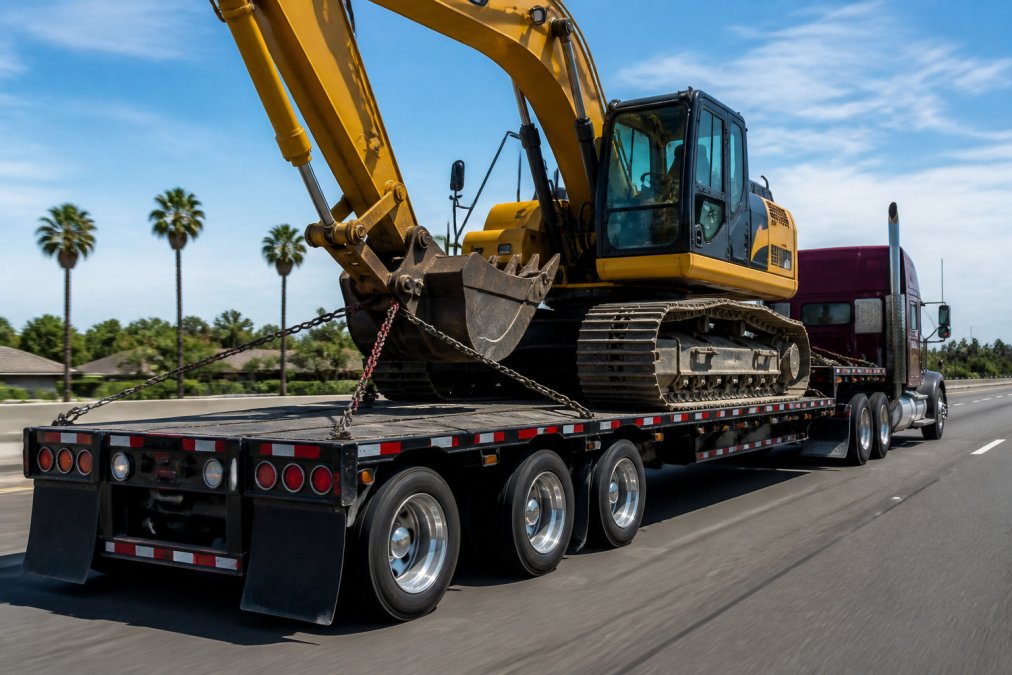
1. Fast Towing San Diego: 24/7 Local Heavy-Duty Response
For heavy equipment transport in San Diego, Fast Towing San Diego offers a strong option. When a machine breaks down on a job site or a project timeline collapses due to a transport failure, you need a responder who arrives now, not one who schedules a pickup for next week. Our team operates 24/7/365 with professionally trained drivers who handle boats, trailers, exotic cars, and heavy machinery with equal care.
What separates Fast Towing San Diego from pure logistics brokers is the breadth of support. If your equipment is involved in an accident, we don’t just drop the load at a yard; we connect you with trusted repair shops and can provide mobile mechanic services on site. We also extend discounts to First Responders, Military personnel, and fleet accounts, which matters for government and city agencies managing multiple vehicles.
For emergency heavy equipment recovery or time-sensitive local moves, Fast Towing San Diego’s 24/7 availability and fast response times make it a reliable choice in the county.
The one limitation to note: we are not exclusively a long-distance heavy haul carrier. For cross-country oversize moves, you may need to pair our local response with one of the national specialists below.
2. Heavy Haulers: Specialists in Oversize Permits
Heavy Haulers earns its place on this list for one specific reason: complex oversize permit navigation. If your equipment exceeds standard legal dimensions, the permit process in California can stall a shipment for weeks. Heavy Haulers focuses on industrial clients moving shipping containers and oversize machinery, and their expertise lies in managing the regulatory paperwork that smaller operators often miss.
The tradeoff is accessibility. Heavy Haulers requires you to contact them for pricing, and there is no instant online quote tool. That friction is acceptable when you’re shipping a $500,000 piece of industrial equipment and the permit requirements are intricate, but it makes them less suitable for quick local moves.
When requesting a quote from any heavy haul provider, ask specifically whether they handle California oversize permit acquisition in-house. Brokers who outsource this step often add days to your transit time.
3. RD Reed Heavy Hauling: Regional Flatbed Network
For construction and industrial firms that move heavy equipment regularly between San Diego and other Western states, RD Reed Heavy Hauling offers an established regional infrastructure. Their flatbed transportation services and heavy haul management are backed by a terminal network that includes both San Diego and Fontana, which shortens transit times for loads moving within the region.
RD Reed’s strength is consistency. They specialize in heavy haul logistics rather than general towing, so their drivers and equipment are configured specifically for dimensional loads and axle weight considerations. The limitation is route flexibility: they operate on specific regional routes, so if your equipment needs to travel outside their network, you’ll need a different provider.
4. uShip: Compare Bids for the Best Freight Rate
uShip flips the heavy equipment transport model on its head. Instead of contacting a single carrier, you post your load details and let a network of verified transporters bid on the job. According to uShip’s San Diego heavy equipment transport marketplace, average rates for heavy equipment shipping run between $2 and $4 per mile, which gives you a baseline for evaluating other quotes.
The marketplace model shines when you have time to shop around. You can compare verified carrier profiles, read customer reviews, and select the bid that fits your budget. The downside is variance: service quality depends entirely on the individual carrier you select, so you trade the consistency of a single provider for potential cost savings.
When using a bidding marketplace, verify each carrier’s cargo insurance coverage before accepting a bid. The lowest price often correlates with thinner insurance limits, which is a risky trade for expensive machinery.
5. A-1 Auto Transport: BBB-Accredited Nationwide Hauling
A-1 Auto Transport brings the credibility of a long-standing operation, having provided heavy equipment hauling services since 1989. Their BBB accreditation and 24/7 customer support make them a safe choice for customers who prioritize established processes over local presence. They manage permits and escort vehicles for oversize loads as part of their standard service offering.
Pricing from A-1 Auto Transport fluctuates between $2.00 and $5.50 per mile depending on load size and permit complexity, per A-1 Auto Transport’s San Diego heavy equipment shipping page. That range reflects the reality of heavy haul pricing: oversize loads requiring pilot cars and special routing cost significantly more than standard dimensional freight.
6. Logi Transports: Secure Local Machinery Moving
Logi Transports focuses on what they call secure heavy machinery transport, with an emphasis on efficient route planning and specialized equipment for heavy loads. For businesses moving construction equipment between local San Diego job sites, their protocols prioritize load securement and damage prevention over raw speed.
What’s less clear from their public information is their nationwide reach. Logi Transports appears optimized for regional and local moves, which makes them a solid option for routine machinery transport but a less certain choice for interstate hauling. Request a detailed scope of their service area when you contact them for a quote.
7. Transition Towing: Local Heavy-Duty Towing Experts
Transition Towing rounds out this list as a locally owned and operated service with heavy-duty towing capabilities. Their responsive local dispatch makes them a practical choice for moving heavy equipment short distances or recovering vehicles that have broken down. The personalized customer service that comes with a small local operation is a genuine advantage when you need a flexible partner.
The limitation is scope. Transition Towing is primarily a towing-focused business rather than a long-haul logistics provider, so their equipment and processes are oriented toward recovery and local moves. For simple, short-distance heavy equipment transport, they are worth contacting; for complex oversize loads, the specialists earlier in this list are better equipped.
How to Prepare Heavy Equipment for Transport
Before any heavy equipment transport service arrives, the condition of your machinery determines whether the move goes smoothly or stalls at the first inspection point. Proper preparation also reduces your liability if damage occurs during transit.
A common mistake is skipping basic maintenance before loading. Check for fluid leaks, which can create safety hazards and violate transport regulations, and secure or remove loose attachments like buckets and booms. Document the equipment’s condition with dated photos before the hauler arrives; this protects you if you need to file a cargo insurance claim later.
- Drain or secure all hydraulic equipment and fuel systems per carrier requirements
- Retract and lock any extendable arms, booms, or blades
- Disconnect batteries on electronic equipment to prevent drain during transit
- Measure the equipment’s height, width, length, and weight for permit calculation
- Clear the loading area of obstacles to give the flatbed or lowboy room to maneuver
Oversized Load Transport Requirements
Understanding oversized load transport requirements is essential because they determine whether your shipment requires special permits, escort vehicles, or route restrictions. In California, any load exceeding legal width, height, or length limits falls under oversize regulations enforced by the state’s Department of Transportation. The California Department of Transportation oversize permit guidelines outline specific dimension thresholds and permit application procedures.
For loads that exceed standard limits, you will typically need a pilot car or escort vehicle to warn other drivers and guide the transport. Axle weight is another critical factor: exceeding legal axle weight limits can damage roadways and result in fines. The transport provider should handle permit acquisition and escort coordination, but you should confirm this is included in your quote rather than assumed.
Never assume your load qualifies as standard freight. Confirming oversize status before booking prevents permit delays and unexpected escort vehicle costs.
How to Request a Shipping Quote
Requesting a shipping quote for heavy equipment transport requires more detail than a standard towing estimate. Providers need accurate specifications to calculate the correct trailer type, permit requirements, and transit time. The more precise your information, the more accurate your quote will be.
When contacting providers like Heavy Haulers or RD Reed, prepare the following: the equipment’s make, model, and year; its exact dimensions including height with any attachments; its weight; and the pickup and delivery addresses. For door-to-door delivery, confirm whether the destination has adequate clearance for a lowboy trailer and whether a crane or loading dock is available at both ends.
FMCSA cargo insurance and broker regulations require freight brokers to maintain specific insurance levels, so verify that any provider you book through holds valid coverage. This is especially important when using a marketplace like uShip, where the broker and the actual carrier are different entities.
Which Heavy Equipment Transport Service Should You Choose?
The right choice depends entirely on your situation. For emergency recovery, local moves, or time-sensitive projects, Fast Towing San Diego’s 24/7 availability and fast response times make it a strong option. For complex oversize loads requiring extensive permits and escort vehicles, Heavy Haulers or A-1 Auto Transport offer the specialized expertise you need.
Weigh the tradeoffs: local providers offer faster response and more personalized service, while national specialists bring deeper permit experience but less flexibility. Whichever you choose, prepare your equipment thoroughly and confirm insurance coverage before the trailer arrives.
Moving heavy equipment in San Diego doesn’t have to be a gamble, but it does require matching the right provider to your specific load. Whether you need emergency recovery of a broken-down machine or a scheduled local move, Fast Towing San Diego combines 24/7 availability, professionally trained drivers, and over 100 years of combined experience to get your equipment where it needs to be. Get started with Fast Towing San Diego and secure a reliable partner for your next heavy equipment transport.
Frequently Asked Questions
How much does it cost to transport heavy equipment in San Diego?
Pricing depends on the equipment size, weight, distance, and required permits. For a heavy equipment shipping cost estimate, you need a detailed quote. Marketplace options like uShip show average rates around $2 to $4 per mile, while full-service haulers often quote $2.00 to $5.50 per mile. Local towing companies may offer service-based pricing. Contact each provider directly for an accurate figure based on your specific load and route.
What are the oversized load transport requirements in California?
Oversized loads in California require a special permit from the Department of Transportation (Caltrans). You must provide exact dimensions and axle weight for the hauling company to secure the permit. Depending on the load’s width and length, escort vehicles (pilot cars) may be mandatory. The transport company typically handles this process. Always verify your chosen provider manages permit acquisition and compliance for routes through San Diego County.
How do I prepare heavy machinery for long-distance transport?
Start by cleaning the equipment to remove loose debris and mud, which can hide damage and add weight. Inspect for fluid leaks and fix them before shipping. Lower any adjustable arms or buckets to reduce height and improve stability. Disconnect batteries and secure all loose parts. Finally, document the machine’s condition with dated photos to have a record before the carrier arrives for loading.
What is the difference between flatbed and lowboy transport?
A flatbed trailer is a standard open trailer with no sides, suitable for equipment under 10 feet tall. A lowboy trailer has a dropped deck between the front and rear axles, allowing it to carry taller machinery like excavators while staying within legal height limits. Your choice depends on the height of your equipment. A lowboy is required for most construction machinery to avoid exceeding oversize load requirements.
How do I choose the right heavy equipment shipping company?
Start with your equipment type and route. For emergency local breakdowns or moves needing a fast response, a local towing company with heavy-duty capabilities is best. For interstate hauling or complex oversize loads, choose a logistics provider specializing in permits. Compare quotes, verify insurance coverage, and read recent customer reviews. Confirm they have the correct trailer type for your machinery’s dimensions.