
Table of Contents
- What to Expect: Emergency Towing Response Time Expectations 2026
- Factors Affecting Tow Truck Arrival Times
- Urban vs. Rural Response Time Variations
- How Tow Truck Dispatch Systems Work
- How to Choose a Towing Service for Faster Response
- Roadside Assistance Response Time vs. Independent Towing
- Safety During the Wait: What to Do Before Help Arrives
- Consumer Rights When Towing Service Response Is Delayed
- Frequently Asked Questions
Emergency Towing Response Time Expectations 2026
Last Updated: August 2, 2026
Understanding emergency towing response time expectations 2026 is critical as dispatch technology evolves across American roadways. Response times aren’t arbitrary, they’re shaped by urban density, traffic conditions, weather, incident severity, and dispatch sophistication. This guide explains realistic emergency towing response time expectations 2026, the factors that influence arrival windows, and how to choose a service that delivers when you need it most.
What to Expect: Emergency Towing Response Time Expectations 2026
Modern dispatch systems use real-time tracking, GPS optimization, and predictive routing to reduce arrival windows. In urban areas with high dispatch density, professional towing services target arrival times between 15 and 30 minutes under normal traffic conditions. Rural areas typically see response times between 45 minutes and 90 minutes due to greater distances between dispatch centers and incident locations. Industry standards consider 30 minutes or less a “golden response time” for metropolitan regions.
The most reliable services acknowledge that response times vary by location, traffic, and time of day, then provide honest estimates based on current dispatch status.
When calling for roadside assistance, ask the dispatcher for an estimated time of arrival (ETA) and a callback number to confirm the driver’s location. Reputable services provide this information upfront rather than offering vague estimates.
Factors Affecting Tow Truck Arrival Times
Urban density and dispatch efficiency
Urban density directly correlates with response speed. In densely populated areas, towing services can position multiple units strategically to cover high-incident zones. Dispatch efficiency depends on technology infrastructure, modern dispatch centers use real-time GPS tracking of all active units, allowing dispatchers to route the nearest available truck in seconds. The density of competing incidents also matters; a service with adequate fleet size handles simultaneous breakdowns without significant delays.
Traffic congestion and unforeseen conditions
Traffic congestion is the single largest variable affecting tow truck arrival times. A 10-mile trip that normally takes 12 minutes might take 35 minutes during rush hour or a freeway accident. Real-time traffic data helps mitigate this, but no system predicts every disruption. Weather amplifies both the frequency of breakdowns and the difficulty of response, as heavy rain, snow, or ice increase accident rates while making roads harder to navigate.
Weather and incident severity
Heavy precipitation correlates with a spike in towing requests. Incident severity determines how long a tow truck remains on-scene, a simple lockout takes 5 minutes; a vehicle recovery from a ditch takes 20-30 minutes. Professional drivers prioritize safety over speed, as rushing in hazardous conditions causes accidents that create more towing requests.
Never assume your incident will be resolved quickly. Accident towing, especially those involving injuries or multiple vehicles, requires careful documentation and coordination with law enforcement. Budget 45-60 minutes minimum from initial call to vehicle transport beginning.
Urban vs. Rural Response Time Variations
In urban centers, dispatch density creates natural advantages. A service operating in a city might have 8-12 units within a 5-mile radius, allowing response times of 12-20 minutes under normal conditions. The same service in rural areas might have 2-3 units covering 50+ square miles, pushing response times to 60-90 minutes or longer. Rural response latency isn’t a service failure, it’s a mathematical reality. Rural residents should establish a relationship with a service known for rural coverage before an emergency occurs.
How Tow Truck Dispatch Systems Work
Real-time tracking and arrival window accuracy
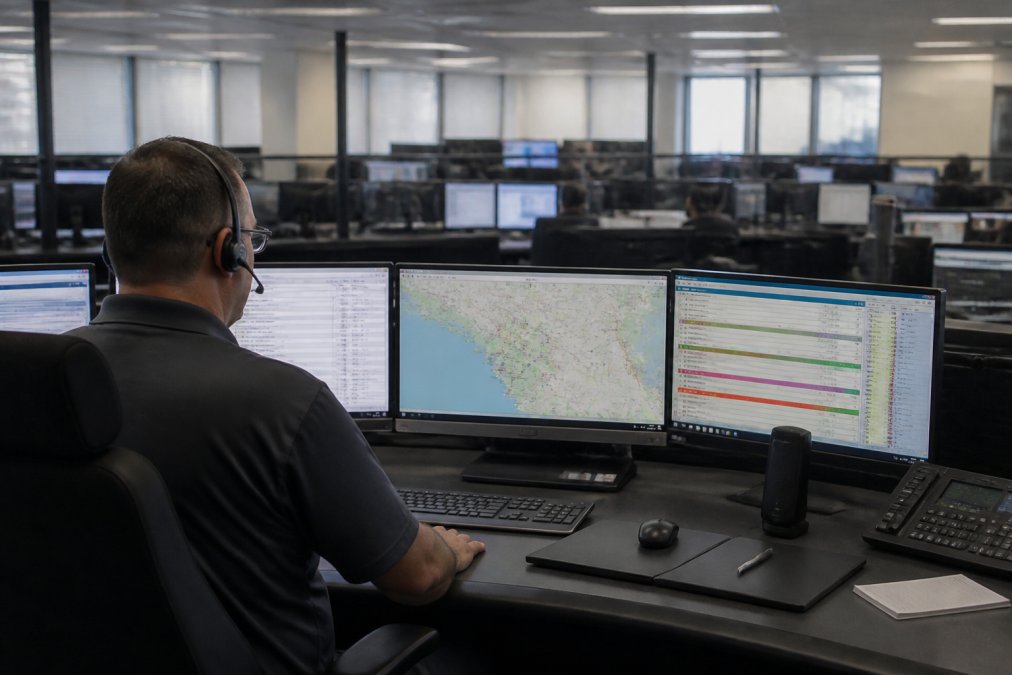
Real-time tracking uses GPS to monitor every active tow truck’s location simultaneously. When a call comes in, the dispatcher sees a map with all available units and their current positions. The system automatically calculates distances and estimated arrival times for each unit, allowing assignment to the truck with the shortest ETA. This technology dramatically improves accuracy compared to manual dispatch, reducing response times by 10-15% on average.
Technology-driven ETA improvements
Predictive routing algorithms learn from historical data to anticipate traffic patterns and suggest optimal routes. Machine learning models can forecast incident frequency based on weather, time of day, and location, allowing services to pre-position units before demand spikes. However, technology has limits, no system predicts every traffic incident or accident. The human element remains critical; a dispatcher who recognizes unusual traffic patterns and adjusts assignments dynamically outperforms a system that simply routes the nearest available unit.
How to Choose a Towing Service for Faster Response
Service level agreements and operational standards
A service level agreement (SLA) is a written commitment specifying response time targets and service quality standards. An SLA might state: “We commit to dispatching a unit within 5 minutes of your call and arriving within 30 minutes in urban areas under normal traffic conditions.” These qualifiers acknowledge reality, a service guaranteeing 15-minute response times everywhere is either lying or operating with unrealistic assumptions.
Operational standards include driver training, equipment maintenance, safety protocols, and quality control processes. Services meeting professional certification standards demonstrate commitment to consistent, reliable service. Pricing transparency matters for trust.
The best towing service is the one you’ve already vetted before an emergency. Call three services during business hours, ask about response times, SLAs, and service areas. Save the contact information of the service you choose.
Professional certification and dispatch center capability
Professional certification indicates that a towing service has met industry standards for training, equipment, and operational procedures. Ask potential services: What technology platform do you use for dispatch and GPS tracking? How many dispatchers staff your center during peak hours? What’s your average response time in urban areas during normal conditions? Do you maintain service level agreements, and what are your specific targets?
Roadside Assistance Response Time vs. Independent Towing
Roadside assistance programs maintain networks of contracted tow truck operators. Response times depend on network density in your area. The advantage is coordination and accountability; the disadvantage is that you don’t control which specific tow truck operator responds.
Independent towing companies operate their own dispatch centers and respond directly to your call. This direct relationship can result in faster response times because there’s no intermediary. The trade-off is that independent services must maintain their own dispatch infrastructure and fleet capacity.
Safety During the Wait: What to Do Before Help Arrives
Move over law compliance and roadway safety
The Move Over Law, enacted across all 50 states, requires drivers to change lanes away from stationary emergency vehicles when safe to do so. When your vehicle breaks down on a freeway or highway, activate your hazard lights immediately. If safe to do so, move your vehicle out of traffic lanes. If you can’t move safely, stay inside with the engine off and doors locked.
Protecting yourself and your vehicle
When the tow truck arrives, verify that the driver is from the service you called. Ask for identification and confirm the company name. Before the tow truck operator hooks up your vehicle, discuss the destination and confirm any additional charges.
Document the condition of your vehicle with photos before towing begins. This protects you if the towing process causes additional damage. Ask about the driver’s insurance coverage. Keep your vehicle’s keys with you, not with the tow truck driver.
Consumer Rights When Towing Service Response Is Delayed
Document the incident thoroughly. Note the exact time you called, the promised response time, and the actual arrival time. Save all communications, text messages, email confirmations, and call records.
If response time was unreasonably delayed without legitimate cause, contact the service’s management. A professional service will acknowledge the failure and may offer compensation or service credits. If the service refuses to acknowledge poor performance, file a complaint with your state’s consumer protection agency or the Better Business Bureau.
Understand that legitimate delays caused by traffic, weather, or incident severity don’t constitute service failures. A service that promises 30-minute response times in normal conditions isn’t at fault if a freeway accident creates 60-minute delays.
When an emergency strikes and your vehicle breaks down, the quality of your towing service becomes your immediate priority. Fast Towing San Diego delivers the reliability you need when minutes matter most, with real-time GPS dispatch that gets professionally trained drivers to your location quickly. Our team combines over 100 years of combined experience with modern dispatch technology to meet emergency towing response time expectations 2026 with consistent, transparent service. Whether you need accident towing, freeway assistance, or specialized transport for motorcycles and exotic vehicles, we’re available 24/7/365. Contact Fast Towing San Diego today and join thousands of San Diego residents who trust us when emergencies happen.
| Response Time Factor | Urban Areas | Rural Areas | Key Variables |
|---|---|---|---|
| Typical response window | 15-30 minutes | 45-90 minutes | Dispatch density, distance to units |
| Traffic impact | High (30-50% delay) | Low (10-20% delay) | Congestion levels, alternate routes |
| Weather impact | Moderate (15-25% delay) | Significant (25-40% delay) | Visibility, road conditions, accident frequency |
| Peak hour delays | 20-40 minutes | 60-120 minutes | Call volume, available units, incident severity |
| Technology advantage | 10-15% improvement | 5-10% improvement | GPS tracking, real-time routing, predictive dispatch |
Understanding emergency towing response time expectations 2026 means recognizing that response times aren’t fixed, they’re influenced by geography, traffic, weather, incident severity, and dispatch sophistication. The most reliable services acknowledge these variables, publish honest estimates, and maintain operational standards that deliver consistent performance. By choosing a service before an emergency occurs and understanding the factors affecting response times, you can set realistic expectations and receive better service when you need it most.
According to National Highway Traffic Safety Administration guidance on roadside safety, proper positioning of vehicles and use of warning lights reduces secondary accident risk by up to 40%.
Research from American Automobile Association incident response data shows that urban towing services with real-time GPS dispatch reduce average response times by 12-18% compared to services using traditional radio-based dispatch.
The Federal Motor Carrier Safety Administration regulations on towing operations establish standards for driver training, vehicle maintenance, and operational procedures that professional towing services must follow.
Frequently Asked Questions
What is the typical emergency towing response time in urban areas?
Emergency towing response time in urban areas typically ranges from 15 to 45 minutes, depending on traffic, dispatch efficiency, and the towing company’s fleet size. Factors like proximity to the incident, current dispatch load, and operational standards affect the actual arrival window. Companies with real-time tracking and modern dispatch systems often achieve faster response times. Always confirm estimated arrival when you call, as conditions vary by location and time of day.
How do traffic and weather impact tow truck arrival times?
Traffic congestion can significantly extend response times, particularly during peak hours or accidents that block roadways. Heavy rain, snow, or fog slows tow truck movement and may complicate recovery operations. Weather also affects vehicle conditions, which can require specialized equipment or additional time on-site. Dispatch centers adjust estimated time of arrival based on current traffic flow and weather reports. Severe weather may cause delays of 30 minutes to several hours depending on incident complexity.
What should I provide to a towing company for faster response?
When calling for help, provide your exact location (address, mile marker, or intersection), the type of vehicle and its condition, whether occupants are safe, and any hazardous materials involved. Clear communication helps dispatch centers prioritize your request and assign the right equipment. Mention if you’re on a highway or in a remote area, as this affects dispatch routing. Have your vehicle registration and insurance information ready. The more details you share upfront, the more accurately the dispatch center can estimate arrival time and prepare the appropriate response.
Are roadside assistance programs faster than independent towing companies?
Response times vary between roadside assistance programs and independent towing companies. Roadside assistance programs often have service level agreements guaranteeing response within specific timeframes, but they may contract with local tow operators, which can add delays. Independent towing companies with strong dispatch systems and local fleet presence may respond faster in some areas. The key difference is accountability: roadside assistance programs typically offer guaranteed response windows and coverage across wider regions, while independent operators may excel in specific localities. Compare service level agreements and read customer reviews for your area to determine which option suits your needs.
What are my rights if a towing company doesn’t arrive within the promised timeframe?
Your rights depend on the service agreement and whether you purchased a service level agreement with specific response guarantees. If a company promises arrival within a certain window and fails without valid cause, you may be entitled to a service credit or refund. Document the time you called, the promised arrival window, and the actual arrival time. Check your insurance policy or roadside assistance contract for specific remedies. Some programs allow you to request another service provider if the first doesn’t arrive within the guaranteed window. Always review terms before purchasing and keep records of service requests for disputes.