
Table of Contents
- What Fast Towing Services Include
- 24/7 Emergency Towing and Roadside Assistance
- How to Choose a Reliable Towing Company
- Understanding Average Cost of Towing in San Diego
- What Happens After Your Vehicle Is Towed
- Safety Tips for Stranded Drivers
- Frequently Asked Questions
Last Updated: September 21, 2026
What Fast Towing Services Include
Fast towing services are the professional response when your vehicle breaks down, gets into an accident, or needs transport. These services go far beyond simply hooking up your car and driving off. They encompass emergency dispatch, roadside assistance, vehicle recovery, and the logistics of getting your car safely to a repair facility or destination.
When you call for fast towing services, you’re accessing a coordinated system. A dispatcher answers immediately, assesses your situation, and dispatches the nearest available unit. The tow operator arrives with specialized equipment, secures your vehicle using the appropriate method for its type and condition, and transports it safely. This is where professional expertise matters most.
The scope includes flatbed towing for luxury or damaged vehicles, wheel-lift towing for standard cars, and specialized handling for motorcycles, boats, and exotic vehicles. Many services also offer roadside assistance like jump starts, tire changes, lockout services, and fuel delivery. Fast Towing San Diego operates 24/7/365, meaning you can access these services at 3 AM on a holiday just as easily as on a Tuesday afternoon.
When calling a towing service, have your vehicle location ready and describe any damage or concerns. This helps the dispatcher send the right equipment and gives the operator context before arrival.
24/7 Emergency Towing and Roadside Assistance
Emergency towing is available around the clock because vehicle emergencies don’t follow business hours. Whether you’re stranded on the freeway at midnight or your car won’t start in a parking lot on Sunday, a professional towing company should answer your call immediately.
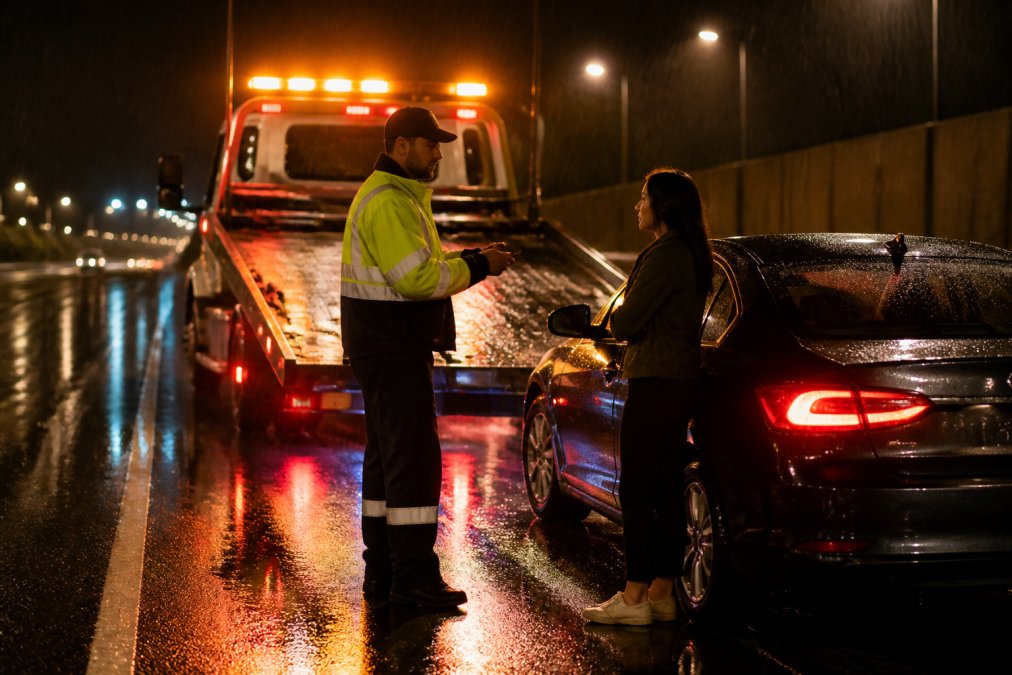
The response time is critical. When you’re stuck on the side of the road, every minute matters for your safety and peace of mind. Fast Towing San Diego operates a dedicated emergency dispatch center that receives calls directly and sends the nearest available unit. This direct dispatch model eliminates delays that come from call centers routing requests through multiple systems.
Accident Recovery and Vehicle Transport
Accidents create unique towing challenges. Your vehicle may have damage that prevents it from being driven, debris may scatter across lanes, and you’re likely dealing with police reports and insurance claims simultaneously. Professional accident recovery teams understand these complexities.
Accident recovery involves more than just towing. It includes documenting the vehicle’s condition, safely clearing debris from the roadway, coordinating with law enforcement if needed, and providing referrals to repair shops. The tow operator’s job is to secure the scene, protect your vehicle from further damage during transport, and help you understand next steps. After an accident, you shouldn’t have to figure out repair shops and body work alone. Fast Towing San Diego connects customers with trusted repair facilities, removing one more burden from an already stressful situation.
Specialized Vehicle Handling
Not all vehicles tow the same way. A vintage motorcycle requires different equipment than a modern sedan. Exotic cars, boats, and trailers each have specific requirements that separate competent operators from those who cause damage during transport.
Specialized vehicle towing demands knowledge of weight distribution, suspension sensitivity, and proper securing techniques. A motorcycle needs a different tie-down approach than a four-wheeled vehicle. Luxury and exotic cars often have low ground clearance that rules out standard wheel-lift towing. Boats require flatbed transport with proper weight distribution to prevent hull damage. Operators who handle specialized vehicles have trained extensively on the equipment and techniques required.
How to Choose a Reliable Towing Company
Choosing a towing company before you need one prevents poor decisions made in an emergency. When you’re stranded, you’re vulnerable to overcharging, slow response times, and operators who lack proper training. A few key criteria separate reliable operators from problematic ones.
Licensing, Insurance, and Credentials
A legitimate towing company carries proper licensing and insurance. This isn’t optional or negotiable. Licensed operators have met regulatory requirements and carry liability coverage that protects you if something goes wrong during transport.
Ask any potential towing company for proof of licensing and current insurance. In most states, towing operators must be licensed through the Department of Motor Vehicles or equivalent regulatory body. Insurance should cover both the tow vehicle and liability for damage to customer vehicles. If a company hesitates to provide this information, move on immediately.
Professional training matters too. Operators should have completed formal towing training that covers equipment operation, vehicle securing techniques, and safety protocols. Fast Towing San Diego’s team brings over 100 years of combined experience, which translates to professionally trained drivers who know how to handle almost any situation.
Response Time and Availability
Response time is where promises often fall short. A company that claims 15-minute response times but regularly takes 45 minutes has a credibility problem. When you’re stranded, slow response means extended time on the roadside, increased safety risk, and growing frustration.
The best indicator of realistic response times is a company’s service area and fleet size. A small operation covering a huge geographic area will have longer response times than a well-resourced company with multiple units strategically positioned. Fast Towing San Diego maintains a fleet sized to serve the entire region.
Availability matters equally. A company that closes at 6 PM isn’t available when most breakdowns happen. Twenty-four-hour availability means you can call at 2 AM and reach a real person who dispatches help immediately, not an answering machine promising a callback in the morning.
Fleet Capability and Equipment
A company’s equipment determines what it can actually handle. A single flatbed truck limits your options. A diverse fleet with flatbeds, wheel-lift units, and specialized equipment means the right truck arrives for your specific situation.
Ask about fleet composition. Can they handle exotic vehicles, motorcycles, and boats? Do they have flatbed capacity for long-distance transport? Can they perform roadside assistance like jump starts and tire changes, or do they only tow? A company with comprehensive equipment and capabilities serves more situations effectively.
Understanding Average Cost of Towing in San Diego
Towing costs vary widely based on distance, vehicle type, time of day, and service complexity. There’s no single “average” because your specific situation determines the price. However, understanding what factors affect your bill helps you make informed decisions and recognize fair pricing.
Factors That Affect Your Towing Bill
Distance is the primary cost driver. A short-distance local tow costs less than a 50-mile transport. Most towing services charge a base fee plus a per-mile rate, so longer distances accumulate costs quickly. Specialized towing for exotic vehicles or motorcycles typically costs more than standard car towing because it requires different equipment and expertise.
Time of day affects pricing.
Getting a Quote Before Service
Never assume pricing. Call and describe your situation: your vehicle type, your location, your destination, and what happened. A professional operator provides a quote based on actual details, not guesses. If a company refuses to quote before service or provides only a vague range, that’s a warning sign.
Avoid companies that won’t quote over the phone or that quote significantly lower than competitors, this often signals hidden fees or poor service quality that you’ll discover after they’ve already picked up your car.
What Happens After Your Vehicle Is Towed
After your vehicle is towed, you enter the next phase of the process. Understanding what happens helps you plan your next steps and stay informed about your vehicle’s status.
Safety Tips for Stranded Drivers
Being stranded on the roadside creates safety risks beyond the mechanical problem. Taking proper precautions protects you while you wait for help.
The most important safety action is calling for professional help immediately rather than attempting roadside repairs in traffic. Your safety matters more than avoiding a towing charge.
| Service Type | When You Need It | What to Expect |
|---|---|---|
| Emergency Towing | Vehicle won’t start or is disabled | Immediate dispatch, professional transport |
| Accident Recovery | Vehicle involved in collision | Scene documentation, repair shop referrals |
| Roadside Assistance | Jump start, tire change, lockout | On-site service without full tow |
| Specialized Transport | Motorcycle, boat, exotic vehicle | Equipment-specific handling and expertise |
| Long-Distance Towing | Transport to distant repair facility | Flatbed transport with secure securing |
Frequently Asked Questions
How fast can a towing service actually arrive after I call?
Response times vary based on current demand and your location, but professional fast towing services in the area aim for quick dispatch and arrival. Factors affecting speed include traffic conditions, time of day, and proximity to available units. When you call, ask the dispatcher for an estimated arrival time. Services with multiple vehicles stationed throughout the county typically respond faster than those operating from a single location. Always provide your exact location and vehicle description to help dispatchers send the nearest available unit.
What should I look for when choosing a reliable towing company?
Verify the company is licensed and insured, which protects you if damage occurs during transport. Check that they operate 24/7 if you need round-the-clock availability. Ask about their experience with your vehicle type, especially if you drive a motorcycle, exotic car, or specialty vehicle. Confirm they have the right equipment for your needs, whether that’s flatbed towing, wheel-lift service, or winch-out capability. Ask if they offer roadside assistance beyond towing, such as jump starts and tire changes.
Does insurance typically cover emergency towing services?
Many comprehensive auto insurance policies include towing coverage, but limits and conditions vary. Check your policy documents or call your insurer to confirm what’s covered and any mileage limits. Some policies cover only towing to the nearest repair facility, while others allow you to choose your destination. If you don’t have towing coverage through insurance, roadside assistance memberships like AAA offer towing benefits. Always ask the towing company if they accept your insurance before service begins to avoid unexpected out-of-pocket costs.
What’s the average cost of towing in San Diego, and how is pricing determined?
Towing costs depend on several factors including distance traveled, time of day, vehicle type, and complexity of the job. Basic local towing typically costs more during nights and weekends. Long-distance towing charges by the mile. Specialty services like winch-outs for vehicles stuck off-road or flatbed transport for exotic vehicles cost more than standard wheel-lift towing. Rather than guessing, call your towing provider for a quote based on your specific situation. Many reputable companies provide transparent pricing before dispatch, so you know the cost upfront.