
Table of Contents
- Quick Comparison: Best Fleet Towing Accounts in San Diego
- What San Diego Fleet Managers Should Look for in a Towing Partner
- 1. Fast Towing San Diego: Best Overall for Fleet Accounts
- 2. Angelo’s Towing: Best for Heavy-Duty Recovery
- 3. All Roadside Towing: Best for Auto Shops and Delivery Fleets
- 4. Star Towing: Best for Multi-Location Coverage
- 5. Western Towing: Best for Professional Presentation
- Commercial Vehicle Roadside Assistance: What’s Included
- Frequently Asked Questions
Last Updated: September 12, 2026
Quick Comparison: Best Fleet Towing Accounts in San Diego
Fleet managers in San Diego need a towing partner who answers at 2 AM, bills cleanly against a corporate account, and can move anything from a sedan to a box truck. This guide from Fast Towing San Diego outlines what to look for in a towing partner across response capability, billing structure, and vehicle range.
Quick Picks:
- Best Overall: Fast Towing San Diego, 24/7/365 coverage, fleet account discounts, and 100+ years of combined experience
| Provider | Best For | Fleet Billing | Availability |
|---|---|---|---|
| Fast Towing San Diego | Overall fleet accounts | Account-based, fleet discounts | 24/7/365 |
| Angelo’s Towing | Heavy-duty recovery | Contact for terms | 24/7 |
| All Roadside Towing | Auto shops, delivery fleets | Corporate account contract | 24/7 |
| Star Towing | Multi-location coverage | Contact for terms | 24/7 |
| Western Towing | Professional presentation | Contact for terms | 24/7 |
What San Diego Fleet Managers Should Look for in a Towing Partner
Fleet towing is the contracted provision of towing, recovery, and roadside assistance to a business operating multiple vehicles, usually under negotiated account terms rather than per-call payment. The right partner reduces downtime, not just tow bills. Because most local providers publish only a phone number and a service list, the fleet manager must interrogate the contract before signing.
Response time, in writing
Ask what priority dispatch actually means and get it documented. A contracted account should move ahead of retail callers, and the contract should state a target response window by zone rather than one county-wide number. A provider quoting one flat ETA for the whole service area is either overpromising or padding. Request the escalation path too: a named dispatch contact, a backup number, and a defined chain of command.
Billing structure and contract terms
Per-incident invoicing gets messy fast once you run more than a handful of vehicles. Look for monthly consolidated billing tied to a corporate account, with a single statement itemizing each call by unit number, date, location, service performed, and driver. Net-30 is the common baseline; net-45 or net-60 sometimes appear for high-volume municipal and government fleets (gfoa.org). Confirm in writing:
- Whether the account carries a monthly minimum or a per-call minimum
- How after-hours, weekend, and holiday calls are rated
- Whether fuel surcharges, winch fees, and second-unit charges are flat or variable
- The dispute window for challenging a line item before it is due
- Whether the rate card is locked for the contract term or subject to adjustment
A provider that will not put the rate card in the contract is asking you to trust a verbal quote across a budget cycle.
Compliance and insurance documentation
This is where a lot of fleet managers get burned. Before the first tow, request a certificate of insurance naming your company as an additional insured, and confirm the liability limits meet your risk-management threshold. Ask whether the provider carries cargo coverage and on-hook coverage, since damage in transit is a different claim than damage at the scene. For regulated fleets, hazmat, passenger transport, municipal, confirm the provider can produce incident reports, driver logs, and photographic documentation on request. Keep a current COI on file and calendar the renewal date.
Vehicle range and equipment
A fleet rarely runs one vehicle type. Confirm the provider handles light-duty towing, medium-duty trucks, and heavy-duty recovery under one contract, and ask about wheel-lift versus flatbed for the units you operate. All-wheel-drive and low-clearance vehicles generally require a flatbed, and electric vehicles add constraints around lift points and transport (aaa.com). If your fleet includes box trucks, buses, or equipment trailers, verify wrecker capacity and whether the largest recoveries are subcontracted.
Preventative maintenance integration
A towing partner that only shows up after a breakdown leaves value on the table. Ask whether the provider will coordinate with your maintenance schedule, moving a unit to a shop during a low-demand window, or flagging repeat failures on the same vehicle so your team can investigate. Some fleet accounts route all shop transfers through the towing provider, consolidating scheduling and removing a layer of dispatch overhead.
Driver safety and communication protocols
For corporate risk management, how the provider protects your driver matters as much as how fast the truck arrives. Ask about GPS tracking on the tow unit, whether dispatch sends ETA updates to the stranded driver, and whether the driver must stay with the vehicle or wait in a safe location. Confirm drivers are background-checked, drug-tested, and trained on traffic-incident scene safety (fmcsa.dot.gov). A provider that pushes proactive status updates to a dispatcher or fleet manager reduces the calls your team has to make.
The most common mistake fleet managers make is signing on price alone. A provider that saves a few dollars per tow but takes 90 minutes to arrive costs far more in driver downtime and missed deliveries than the invoice difference ever reflects. The second most common mistake is skipping the COI review, an uninsured tow is an uninsured loss.
Documentation and reporting
Ask for a sample monthly report before you sign. A useful fleet report shows call volume by unit, average response time by zone, service type breakdown, and repeat incidents. That data feeds your maintenance planning and risk reviews. If the provider cannot produce it, you will be reconstructing it from invoices at quarter-end.
When negotiating a fleet towing contract, ask for a named dispatch contact, a documented escalation path, and a sample invoice and monthly report. The difference between a 20-minute and 60-minute response often comes down to whether your account has a direct line or goes through a general queue, and the difference between a clean renewal and a messy one comes down to whether the paperwork was right the first time.
1. Fast Towing San Diego: Best Overall for Fleet Accounts
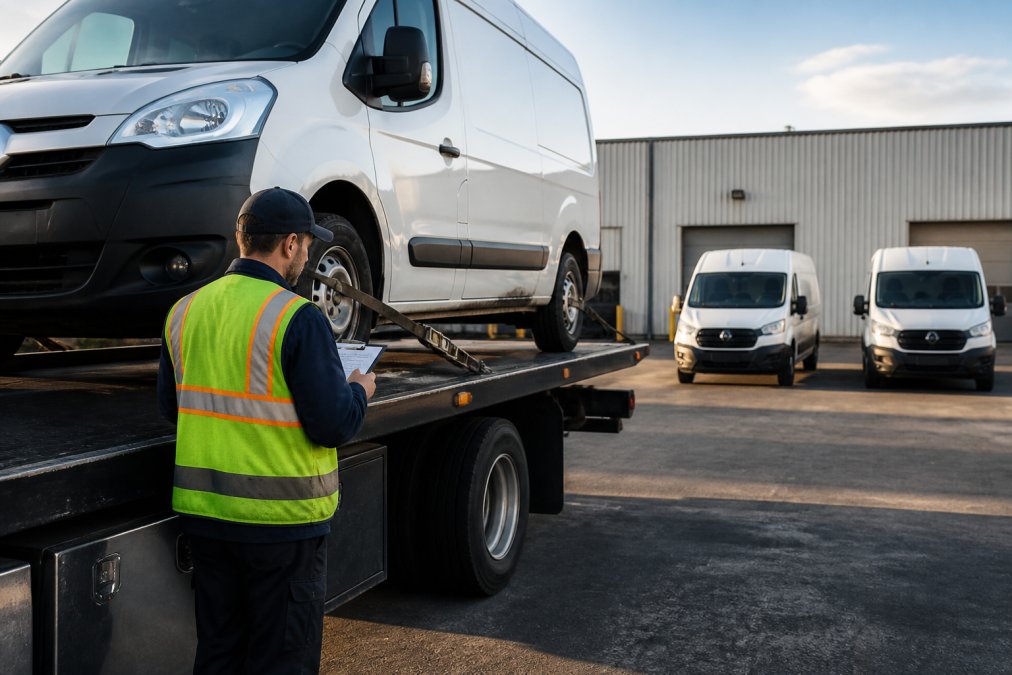
Fast Towing San Diego offers round-the-clock availability with dedicated fleet pricing and a vehicle range covering a wide variety of commercial needs. The company operates 24/7/365 with professionally trained drivers backed by over 100 years of combined experience.
Why Fast Towing Leads for Fleet Accounts
Government, city, and county agencies, as well as first responders and military personnel, receive special discounts. This can be beneficial for municipal fleets that need predictable costs across a budget cycle.
Capability is the other differentiator. Fast Towing San Diego is capable of towing a wide variety of vehicles including boats, trailers, and exotic cars. Mobile mechanic services and repair shop referrals mean a disabled vehicle doesn’t sit while a manager scrambles to find a body shop.
Customer feedback reflects the reliability claim. Miguel, a customer, noted: “I called Fast Towing and they were here in 30 minutes and did an awesome job, even in the rain!”
Fleet Billing and Contract Terms
Fleet accounts are structured around negotiated terms rather than one-off charges. Fast Towing San Diego offers fleet account discounts and consolidated billing designed for high-volume users.
When negotiating a fleet towing contract, ask for a named dispatch contact and a documented escalation path. The difference between a 20-minute and 60-minute response often comes down to whether your account has a direct line or goes through a general queue.
2. Angelo’s Towing: Best for Heavy-Duty Recovery
Angelo’s Towing earns its place for commercial fleets running semi-trucks, RVs, and other heavy equipment. The operation maintains strategically positioned heavy-duty wreckers, which shortens response windows when a large vehicle goes down.
Where it fits: construction companies, logistics operators, and any fleet with vehicles above standard GVWR thresholds. The trade-off is that heavy-duty specialization can push base rates higher for routine passenger vehicle calls, so mixed fleets should confirm light-duty pricing separately.
3. All Roadside Towing: Best for Auto Shops and Delivery Fleets
All Roadside Towing built its model around high-volume corporate accounts, making it a natural fit for collision centers, repair shops, and delivery companies that move vehicles constantly.
The company offers customized fleet pricing, priority service for account holders, and comprehensive roadside assistance for delivery vans and light trucks. One caveat: because contract holders get priority, individual callers may wait longer during peak demand. For a business with steady volume, that trade favors the account holder.
4. Star Towing: Best for Multi-Location Coverage
Star Towing answers the geographic problem. With four regional locations and more than 50 years of operation, it covers fleets operating across multiple zones without routing every call through a single yard.
The scale cuts both ways. Large fleets mean high call capacity, but account managers may find the service less personalized than a smaller operator. If your fleet runs fixed routes across the county, the coverage math usually wins.
5. Western Towing: Best for Professional Presentation
Western Towing runs modern equipment and uniformed drivers, which matters when your branded vehicles are moved in front of customers. A fleet vehicle on a clean, well-equipped flatbed reflects on your business.
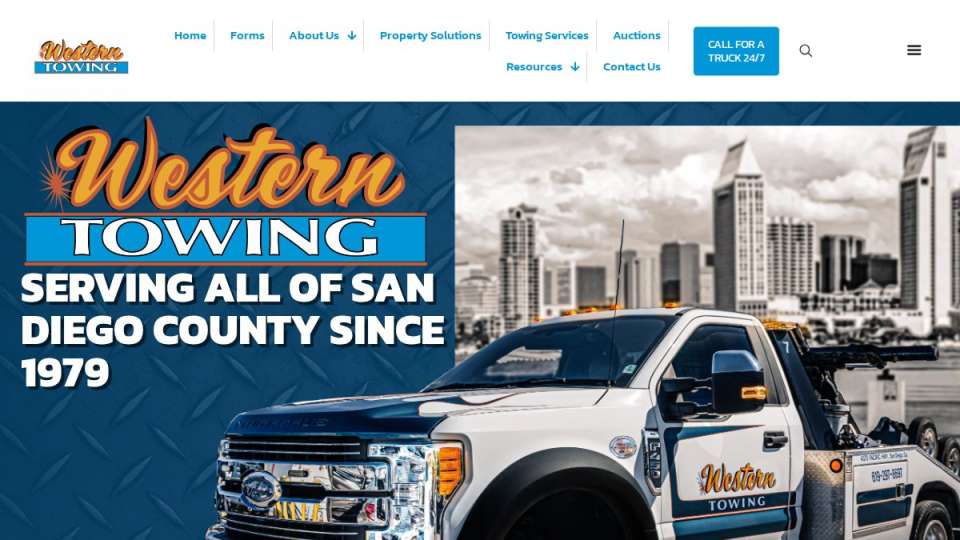
The company covers the full county and emphasizes driver standards. Pricing isn’t published, so fleet managers will need to request a quote and compare terms directly against other providers.
Commercial Vehicle Roadside Assistance: What’s Included
Commercial vehicle roadside assistance covers the same core services as consumer roadside help, scaled to fleet operations and billed through an account. What matters for a fleet manager is the scope boundary, what is included in the base call, what triggers an additional charge, and how each item lands on the monthly statement.
Core services under a fleet account
- Jump starts and battery service. Includes testing and, where the provider carries stock, replacement. Confirm whether the battery is billed at cost plus markup or a flat rate.
- Tire changes and inflation. Spare installation and inflation to spec. Roadside tire repair is a separate service and is often billed differently.
- Fuel delivery for out-of-gas vehicles. Typically a set delivery fee plus fuel at pump price. Ask whether diesel, DEF, and reefer fuel are all covered.
- Lockout assistance. Standard for light-duty. Medium- and heavy-duty lockouts may require a different technician and rate.
- Winching and vehicle recovery. Winching off a shoulder or lot is usually included; recovery from an off-road position, embankment, or water is a recovery call with its own rate structure.
- Light, medium, and heavy-duty towing. Confirm the weight classes your contract covers and whether the largest units are handled in-house or subcontracted.
- Accident towing and vehicle transport. Includes transport to a body shop or storage yard of your choosing. Storage fees, if the vehicle sits, are typically billed by the day and worth confirming up front.
- Mobile mechanic and shop transfers. Some providers will send a mechanic for on-site repair or move a unit to a shop for scheduled service. This overlaps with preventative maintenance and is worth asking about explicitly.
What usually is not included
A clear contract states the exclusions. Common ones:
- Recovery from private property without owner authorization
- Off-road, off-highway, or submerged recovery
- Hazardous materials incidents, which require specialized response
- Damage caused by an unsecured load or by the vehicle’s own condition
- Second tow of the same vehicle within a defined window
- Storage beyond a stated grace period
Knowing the exclusions in advance prevents the surprise line item that turns a routine call into a dispute.
How the billing actually works
Most fleet accounts run on one of three models. Per-call with account pricing bills each incident at a negotiated rate and rolls everything into a monthly statement. Retainer or minimum guarantees a monthly spend for priority dispatch and locked rates. Hybrid combines a modest retainer with per-call pricing above a threshold. The right model depends on call volume and how much predictability your finance team needs. Net-30 is the common payment term; municipal and government accounts sometimes negotiate longer.
Matching the service to the vehicle
Not every unit in a mixed fleet needs the same response. A sedan or cargo van is a light-duty call; a box truck or utility vehicle is medium-duty; a tractor-trailer, bus, or heavy equipment is a heavy-duty recovery requiring a wrecker with the right capacity and often a second unit for traffic control. A provider that quotes one rate for “towing” without asking what is being towed is not pricing accurately.
The gap between a good and a mediocre fleet towing contract rarely shows up on the invoice. It shows up in response time, documentation quality, and whether your drivers get back on the road in 30 minutes or three hours. Read the inclusions and exclusions side by side before you sign, and make sure the rate card matches the vehicles you actually run.
Frequently Asked Questions
How do I set up a corporate fleet towing account in San Diego?
Contact a provider like Fast Towing San Diego directly to discuss your fleet size and vehicle types. You’ll need to provide your company information and estimated monthly volume. Most companies, including Fast Towing, offer customized fleet towing contract benefits such as discounted rates, priority towing dispatch services, and consolidated monthly billing. The process typically involves a simple agreement outlining terms, coverage area, and payment schedule. There’s no standard online form, so a phone call is the fastest way to get started.
What is the 80/20 rule in towing, and does it apply to fleet accounts?
The 80/20 rule in towing generally refers to the principle that 80% of your towing needs will come from 20% of your fleet vehicles or locations. For fleet managers, this means focusing your contract on the high-incident vehicles or routes. A good provider will help you analyze your data and set up priority dispatch for those critical units, ensuring faster response times where they matter most.
Are there 24/7 emergency towing options for commercial fleets?
Yes. Reputable San Diego towing companies, such as Fast Towing San Diego, offer 24/7/365 emergency dispatch for commercial accounts. This ensures your drivers are never stranded, regardless of the hour. When setting up your account, confirm that round-the-clock availability is included and ask about average response times for after-hours calls. This is a key part of commercial vehicle roadside assistance.
What should be included in a fleet towing service agreement?
A solid fleet towing service agreement should cover response time guarantees, service area coverage, vehicle types covered (including heavy-duty), billing terms, and liability coverage. It should also detail any priority dispatch protocols and procedures for preventative maintenance integration. Ask about compliance and insurance documentation to ensure your provider meets all regulatory requirements. Review the contract carefully to avoid unexpected charges.
How does priority dispatch work for fleet account holders?
Priority towing dispatch services give fleet accounts a higher place in the queue. When you call, your request is flagged, and the nearest available truck is routed to you before standard calls. This reduces wait times, especially during peak hours or bad weather. Some providers use GPS tracking to optimize routing. For fleets, this can mean the difference between a minor delay and a major operational disruption.