
Table of Contents
- What to Do When Your Car Breaks Down: Immediate Steps
- How to Request Emergency Roadside Help Now
- Services Available Through Emergency Roadside Assistance
- Roadside Assistance Without Membership: Your Options
- Average Cost of Roadside Assistance: What to Expect
- Why Professional Help Beats DIY in Emergencies
- 24/7 Availability: Getting Help Any Time, Any Day
- Frequently Asked Questions
Last Updated: August 16, 2026
What to Do When Your Car Breaks Down: Immediate Steps
Your car just stopped. The first few minutes after a breakdown determine whether you stay safe or end up in danger. Understanding what to do when your car breaks down can mean the difference between a minor inconvenience and a serious incident.
Safety First: The Immediate Checklist
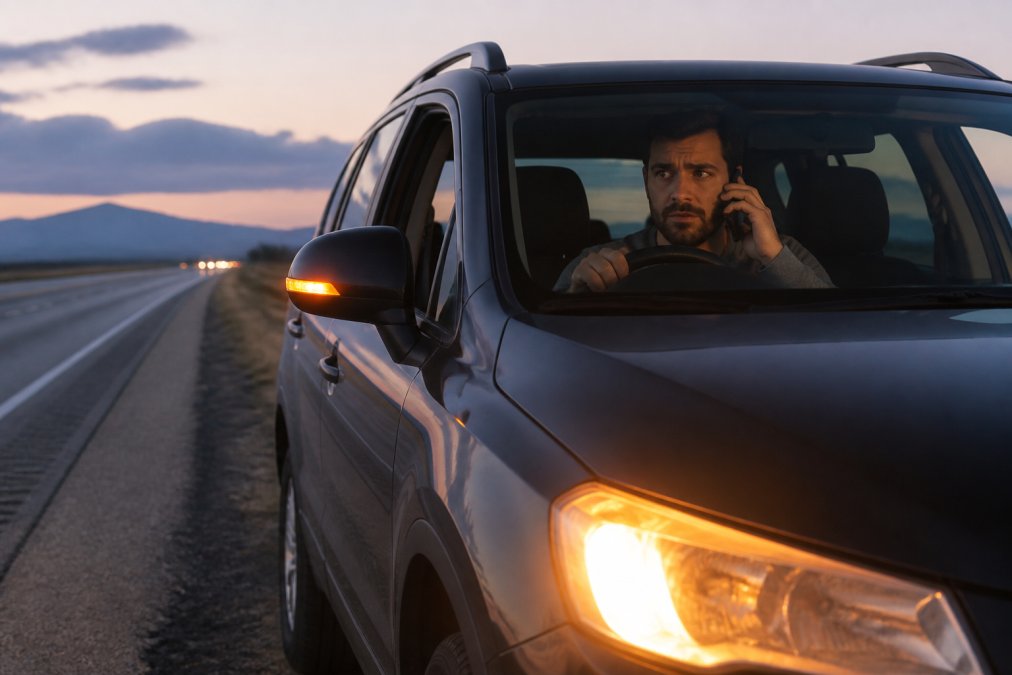
Turn on your hazard lights immediately to alert other drivers. If you’re on a highway or busy road, activate those flashers before you pull over. Move your vehicle to a safe location if it’s still operational, get off the main traffic lane and onto the shoulder. If your car won’t move, stay inside with your seatbelt on and doors locked until help arrives.
Never stand between your vehicle and oncoming traffic. If you must exit your car on a highway, move to the far side away from traffic. Roadside accidents kill over 1,000 people annually in the United States.
Turn off the engine to reduce fire risk. Check for immediate hazards: smoke, fluid leaks, or unusual smells. If you see flames or smell fuel, exit immediately and move at least 100 feet away, then call 911. Stay calm and assess your situation: Are you injured? Is anyone else hurt? Are you in immediate danger from traffic?
Assess Your Situation
Once you’re safe, determine what’s actually wrong. Is your engine completely dead, or did you run out of fuel? Can you hear the engine trying to turn over? Does the dashboard show warning lights?
Check your fuel gauge first, running out of gas is surprisingly common. Look at your dashboard warning lights. A check engine light, temperature warning, or oil pressure light indicates a specific problem.
If your engine is overheating, never open the radiator cap immediately. The coolant is under extreme pressure and can cause severe burns. Wait at least 15-20 minutes for the engine to cool, then carefully open the cap away from your face.
Determine whether you can safely operate the vehicle or need professional help. If you hear grinding noises, smell burning rubber, see fluid pooling under the car, or feel the steering wheel pulling hard, professional help is necessary.
How to Request Emergency Roadside Help Now
Once you’ve determined you need professional assistance, requesting emergency roadside help is straightforward. You have multiple options depending on your situation and existing coverage.
Information You’ll Need Ready
When you call for roadside assistance, have this information ready: your exact location (GPS, mile markers, street address, or landmarks), vehicle information (make, model, year, color, license plate), what happened (engine won’t start, flat tire, locked out, overheating), your contact number, and your policy or membership number if applicable. Mention any injuries or immediate safety concerns first, and note if you’re stranded in a dangerous location.
What Happens After You Call
After you provide your information, the dispatcher logs your request and dispatches a service vehicle. Response times typically range from 30-60 minutes in urban and suburban areas; rural locations may take longer. The service provider will call before arrival to confirm your location and explain what they’ll do. They’ll assess your vehicle, perform the necessary service (jump-start, tire change, fuel delivery, or towing), and get you back on the road or transport your vehicle to a repair facility.
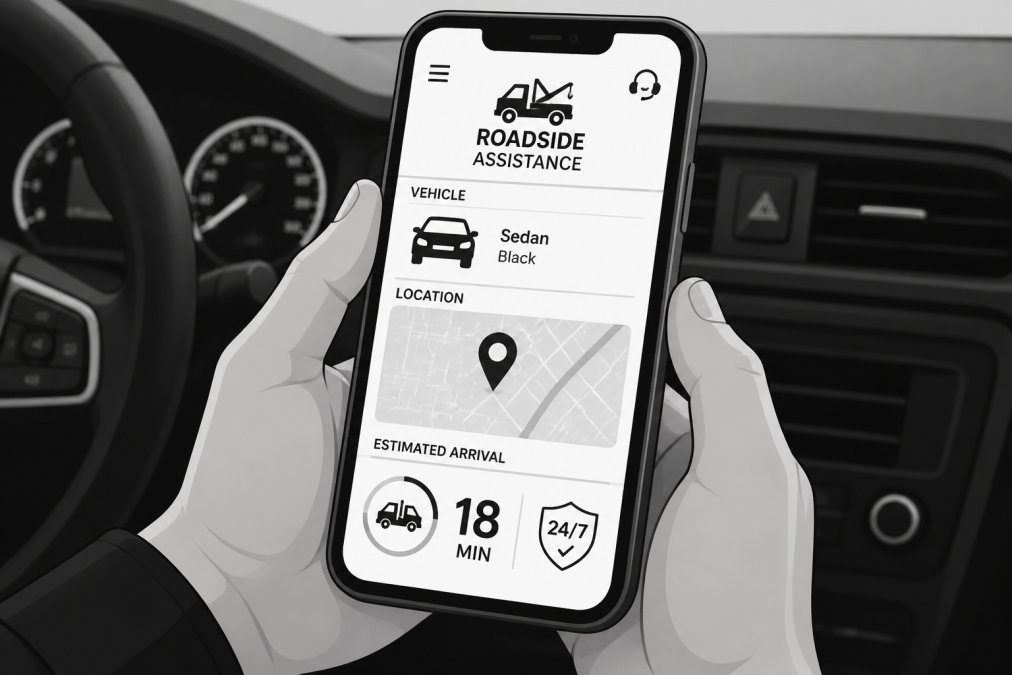
The entire process from call to resolution typically takes 45-90 minutes for standard services like jump-starts and tire changes. Towing takes longer depending on distance to the repair shop.
Services Available Through Emergency Roadside Assistance
Professional emergency roadside help covers multiple scenarios. Understanding what’s available helps you know what to expect when you call.
Towing Services and Vehicle Recovery
Towing is the most common emergency roadside assistance service. If your vehicle won’t start, has serious mechanical failure, or is involved in an accident, towing gets your car safely to a repair facility.
Professional towing services handle vehicles of all types. Fast Towing San Diego, for example, maintains professionally trained drivers and equipment capable of handling everything from compact vehicles to boats and exotic cars. Light-duty tow trucks handle standard passenger vehicles, while heavy-duty trucks manage larger vehicles and accident-damaged cars. The service provider assesses your situation and sends appropriate equipment.
The towing process is straightforward: the driver secures your vehicle using proper tie-down points, loads it onto the truck, and transports it to your chosen destination. Professional drivers know how to protect your vehicle during transport, which matters significantly for accident-damaged cars or high-value vehicles.
Battery Jump-Start and Flat Tire Changes
Dead batteries and flat tires are the most common roadside emergencies, typically resolved on-site without towing.
A battery jump-start involves connecting jumper cables from the service vehicle’s battery to yours, providing the electrical current needed to start your engine. This takes 10-15 minutes. After a successful jump-start, drive directly to a service station or repair shop to have your battery tested.
Flat tire changes follow a similar process. The service provider removes the damaged tire, installs your spare, and gets you mobile again. Most people can drive on a spare tire for 50-70 miles at reduced speeds.
A spare tire is a temporary solution, not a permanent fix. Get your tire repaired or replaced as soon as possible.
Vehicle Lockout Assistance and Emergency Fuel Delivery
Getting locked out of your vehicle is frustrating but usually fixable without towing. Professional locksmiths or roadside service technicians can unlock your car safely without damage. Never attempt to break into your own vehicle, this risks expensive damage. Professional unlocking takes 15-30 minutes.
Emergency fuel delivery addresses running out of gas. A service vehicle arrives with fuel and adds enough to your tank to reach a gas station. This service typically takes 20-30 minutes.
Roadside Assistance Without Membership: Your Options
Not everyone has roadside assistance through insurance or a membership club. If you don’t have existing coverage, you still have options.
Pay-per-use services are available through independent towing companies and roadside assistance providers. You call directly, describe your situation, and agree to pricing before service begins. This approach costs more per incident than membership-based services but requires no long-term commitment.
Insurance companies often provide roadside assistance even without a dedicated membership. Call your insurance agent to ask about coverage. Some policies include limited roadside assistance at no extra charge; others offer it as an add-on for a small annual fee.
Credit card companies sometimes include roadside assistance benefits. Check your card’s benefits guide or call the customer service number on the back of your card. Local towing companies like Fast Towing San Diego provide direct pay-per-use services.
Individual drivers without existing roadside assistance who want immediate help without long-term commitment. Pay-per-use services work well for occasional needs.
The key advantage is flexibility, no annual fee for coverage you might not use. The disadvantage is higher per-incident costs.
Average Cost of Roadside Assistance: What to Expect
Service costs vary based on the type of assistance needed and your location. Battery jump-starts typically cost less than tire changes, which cost less than towing. Urban areas generally have lower costs due to higher service provider density. Rural locations cost more because distances are greater.
Membership-based services spread costs across a year. An annual membership might cost $50-150 depending on coverage level and provider. This approach makes sense if you anticipate needing roadside assistance multiple times yearly.
Pay-per-use services charge per incident. Focus on comparing providers based on response time, vehicle handling capabilities, and customer reviews. Fast Towing San Diego emphasizes fast response times and professional handling of specialized vehicles.
Get pricing quotes from at least two providers before an emergency. Save the numbers in your phone.
Why Professional Help Beats DIY in Emergencies
Professional service providers have proper equipment. A dead battery needs jumper cables and a working vehicle. A flat tire needs a jack, lug wrench, and proper technique. Attempting these tasks without proper tools risks injury and vehicle damage.
Safety is the primary concern. Roadside work is dangerous, you’re near traffic, often at night or in poor weather, stressed and potentially injured. Professional service providers are trained in roadside safety protocols and work efficiently to minimize exposure.
Professional drivers diagnose problems quickly and determine whether you can safely drive or need towing. They understand the difference between a quick fix and a situation requiring professional repair. If something goes wrong during their work, they carry liability insurance and are responsible.
Time matters in emergencies. A professional arrives with the right equipment and completes the job efficiently, leaving you stranded for less time.
24/7 Availability: Getting Help Any Time, Any Day
Emergencies don’t happen during business hours. Professional roadside assistance services operate around the clock, maintaining dispatch centers and service vehicles 24 hours a day, 365 days a year.
24/7 availability is critical for safety. A breakdown at night on an empty highway is more dangerous than a daytime breakdown. Immediate professional response reduces your exposure to these dangers.
Response times remain consistent across all hours. A 2 AM call gets the same priority and response speed as a noon call. Dispatch centers don’t slow down at night or on holidays.
True 24/7 availability means dispatch centers staffed around the clock with service vehicles ready to deploy immediately. Verify this before you need help.
Fast Towing San Diego maintains 24/7 availability with professionally trained drivers ready to respond to emergencies at any hour. Having a reliable 24/7 service available changes your experience during emergencies, instead of panicking about how you’ll get help in the middle of the night, you know professional assistance is a phone call away.
Getting emergency roadside help now requires knowing what to do when your car breaks down, understanding what services are available, and having a reliable provider’s number saved in your phone. Fast Towing San Diego offers 24/7 emergency roadside assistance with professionally trained drivers, fast response times, and comprehensive services including towing, jump-starts, tire changes, lockout assistance, and fuel delivery. Their team brings over 100 years of combined experience and can handle everything from standard vehicles to motorcycles, exotic cars, and boats. When your vehicle breaks down, professional help beats DIY attempts every time. Save Fast Towing San Diego’s number now, before you need it.
Frequently Asked Questions
Can I get emergency roadside help immediately if I’m not a member?
Yes. You don’t need to be a member of a club or insurance plan to request emergency roadside help. When you call for assistance, dispatch will send a towing service or roadside technician to your location. Response times vary based on your location and current demand, but professional services operate 24/7 to handle emergencies. Have your vehicle location, description, and the nature of your breakdown ready when you call.
What information do I need to provide when calling for roadside assistance?
Have your vehicle’s location (highway name, mile marker, or cross street), vehicle type and color, license plate number, description of the problem (engine won’t start, flat tire, lockout), and your contact number ready. If you’re in an unsafe location, let the dispatcher know so they can prioritize safety. The more details you provide, the faster they can send the right equipment and technician to help you.
What’s the average cost of roadside assistance for a tow?
Pricing depends on distance, vehicle type, and the specific service needed. Local tows typically cost less than long-distance recovery. Some insurance policies include roadside assistance coverage at no extra cost, while membership clubs charge annual fees. For accurate pricing, contact your insurance provider or a local roadside assistance service directly. Many services offer transparent quotes before work begins.
What should I do if I’m stranded on a highway at night?
Move your vehicle to the shoulder if it’s safe to do so, turn on your hazard lights, and stay inside your vehicle with doors locked. Call for emergency roadside help immediately with your exact location. If you feel unsafe, call 911. Stay visible and avoid standing on the roadway. Keep your phone charged and have a flashlight or emergency kit in your vehicle. Professional dispatch will prioritize your safety and send help to your exact location.