
Guide to Emergency Roadside Assistance
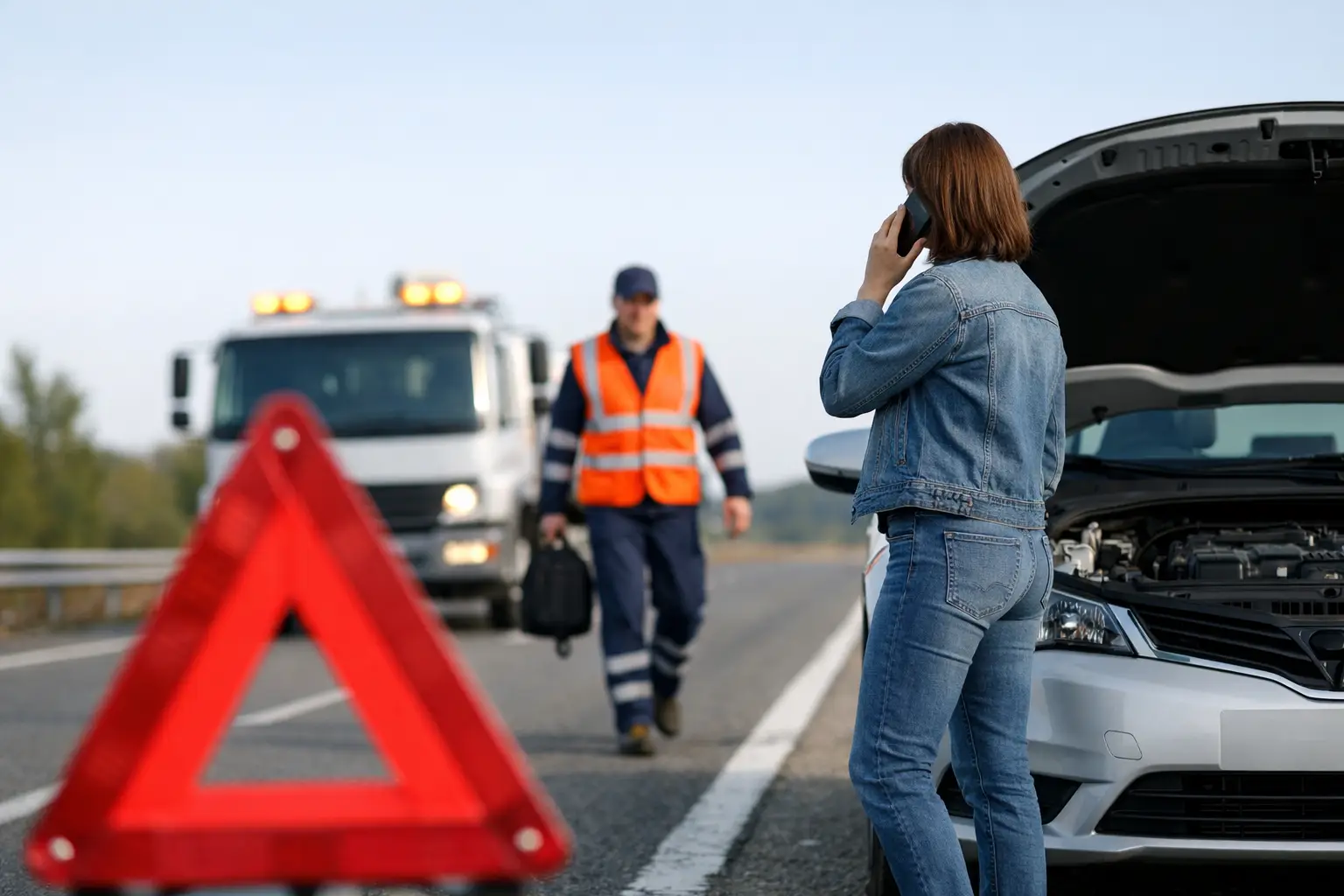
⏱️ Read Time: 5 mins
📍 Service Area: San Diego County
⭐ By: Fast Towing San Diego
A dead battery at midnight, a blown tire on the shoulder, steam coming out from under the hood in traffic – that is exactly when a real guide to emergency roadside assistance matters. When your vehicle quits, you do not need fluff. You need to know what to do first, who to call, what help actually solves the problem, and how to keep a bad situation from getting worse.
The biggest mistake drivers make is waiting too long to act. They hope the warning light goes away, assume the tire can make it one more mile, or try to fix a serious issue in a dangerous spot. That is how a simple roadside problem turns into a wrecked wheel, a cooked engine, or an accident. Fast action beats wishful thinking every time.
What emergency roadside assistance actually covers
Roadside assistance is not just towing. Good service is about getting you moving again if that can be done safely, or getting your vehicle transported correctly if it cannot. The right response depends on the problem, the vehicle, and where you are stopped.
Most roadside calls fall into a few categories: jump starts for dead batteries, tire changes for flats or blowouts, lockout service, fuel delivery, and towing for breakdowns or accident damage. Some providers also handle winch-outs, light mobile mechanic work, and specialty transport for motorcycles, EVs, luxury cars, trailers, boats, and larger vehicles.
That last part matters more than people think. A compact sedan with a dead battery is one job. An EV with a drivetrain issue, a lowered exotic car, or a loaded work truck is a different job entirely. Not every company can handle every vehicle. If the dispatcher sounds vague when you describe what you drive, that is a red flag.
The first five minutes matter most
When your vehicle breaks down, your first job is safety. If the car still rolls and you can move without risking a collision, get to the shoulder, a parking lot, or any safer area away from live traffic. Turn on your hazard lights right away. At night, keep the cabin light on if it helps first responders or a tow operator see you.
If you are on a busy freeway shoulder, do not stand next to the traffic side of the vehicle. If you can safely exit, use the side away from traffic and wait well clear of the road. If staying inside the vehicle is safer, keep your seat belt on. It depends on where you are stopped. On a quiet side street, getting out may be fine. On a fast-moving highway, one wrong step can be deadly.
Then call for help with clear information. Give your exact location, the vehicle type, what happened, and whether the car is drivable. Say if you are blocking traffic, stuck in a garage, towing a trailer, or driving something specialized. The more specific you are, the faster the right truck gets dispatched.
A guide to emergency roadside assistance calls: what to say
A lot of delays happen because the first call is too vague. Saying “my car broke down” is not enough. A good dispatcher needs details to send the right equipment and technician.
Tell them your make, model, and if it is all-wheel drive, electric, oversized, lifted, lowered, or carrying cargo. Explain whether the issue is a flat tire, no start, overheating, accident damage, or something else. Mention if the wheel is damaged, the keys are locked inside, or the car is stuck in neutral and cannot be shifted. These details change the job.
You should also ask direct questions. How fast can you arrive? Can you handle this type of vehicle? Are you doing a roadside fix or preparing for a tow? Will the vehicle go to my home, my shop, or a body shop? Straight answers save time and prevent handoffs later.
When roadside help is enough and when you need a tow
Not every breakdown needs a tow truck, but forcing a car to keep moving can get expensive fast. A dead battery, a simple flat, or an empty tank can often be handled on the spot. A grinding wheel, overheating engine, severe fluid leak, accident damage, or repeated stalling usually means stop driving and tow it.
Overheating is one of the most abused situations. People top off coolant and try to limp the car home. Sometimes that works. Sometimes it turns a manageable repair into engine failure. The same goes for driving on a shredded tire. You are not just ruining the tire at that point. You can destroy the rim, suspension, and fender too.
If the vehicle feels unsafe, sounds worse by the minute, or shows warning signs tied to brakes, steering, or temperature, do not gamble. Get it off the road correctly.
Not all towing is the same
This is where drivers get caught off guard. Towing sounds simple until your vehicle needs the right method. Front-wheel drive, rear-wheel drive, all-wheel drive, EVs, motorcycles, lifted trucks, low-clearance cars, and motorhomes all come with different handling requirements.
A basic hookup might be fine for one vehicle and completely wrong for another. EVs often require specific procedures. Exotics and lowered cars need extra care loading to avoid bumper or underbody damage. Motorcycles need secure transport points. Trailers and boats add length, weight, and balance concerns. If a company acts like every tow is identical, keep looking.
The best roadside providers do not just show up fast. They show up prepared. That means proper equipment, trained operators, and enough experience to move the vehicle without creating a second problem.
What to keep in your car before trouble starts
A guide to emergency roadside assistance should be practical, so here it is: preparation buys you time and lowers stress. You do not need to turn your trunk into a repair shop, but a few basics help a lot.
Keep your registration and insurance easy to find. Make sure your phone stays charged or carry a backup battery pack. Have a flashlight, water, and a simple emergency kit. If your vehicle has a locking wheel key, know where it is. If you drive an EV, understand your battery alerts and towing instructions. If you haul equipment, a trailer, or specialty cargo, keep that information ready too.
And save the number of a real local roadside company before you need one. Searching while stranded on the shoulder is not the move.
How to choose the right roadside assistance provider
Speed matters, but speed without competence is a bad deal. The right provider answers the phone, asks the right questions, gives a realistic ETA, and can actually handle your vehicle type. That sounds basic, but in an emergency, basic matters.
Look for a company that does more than standard passenger cars. If they can handle trucks, SUVs, motorcycles, EVs, exotic cars, trailers, boats, and motorhomes, that usually tells you they have stronger equipment and broader experience. It also means fewer excuses when the job gets complicated.
Professionalism matters too. You want fair pricing, clear communication, and someone who understands that this is already a stressful moment. The best operators keep things simple: they confirm the problem, secure the vehicle correctly, and get you to the next step fast, whether that is a jump start, a tire change, a tow, or a referral to the right repair shop.
That is the standard Fast Towing believes in – fast response, correct handling, and no wasted time.
The real goal is not just getting picked up
Most people think roadside assistance ends when the truck arrives. It does not. The real goal is solving the whole problem with as little damage, delay, and stress as possible.
Sometimes that means getting you back on the road in ten minutes. Sometimes it means taking the vehicle to a trusted repair facility, body shop, tire shop, or safe location where the next fix can happen without more chaos. Good roadside service is about judgment as much as speed.
When your vehicle breaks down, stay calm, get safe, and ask direct questions. The right help should make the situation feel under control fast. And when you have the right number saved before trouble starts, a bad day gets a whole lot easier to manage.
Licensed, insured, and rapid response units on standby across all San Diego corridors.