
Table of Contents
- Heavy Duty Towing vs Standard Roadside Assistance: Key Differences
- What Is Standard Roadside Assistance?
- What Is Heavy Duty Towing and When Do You Need It?
- Light Duty vs Heavy Duty Towing Capacity: Understanding Weight Limits
- Commercial Truck Roadside Assistance: Coverage for Fleet and Commercial Vehicles
- What Does Roadside Assistance Cover for RVs and Trailers?
- Choosing Between Heavy Duty Towing and Standard Roadside Assistance
- Conclusion
- Frequently Asked Questions
Last Updated: August 30, 2026
Heavy Duty Towing vs Standard Roadside Assistance: Key Differences
When your vehicle breaks down, the difference between standard roadside assistance and heavy duty towing can mean the difference between a quick fix and a costly nightmare. At Fast Towing San Diego, we’ve worked with thousands of drivers, fleet managers, and RV owners who discovered, sometimes too late, that their roadside assistance plan didn’t cover what they actually needed. Understanding this gap before you’re stranded is critical.
Standard roadside assistance handles everyday emergencies: dead batteries, flat tires, lockouts, and fuel delivery for passenger vehicles. Heavy duty towing is engineered for vehicles exceeding standard weight and complexity limits. If you’re driving a commercial truck, operating an RV, hauling a trailer, or managing a fleet, standard roadside assistance won’t suffice. This guide breaks down what separates these services, what each covers, and how to choose the right protection for your situation.
Quick Comparison Table
| Service Type | Vehicle Types | Towing Capacity | Best For | Key Services |
|---|---|---|---|---|
| Standard Roadside Assistance | Passenger cars, light trucks under 10,000 lbs | Up to 10,000 lbs | Daily commuters, occasional drivers | Jump start, tire change, fuel delivery, lockout |
| Heavy Duty Towing | Commercial trucks, RVs, trailers, specialty vehicles | 10,000+ lbs (up to 50,000+ lbs) | Fleet operators, RV owners, commercial drivers | Recovery, winch-out, on-site repair, specialized transport |
What Is Standard Roadside Assistance?
Standard roadside assistance is a membership service providing immediate help for typical passenger vehicles. Services include jump starts, tire changes, lockout assistance, fuel delivery, and light towing (usually 5-10 miles to the nearest repair facility).
Most standard roadside plans cover vehicles with a gross vehicle weight rating (GVWR) under 10,000 pounds, including sedans, compact SUVs, and light pickup trucks (aaa.com). Towing distance is typically capped at 7 to 10 miles. Plans like AAA Roadside Assistance and Allstate Roadside Assistance operate nationwide through established service provider networks.
Standard roadside assistance appeals through affordability and simplicity. Annual memberships cost between $50 and $150, making it accessible for individual drivers (aaa.com). Coverage is portable and includes perks like hotel discounts or trip interruption reimbursement. For drivers with a single passenger vehicle and predictable commutes, this covers 95% of real-world breakdowns.
However, standard roadside assistance has hard limits. If your vehicle exceeds 10,000 pounds, many plans exclude you or charge substantial overage fees. Specialized equipment like flatbeds for exotic cars or rotators for jackknifed semi-trucks aren’t available. For anyone driving outside the typical passenger-vehicle category, standard assistance becomes inadequate.
What Is Heavy Duty Towing and When Do You Need It?
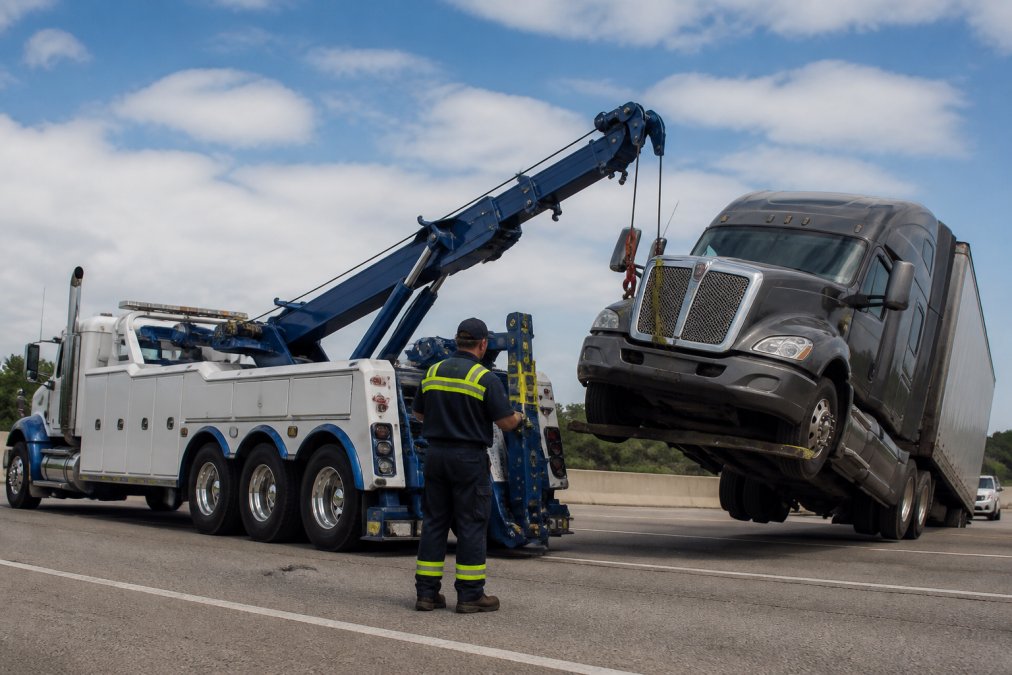
Heavy duty towing is specialized recovery and transport service for vehicles exceeding standard weight limits or requiring advanced equipment due to size, value, or complexity. Unlike standard roadside assistance, heavy duty towing uses winches, rotators, and flatbed carriers designed to handle vehicles weighing 10,000 pounds or more, including commercial trucks, RVs, trailers, and specialty vehicles.
Heavy duty towing operators are trained in recovery techniques that standard drivers lack. If a tractor-trailer jackknifes across multiple lanes or an RV tips into a ditch, specialized equipment and expertise are required. These situations demand on-site assessment, careful rigging, and sometimes multiple vehicles working in coordination. Fast Towing San Diego maintains the equipment and trained personnel to handle these scenarios 24/7.
You need heavy duty towing if you operate:
- Commercial trucks (semi-trucks, box trucks, flatbeds with gross vehicle weight ratings above 10,000 lbs)
- Recreational vehicles (motorhomes, fifth wheels, travel trailers)
- Specialty vehicles (exotic cars, vintage motorcycles, imported sports cars requiring flatbed transport)
- Trailers (enclosed trailers, utility trailers, horse trailers, boat trailers)
- Fleet vehicles (multiple commercial or specialty vehicles requiring coordinated service)
Heavy duty towing costs more than standard roadside assistance because you’re paying for specialized equipment, highly trained operators, and complex emergency response capability. The alternative, attempting standard towing on a heavy vehicle, risks additional damage, liability issues, and extended stranding.
Light Duty vs Heavy Duty Towing Capacity: Understanding Weight Limits
The fundamental difference between light duty and heavy duty towing is gross vehicle weight rating (GVWR), the maximum safe weight a vehicle can carry, including its own weight plus cargo and passengers. Understanding your vehicle’s GVWR determines which type of roadside assistance you actually need.
Light duty towing handles vehicles up to 10,000 pounds GVWR, covering most passenger sedans (3,500-4,500 lbs), compact SUVs (4,500-6,000 lbs), and light pickup trucks (6,000-9,000 lbs). Standard roadside assistance plans are built around this threshold.
Heavy duty towing begins at 10,000 pounds and extends upward (nhtsa.gov). Medium-duty trucks (10,000-14,000 lbs GVWR) sit at the threshold, while heavy-duty commercial trucks (14,000-36,000 lbs) and loaded tractor-trailers (up to 80,000 lbs) require dedicated heavy duty equipment.
RVs illustrate this distinction clearly. A small travel trailer weighing 5,000-8,000 pounds falls within light duty limits. A fifth wheel or motorhome typically weighs 12,000-35,000 pounds, requiring heavy duty towing. Attempting to tow a 20,000-pound RV with a standard light duty tow truck risks damaging both vehicles and creates safety hazards.
When choosing roadside assistance, verify your vehicle’s GVWR on the sticker inside the driver’s door jamb. If it exceeds 10,000 pounds, standard roadside assistance is inadequate. Fast Towing San Diego assesses your vehicle type, weight, and specific needs to ensure you have appropriate coverage before an emergency occurs.
Commercial Truck Roadside Assistance: Coverage for Fleet and Commercial Vehicles
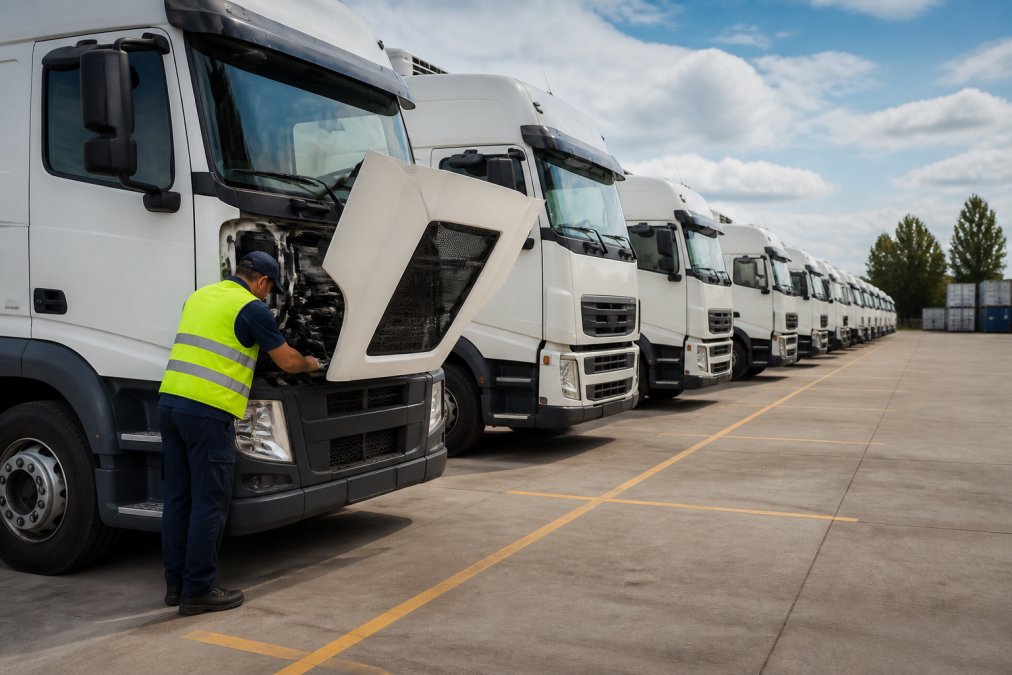
Commercial truck roadside assistance operates under different rules than consumer plans because commercial vehicles face different risks and require different expertise. Government fleet managers, delivery companies, and construction contractors cannot rely on standard roadside assistance; their operations depend on rapid recovery and minimal downtime.
Commercial truck coverage typically includes:
- 24/7 dispatch
- On-site repair capability for common mechanical failures
- Flatbed and heavy-duty towing to transport disabled vehicles without additional damage
- Multiple-vehicle coordination for fleet accounts
- Preventive maintenance support through partner repair facilities
- Billing flexibility with direct invoicing and fleet account discounts
The key difference is accountability. Commercial operators need assurance that help arrives quickly and that their vehicle is handled by someone understanding commercial truck systems. A standard roadside service might dispatch a technician trained only on passenger vehicles, useless for a semi-truck with transmission problems.
Fleet accounts benefit from volume discounts and customized coverage. Fast Towing San Diego works with government agencies, city departments, and private fleets to design roadside assistance packages fitting operational requirements and budgets.
Commercial insurance policies often include roadside assistance riders, but these are frequently limited, capping reimbursement at $500 per incident. For commercial operations, that’s inadequate. Specialized commercial truck roadside assistance removes those limits and ensures the right equipment arrives first.
What Does Roadside Assistance Cover for RVs and Trailers?
RV and trailer owners face a coverage gap that catches many people off guard. Standard roadside assistance explicitly excludes motorhomes, fifth wheels, and travel trailers, or covers them only with significant limitations and overage fees.
RV-specific roadside assistance covers:
- Motorhome and RV breakdown service (engine, electrical, plumbing, appliance failures)
- Trailer-specific support (tire changes, hitch problems, brake system issues)
- Unlimited towing to the nearest service facility (not capped at 5-10 miles)
- Campground-to-repair-facility transport for remote breakdowns
- Specialty equipment access (RV-certified repair shops, RV-familiar parts suppliers)
- Trip interruption reimbursement for hotels and meals during disabled travel
Plans like Good Sam Roadside Assistance are designed specifically for RVs and cost $50-$100 annually. The critical feature is “unlimited towing to the nearest service facility.” Standard plans cap towing at 7-10 miles. If you break down 40 miles from the nearest RV-capable repair shop, a standard plan leaves you stranded.
Trailers present a different challenge. Many roadside assistance plans don’t cover trailers separately from the towing vehicle. Some plans require trailer detachment before towing. Specialized plans clarify coverage for both the towing vehicle and trailer as a combined unit.
Choosing Between Heavy Duty Towing and Standard Roadside Assistance
The choice depends on your vehicle type, usage patterns, and risk tolerance.
Choose standard roadside assistance if:
- You drive a single passenger vehicle under 10,000 lbs GVWR
- Your vehicle is newer and reliable
- You commute predictable routes within 20 miles of home
- You want affordable, no-frills coverage
Choose heavy duty towing if:
- You operate commercial trucks, RVs, trailers, or specialty vehicles
- Your vehicle exceeds 10,000 pounds GVWR
- You travel long distances or remote areas
- You manage a fleet needing coordinated multi-vehicle support
- You need on-site repair capability for complex mechanical issues
Many drivers benefit from both, standard roadside assistance for personal vehicles and heavy duty towing for commercial or specialty vehicles. This layered approach ensures appropriate coverage without overpaying.
Consider your actual risk. Fleet managers with 20 vehicles running 24/7 need heavy duty towing with guaranteed response times; it’s a business necessity. Occasional drivers with reliable cars benefit from standard assistance. RV owners taking cross-country trips need heavy duty coverage; standard assistance becomes a liability.
Fast Towing San Diego helps customers assess actual needs rather than selling unnecessary coverage. Our team reviews your vehicle type, usage patterns, and risk factors to recommend the right service level.
Conclusion
Heavy duty towing and standard roadside assistance serve different purposes for different vehicles and situations. Standard roadside assistance is cost-effective protection for typical passenger vehicles, while heavy duty towing is essential infrastructure for commercial operations, RV travel, and specialty vehicle ownership. Choosing the wrong service type creates a dangerous gap in your protection.
If you operate commercial vehicles, manage a fleet, or own an RV, heavy duty towing coverage is non-negotiable. Fast Towing San Diego provides 24/7 heavy duty towing and roadside assistance with professionally trained drivers, specialized equipment access, and fast response times. We’ve helped government agencies, commercial operators, and RV owners avoid costly mistakes from inadequate coverage. Get started with Fast Towing San Diego and ensure your vehicles and operations are protected around the clock.
Frequently Asked Questions
Q: What is the difference between towing and roadside assistance?
A: Roadside assistance includes services like jump starts, tire changes, fuel delivery, and lockout help, all performed on-site. Heavy duty towing physically transports your vehicle to a repair facility using specialized equipment. Standard roadside assistance handles minor issues, while heavy duty towing is needed for major breakdowns, accidents, or vehicles exceeding 10,000 pounds gross vehicle weight rating. Most roadside assistance plans include limited towing (typically 5-100 miles), but heavy duty recovery requires professional heavy-duty towing services with winch-outs and specialized equipment.
Q: What is considered heavy duty towing?
A: Heavy duty towing handles vehicles weighing 10,000 pounds or more, including tractor-trailers, motor homes, fifth wheels, and commercial trucks. It requires specialized equipment like heavy-duty wreckers, rotators, and winches for recovery and extraction. Heavy duty towing is necessary when vehicles are stuck in ditches, overturned, or require professional recovery from accident scenes. Standard roadside assistance cannot handle these situations, they require trained heavy-duty recovery technicians and commercial-grade towing capacity to safely extract and transport these large vehicles without causing additional damage.
Q: Do I have to pay for towing if I have roadside assistance?
A: Most roadside assistance plans include a limited amount of towing (usually 5-100 miles depending on your plan). If your breakdown occurs within that distance limit to the nearest repair facility, towing is covered at no extra charge. However, if you need towing beyond your plan’s mileage limit, you’ll pay out-of-pocket for the additional distance. Heavy duty towing is rarely covered under standard roadside assistance plans, you’ll typically need to arrange and pay for specialized heavy-duty recovery services separately. Check your specific plan details for exact coverage limits.
Q: Does standard roadside assistance cover commercial vehicles or RVs?
A: Standard roadside assistance can cover RVs and commercial vehicles, but coverage depends heavily on your specific plan and the vehicle’s weight. Many basic plans only cover passenger vehicles up to certain weight limits. RVs and commercial trucks may require specialized plans with higher coverage limits and different reimbursement structures. Good Sam, for example, offers dedicated RV plans with unlimited towing to the nearest service facility. AAA and Allstate offer RV coverage in their premium tiers. Commercial truck roadside assistance typically requires fleet-specific plans that account for higher axle weights and payload capacity. Always verify your vehicle type is covered before purchasing.
Q: What happens when a heavy duty towing service arrives at my breakdown?
A: A professional heavy-duty recovery technician will assess your vehicle’s condition, weight, and position to determine the safest extraction method. They’ll use appropriate equipment, winches, rotators, or flatbeds, to safely recover your vehicle without causing additional damage. Once recovered, your vehicle is transported to a repair facility of your choice or the nearest available shop. Fast Towing San Diego provides on-site support and can help connect you with trusted repair shops after recovery. The entire process prioritizes safety for both your vehicle and the technician, which is why specialized heavy-duty equipment and training are essential for vehicles over 10,000 pounds or in complex recovery situations.