
Table of Contents
- What Counts as Property Damage After a Crash
- How to Take Photos of Car Accident Damage
- Collecting Police Reports, Witness Statements, and Other Evidence
- The Car Accident Property Damage Claim Process
- Sample Car Accident Property Damage Letter
- Digital Evidence Preservation and Diminished Value Claims
- Post-Repair Documentation and Common Mistakes to Avoid
- Frequently Asked Questions
Last Updated: September 24, 2026
What Counts as Property Damage After a Crash
Property damage after a crash covers physical harm to your vehicle, the items inside it, and structures you hit, like fences, signs, or poles. Knowing what counts helps you document car accident property damage correctly from the start.
- Vehicle damage: dents, cracked glass, bent frames, damaged tires
- Personal property: phones, laptops, car seats, tools, groceries
- Aftermarket parts: custom wheels, stereo systems, roof racks
- Diminished value: the drop in your car’s resale price after repairs
How to Take Photos of Car Accident Damage
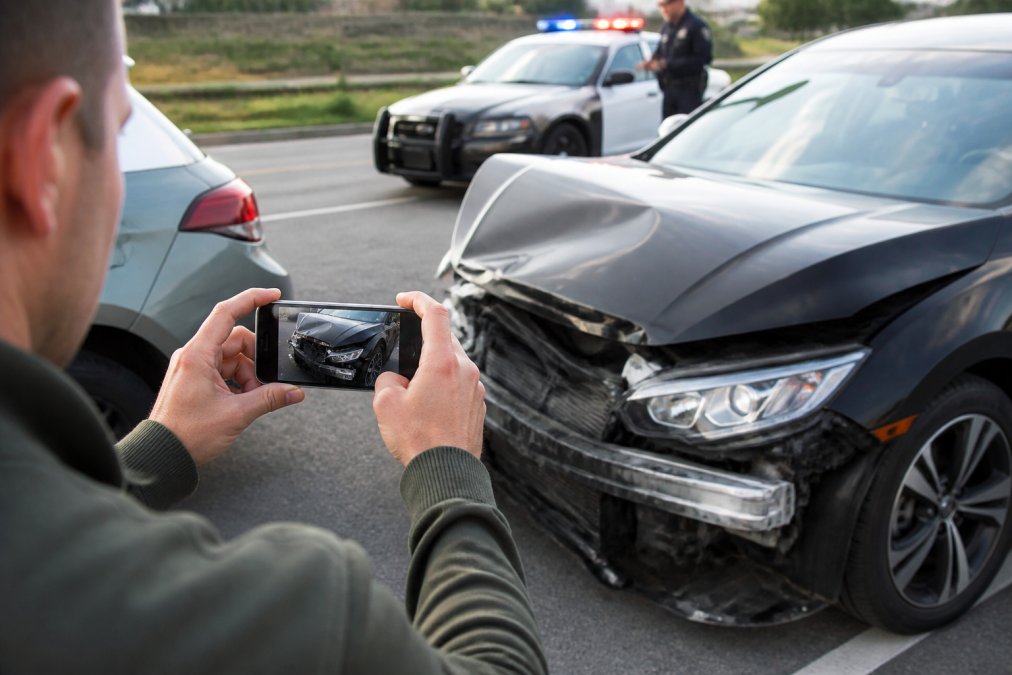
Good photos are the backbone of any property damage claim. Take them before anything is moved, if it’s safe. Your phone camera is enough, coverage matters, not equipment.
Shots to Capture at the Scene
Start wide, then move close. An insurance adjuster needs both context and detail.
- Wide shots: Stand back and capture all vehicles together. Show the road, lanes, and traffic signals.
- Mid-range shots: Photograph each damaged area from about six feet away.
- Close-ups: Get within a foot of every scratch, dent, and crack.
- Multiple angles: Shoot each damaged panel from at least three sides.
- Ground shots: Capture debris, skid marks, and fluid leaks.
Documenting the Vehicle Interior and Personal Property
Open every door and photograph the inside, cabin damage is easy to miss and easy to dispute later.
- Photograph cracked dashboards, deployed airbags, and bent seat frames
- Snap each item of personal property where it sat during the crash
- Include close-ups of any item that broke or was damaged
- Photograph child seats even if they look fine; many need replacement after any crash
A common mistake is forgetting the trunk. Rear-end collisions often push cargo into the trunk lid and rear panels. Photograph the trunk open and closed, plus everything inside it.
Collecting Police Reports, Witness Statements, and Other Evidence
A police report is one of the strongest pieces of evidence in a property damage claim. Officers usually file it within a few days, so ask for the report number before you leave the scene.
- Ask witnesses for their name, phone number, and email
- Record a short video statement if they agree
- Note where each witness was standing when the crash happened
- Write down what they saw in your own words
Also collect:
- The other driver’s name, insurance carrier, and policy number
- Photos of the other driver’s license and insurance card
- Contact details for any passengers
The Car Accident Property Damage Claim Process
The claim process moves through a set order: report, estimate, submit, settle. Skipping a step slows everything down.
| Step | What Happens | Typical Timing |
|---|---|---|
| Notify your carrier | Open the claim, get a claim number | Same day |
| Adjuster contact | Adjuster reviews photos and facts | 1-3 days |
| Repair estimates | Body shop inspects and prices repairs | 2-5 days |
| Evidence submission | You send photos, reports, receipts | Ongoing |
| Settlement offer | Carrier reviews and responds | 1-3 weeks |
Notifying Your Insurance Carrier and the Adjuster
Call your carrier as soon as you can, ideally the same day, to get a claim number you’ll use in every future call. Give the adjuster a short, factual account of what you saw.
Getting Repair Estimates and Submitting Evidence
Get at least two repair estimates from licensed body shops. An insurance adjuster may write their own; when numbers differ, the shop and adjuster usually negotiate.
When you submit evidence, include:
- Accident scene photos and vehicle damage photos
- The police report number and a copy
- Witness statements
- Repair estimates from each shop
- Receipts for towing and rental cars
Sample Car Accident Property Damage Letter
A written notice creates a paper trail. Use this template and fill in your details.
Digital Evidence Preservation and Diminished Value Claims
Two things sink otherwise solid property damage claims: lost digital files and forgotten diminished value. Both are fixable if you act within 24 to 72 hours.
Preserving Digital Evidence So It Holds Up
A phone photo is only useful if you can prove when and where it was taken and that it hasn’t been altered. That’s what metadata does.
Protect it this way:
- Don’t edit, crop, or filter scene photos. Take new photos if you need a cleaner shot. Never overwrite the originals.
- Transfer originals, not screenshots. Use your phone’s share sheet to send the actual file, or plug the phone into a computer and copy the files directly.
- Back up to two places the same day. A cloud account (iCloud, Google Photos, Dropbox) plus a second location, a laptop, an external drive, or a second cloud service. One backup is a single point of failure.
- Turn off auto-delete. Check that your cloud account isn’t set to purge files after 30 or 60 days.
- Keep a written log. A simple note with the date, time, location, and a one-line description of each photo or video creates a chain-of-custody record you can hand to an adjuster.
If your phone is lost, cracked, or wiped before you back up, the evidence is gone. Do the cloud sync the same day as the crash, not the same week.
Documenting Diminished Value
Diminished value claims generally fall into three categories:
- Immediate diminished value: The loss in market value right after the crash, before repairs.
- Repair-related diminished value: Loss caused by less-than-perfect repairs.
- Inherent diminished value: Loss that remains even after a perfect repair, because the vehicle now has an accident history.
To document diminished value, gather:
- Pre-accident value: Use a valuation tool like Kelley Blue Book, NADA, or JD Power, and save the printout or PDF with the date.
- Post-repair value: Get a written appraisal from an independent appraiser who specializes in diminished value, or a dealer trade-in quote in writing after repairs.
- Repair records: The final invoice, parts list, and any supplemental repair orders.
- Vehicle history report: Pull a CARFAX or AutoCheck report after repairs to show the accident is now on record.
- Photos: Before, during, and after repair photos that show the extent of the damage.
Don’t cash a settlement check until you’ve confirmed whether diminished value is covered in your situation. In most cases, cashing the check and signing a release closes the claim for good, including any diminished value you might have been owed.
Insurers don’t volunteer diminished value information. You usually have to ask in writing and, in some states, file it as a separate claim from the repair estimate.
Post-Repair Documentation and Common Mistakes to Avoid
Post-repair documentation closes the loop on your claim, and it’s where many claims quietly go wrong. The car looks fine in the shop’s lighting, you sign the release, and weeks later you notice a paint mismatch or a warning light.
Inspecting and Documenting the Repair
Inspect in daylight, not in the shop bay, and compare panel by panel against your pre-accident photos.
Walk through this list before you sign anything:
- Panel gaps and alignment. Run your eyes along every seam between hood, fenders, doors, and trunk. Uneven gaps usually mean a panel wasn’t aligned or a structural pull wasn’t completed.
- Paint match. Look at each repaired panel from three angles: straight on, from the side, and in direct sun. Metallic and pearl finishes are the hardest to match and the most common source of complaints.
- Overspray. Check adjacent panels, window trim, wheel wells, and door jambs for a rough, gritty texture or a haze that shouldn’t be there.
- Warning lights and sensors. Start the car and confirm no dashboard warnings. If your vehicle has advanced driver assistance features, lane keep, adaptive cruise, blind spot monitoring, those sensors often need recalibration after a collision, and a missed calibration can disable the system.
- Fluids and function. Check coolant, oil, and washer fluid levels. Test every light, the A/C, the radio, and every window and door lock.
- Test drive. Drive at low speed and highway speed. Listen for new rattles, wind noise, or pulling.
- Photograph each repaired area from the same angles you used at the scene
- Photograph the odometer and the final repair invoice
- Save the shop’s warranty paperwork, most body shops warranty their work for a set period, and you’ll need the paperwork if you have to go back
- Keep any parts the shop replaced, if you asked for them in advance
Ask the shop for a written copy of any recalibration report for ADAS sensors. If a calibration was required and skipped, that’s a safety issue and a legitimate basis to reopen the repair.
Common Mistakes That Hurt Property Damage Claims
- Waiting days to report the crash, which gives the other side room to argue the damage came from something else
- Taking blurry, too few, or edited photos, and losing the EXIF metadata in the process
- Forgetting personal property inside the car, especially car seats, electronics, and cargo
- Throwing away damaged parts before the adjuster has seen them
- Skipping the post-repair inspection and signing the release on the spot
- Accepting the first offer without comparing it to your own estimates and diminished value analysis
- Failing to ask in writing whether diminished value is covered before cashing a settlement check
The strongest claims share one trait: complete documentation from scene to settlement. Photos, reports, receipts, a written timeline, and a post-repair inspection beat memory every time.
Frequently Asked Questions
What is considered property damage in an accident?
Property damage in a car accident includes any physical harm to your vehicle, its contents, and other personal property inside it. It also covers damage to public property like guardrails, signs, or fences, and to third-party vehicles or structures. Damage to the other driver’s car is their property damage, but you may be liable for it depending on fault. Documenting all damaged items, from a cracked bumper to a laptop that flew off the seat, helps your car accident property damage claim reflect the full loss.
How do I file a property damage claim for a car accident?
Start by notifying your insurance carrier as soon as possible after the crash. Provide a police report number, photos, witness statements, and repair estimates. The insurer will assign an adjuster to assess the damage. If the other driver was at fault, you can file a third-party claim with their insurer. Keep copies of every document you submit. The car accident property damage claim process typically involves an initial review, a damage assessment, and a settlement offer. Follow up in writing if you don’t hear back within a week.
Do I need photos of the other driver’s insurance card?
Yes, if you can safely obtain them. Photos of the other driver’s insurance card, driver’s license, and license plate help confirm their identity and coverage. This information is useful when filing a third-party liability claim. If the other driver refuses to share it, a police report will usually include those details. Never block traffic or put yourself in danger to get these photos. Exchange information only when it’s safe, and let law enforcement handle the rest.
How do insurance adjusters assess property damage?
Insurance adjusters assess property damage by reviewing photographic evidence, police reports, repair estimates from a body shop, and sometimes a physical inspection. They compare the damage to your vehicle’s pre-accident condition and may use industry databases to value parts and labor. For diminished value claims, they consider the vehicle’s market value before and after the accident. Providing multiple angles of vehicle damage, clear photos of the vehicle interior, and receipts for personal property can help speed up the assessment and support your compensation request.
A crash is stressful, and the paperwork that follows can feel worse. Fast Towing San Diego takes one item off your list: getting your vehicle safely to a shop you can trust. We’re available around the clock, staffed by professionally trained drivers, and we work with first responders, military members, and fleet managers every day. Get started with Fast Towing San Diego and let us handle the tow while you handle the claim.