
Table of Contents
- Step 1: Verify Licensing, Insurance, and Certifications
- Step 2: Check Online Reviews and Service Area Coverage
- Step 3: Ask About Response Time and 24/7 Availability
- Step 4: Request Transparent Quotes and Understand Towing Company Red Flags
- Step 5: Understand Average Cost of Towing Per Mile and Hidden Fees
- Step 6: How to Avoid Towing Scams and Predatory Practices
- Step 7: Confirm Equipment Capability and Vehicle Specialization
- What Makes a Reliable Towing Company Stand Out
- Frequently Asked Questions
Last Updated: August 7, 2026
Step 1: Verify Licensing, Insurance, and Certifications
The foundation of finding a reliable towing company starts with confirming they’re legally authorized to operate. A licensed and insured towing service protects you from liability if something goes wrong during transport. Before you even call, check your state’s Department of Motor Vehicles or your state’s licensing board to verify the company holds a valid towing license.
Insurance matters equally. Ask the company directly about their coverage, they should carry general liability insurance and cargo coverage for your vehicle. A legitimate towing company will provide proof of insurance without hesitation. If they dodge the question or seem vague, move on.
Certifications from organizations like the American Towing Association or state-specific credentials signal professionalism and adherence to industry standards. While not every reliable towing company holds every certification, it’s a positive indicator when they do. Licensed professionals maintain training in safety protocols and vehicle handling, which reduces the risk of damage during transport.
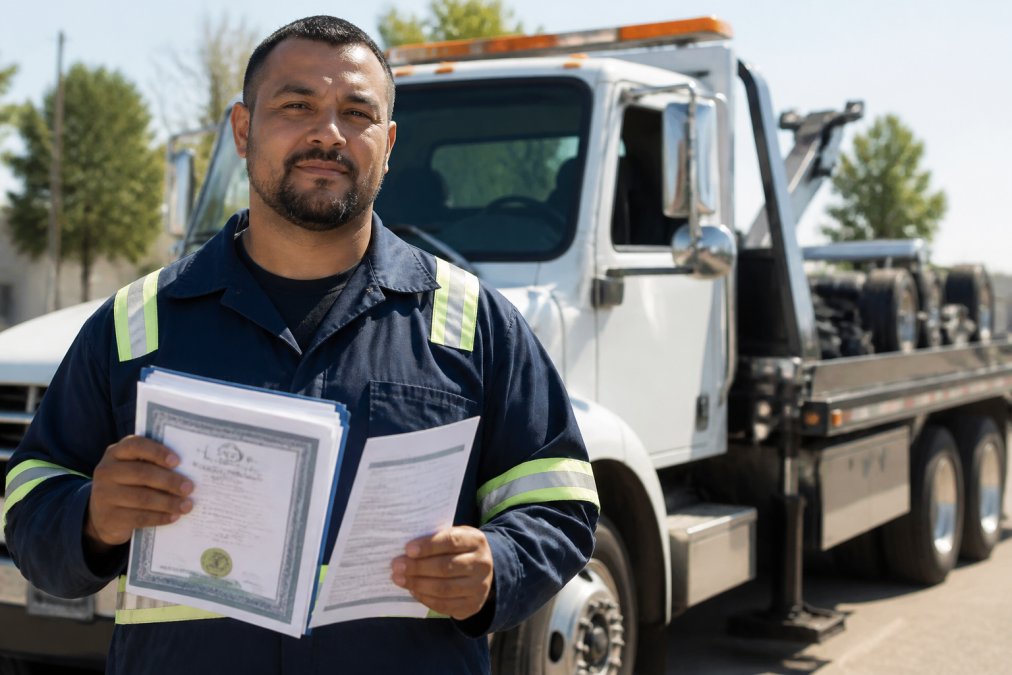
At Fast Towing San Diego, our drivers are professionally trained, backed by over 100 years of combined experience, which ensures your vehicle is handled with expertise from pickup to delivery.
Always request a copy of the company’s insurance certificate and license number. Save these documents in case you need them for your own insurance claim. Legitimate companies have no problem providing this information upfront.
Step 2: Check Online Reviews and Service Area Coverage
Online reputation tells you how a towing company actually performs under real conditions. Check Google Maps, Yelp, and the Better Business Bureau for customer testimonials. Look for patterns in the reviews, not isolated complaints, but recurring themes about response time, professionalism, or pricing surprises.
Service area coverage is equally critical. A company might be excellent, but if they don’t operate where you need them, they’re useless in an emergency. Confirm they cover your location and the areas where you drive most frequently. Some companies advertise wider coverage but respond slowly outside their core service zone.
Pay attention to how recent the reviews are. A company with strong ratings from two years ago might have changed management or quality standards. Current reviews from the last three months give you a better picture of what to expect. When reading testimonials, notice specific details, mentions of response time, vehicle condition upon arrival, and professional communication are green flags.
Negative reviews deserve scrutiny too. One complaint about a damaged vehicle could be legitimate, or it could be a customer dispute. Multiple complaints about the same issue, like hidden fees or long wait times, suggest a systemic problem worth avoiding.
Step 3: Ask About Response Time and 24/7 Availability
Emergency towing isn’t useful if the company takes three hours to arrive. Ask directly about their average response time in your area. A reliable towing company should provide a specific number, 30 minutes, 45 minutes, whatever they guarantee. If they’re vague, they likely don’t have consistent response times.
Round-the-clock availability matters because breakdowns don’t follow business hours. A car can fail at 2 AM on a Sunday. Ask if they operate 24/7/365 or if they have limited hours. Some companies close evenings or weekends, which creates gaps in coverage when you’re most vulnerable.
Understand how their dispatch system works. Do they have a local dispatch center that coordinates pickups, or do they route calls through an outsourced service? A company with its own dispatch team typically responds faster because they control the workflow directly. Ask if you can speak to dispatch when you call, or if you’ll reach an automated system.
Response time also depends on traffic and distance. A company 10 miles away might reach you faster than one 5 miles away if traffic is heavy. Ask about their service area radius and whether response times vary by location. Fast Towing San Diego operates 24/7/365 with fast response times across San Diego and beyond, ensuring help is available whenever you need it.
A reliable towing company commits to specific response times and operates around the clock. Vague answers about availability are a red flag.
Step 4: Request Transparent Quotes and Understand Towing Company Red Flags
Before you need towing, get a quote. Call three companies and ask for their base rate, mileage charges, and any additional fees. Transparent pricing means they explain each charge clearly. If a company refuses to quote over the phone or gives a price range so wide it’s meaningless, that’s a warning sign.
Red flags in pricing include companies that won’t quote until they inspect the vehicle, charge dramatically higher rates for nights or weekends, or mention “service fees” without explanation. Hidden fees are the most common complaint about unreliable towing services. A company might quote a low base rate but then add towing fees, drop-off fees, and fuel surcharges that triple your bill.
Ask specifically about these potential charges: hook-up fee, drop-off fee, mileage charges, fuel surcharge, storage fees, and any specialty equipment costs. A straightforward company lists these upfront. If they seem evasive or say “it depends,” they’re likely hiding something.
Predatory towing practices sometimes target accident victims when they’re vulnerable and not thinking clearly. Be especially cautious if a tow truck shows up at an accident scene you didn’t call. Some unscrupulous operators cruise accident sites and offer unsolicited service at inflated rates. Always call your insurance company or roadside assistance first, they often have preferred providers who offer fair pricing.
Compare quotes side by side. If one company is significantly cheaper than others, investigate why. Sometimes it’s efficiency; sometimes it’s because they cut corners on safety or vehicle care. The cheapest option isn’t always the best value.
Step 5: Understand Average Cost of Towing Per Mile and Hidden Fees
Towing costs vary based on distance, vehicle type, and service complexity. Many towing companies charge a base fee plus a per-mile rate. The per-mile charge typically reflects fuel costs, wear on equipment, and labor. Understanding this structure helps you evaluate whether a quote is reasonable.
Request a detailed breakdown of what you’ll pay. A typical quote should show the base service charge, per-mile rate, and any specialty charges if your vehicle requires special handling. If they quote a flat rate instead of per-mile, ask what distance that covers. Some companies offer flat rates for specific routes or distances.
Storage fees can accumulate quickly if your vehicle sits in a lot while repairs are arranged. Ask if the company offers free storage for a set period, or if charges begin immediately. This matters if you’re dealing with an accident and need time to coordinate with your insurance company.
Fuel surcharges are legitimate during high gas prices, but they should be disclosed upfront. Some companies build fuel costs into their per-mile rate; others add them separately. Either approach is fine as long as it’s transparent.
A common predatory practice is quoting a low base rate, then adding multiple undisclosed fees at the end. Always ask for a complete written quote before committing. If a company won’t provide one, find someone else.
Step 6: How to Avoid Towing Scams and Predatory Practices
Predatory towing thrives on confusion and desperation. When your car breaks down, you’re stressed and not thinking clearly, exactly when scammers strike. The best defense is knowing what to watch for.
Never accept a tow from an unsolicited driver who appears at an accident or breakdown scene. Call your insurance company, roadside assistance program, or a towing company you’ve pre-selected. Insurance companies maintain lists of approved providers for a reason, they’ve vetted them for fair pricing and quality service.
Watch for these red flags during the call: the company won’t quote a price, they pressure you to decide immediately, they claim they’re the “only” service available, or they ask for payment before service. Legitimate companies quote first, perform the service, and bill afterward. If they demand payment upfront via cash or wire transfer, it’s almost certainly a scam.
On the roadside, verify the tow truck driver’s credentials. Ask for their company name, license number, and insurance information. A professional will provide these without hesitation. If the driver seems evasive, call the company directly to confirm they actually dispatched someone to your location.
Emergency roadside safety protocols protect you while waiting for help. Stay in your vehicle if you’re on a highway, keep your hazard lights on, and stay visible. If a tow truck arrives and something feels wrong, the driver seems unprofessional, the vehicle looks poorly maintained, or they’re pressuring you, you can refuse service and call someone else. Your safety and peace of mind are worth the wait.

Insurance integration matters here too. If you’re involved in an accident, your insurance company may require you to use a specific provider or reimburse only approved services. Before you’re in crisis mode, contact your insurance agent and ask which towing services they recommend. Having that list ready prevents you from making a desperate decision that leaves you uninsured for damage.
Step 7: Confirm Equipment Capability and Vehicle Specialization
Not all tow trucks are created equal. A standard flatbed tow truck works for most cars, but specialty vehicles need specific equipment. If you drive a motorcycle, luxury car, or tow a boat or trailer, confirm the company has experience with your vehicle type.
Flatbed towing is gentler on vehicles because the entire car sits on the truck bed, not suspended by a wheel-lift. Wheel-lift towing, where the front or rear wheels lift off the ground, works fine for many vehicles but can damage low-clearance cars or those with custom suspension. Hook and chain towing is the oldest method and can scratch or damage modern vehicles, avoid companies that rely on this exclusively.
Ask what equipment the company uses and why it’s appropriate for your vehicle. A professional can explain the difference and recommend the safest method. If you own a specialty vehicle, ask if they’ve transported that specific make and model before. Experience matters, a company that’s towed dozens of motorcycles knows how to secure one properly.
For exotic or high-value vehicles, confirm the company carries appropriate insurance and uses enclosed transport if available. Some companies offer climate-controlled or enclosed trailers for premium vehicles. If your car is worth significant money, that extra protection is worth the cost.
Fleet managers should ask about capacity and coordination. Can the company handle multiple vehicles simultaneously? Do they have experience with government or commercial accounts? Fast Towing San Diego handles a wide variety of vehicles, from standard cars and motorcycles to exotic vehicles, boats, and trailers, with equipment and expertise matched to each job.
What Makes a Reliable Towing Company Stand Out
A reliable towing company consistently delivers on promises. They answer the phone quickly, arrive when they say they will, handle your vehicle with care, and charge what they quoted. They communicate clearly, explain what they’re doing, and treat you with respect during a stressful situation.
The best companies go beyond basic towing. They offer roadside assistance like jump starts and tire changes. They can recommend repair shops if you need one. They maintain their equipment properly so breakdowns don’t leave you stranded twice. They train their drivers in customer service, not just vehicle handling.
Transparency is the clearest indicator of reliability. A company that’s willing to answer tough questions, provide references, and explain their pricing has nothing to hide. They understand that trust is built through consistent, honest behavior, not through marketing claims or aggressive sales tactics.
The difference between an average towing company and a reliable one often comes down to attention to detail. Do they call to confirm arrival time? Do they protect your vehicle during transport? Do they follow up to make sure you’re satisfied? These small touches separate professionals from operators who simply move cars from point A to point B.
| Reliability Indicator | What to Look For | Why It Matters |
|---|---|---|
| Licensing & Insurance | Current credentials, proof of coverage | Protects you legally and ensures professional standards |
| Online Reviews | Recent feedback with specific details | Shows actual performance, not marketing claims |
| Response Time | Specific guarantee, 24/7 availability | Determines how long you wait in an emergency |
| Transparent Pricing | Itemized quotes, no hidden fees | Prevents billing surprises and scams |
| Equipment Variety | Appropriate method for your vehicle type | Reduces risk of damage during transport |
| Professional Communication | Clear answers, respectful interaction | Indicates training and company culture |
Finding a reliable towing company before you need one eliminates panic from the equation. When you’ve already vetted options and have a trusted provider’s number saved, a breakdown becomes an inconvenience instead of a crisis. Fast Towing San Diego offers 24/7 professional towing with fast response times, transparent pricing, and the expertise to handle any vehicle type, from standard cars to motorcycles and specialty transports. With over 100 years of combined team experience and a commitment to customer care, we’re ready when you need us. Get started with Fast Towing San Diego and experience reliable roadside support that arrives when promised.
Frequently Asked Questions
How can I verify if a towing company is licensed and insured?
Contact your state’s Department of Transportation or regulatory body to check licensing status. Ask the company directly for proof of insurance and request their certificate of insurance. Licensed towing companies display credentials prominently and provide documentation without hesitation. Verify the company name matches exactly on all documents, and confirm the insurance is active and covers liability for vehicle damage during transport.
What are red flags when choosing a towing service?
Watch for companies that won’t quote prices upfront, demand cash-only payment, or pressure you to use their preferred repair shop. Avoid services with no online presence or reviews, those that can’t confirm 24/7 availability, and any that refuse to provide proof of licensing. Predatory towing operations often have vague service areas, no published contact information, and poor communication. If a dispatcher is rude or evasive when answering questions, move on to another company.
What should I expect to pay for a standard tow in San Diego?
Towing costs vary based on distance, vehicle type, and complexity of the situation. Most reliable companies charge a base hook-up fee plus a per-mile rate, with additional fees for specialized equipment or after-hours service. Rather than relying on general estimates, contact multiple towing companies in your area to request quotes for your specific situation. This approach ensures transparent pricing and lets you compare service reliability alongside cost.
What questions should I ask a towing company before they hook up my car?
Ask about their estimated arrival time, the total cost including all fees, what type of towing equipment they’ll use, and whether they have experience with your vehicle type. Confirm they carry adequate insurance for vehicle damage liability. Request their dispatch communication method so you can track the tow truck. Ask what happens after pickup, whether they provide repair shop recommendations and if they offer roadside assistance for other issues like jump starts or tire changes.