
Table of Contents
- Immediate Actions When Your Car Breaks Down
- How to Safely Pull Over to the Shoulder
- Using Hazard Lights and Visibility Signals
- When to Stay in Your Car During a Breakdown
- How to Signal for Help on the Highway
- Emergency Roadside Kit Essentials You Need
- Handling Breakdowns in Extreme Weather and Special Situations
- When to Call Professional Towing Service
- Frequently Asked Questions
Last Updated: September 23, 2026
A car breakdown can be one of the most stressful moments on the road. Your heart races. Traffic whizzes past. You’re uncertain what to do next. Knowing how to handle car breakdown safely turns panic into action. This guide from Fast Towing San Diego covers the exact steps to protect yourself, your passengers, and your vehicle when something goes wrong.
The stakes are high. Every year, thousands of drivers face dangerous situations during breakdowns because they don’t know the right protocol. Some stay in their cars in heavy traffic. Others exit into oncoming lanes. A few stand in the blind spots of passing trucks. These mistakes can be fatal.
The good news: most breakdown emergencies have clear, proven safety steps. Follow them, and you’ll get through it. Below, we’ll walk you through each phase of handling a breakdown safely, from the moment you sense trouble to when professional help arrives.
Immediate Actions When Your Car Breaks Down
Your first five seconds determine whether you make safe choices or dangerous ones. When you feel something wrong, a strange noise, loss of power, steering issues, your body triggers a fight-or-flight response. Adrenaline floods your system and blood flow shifts away from your decision-making brain toward your fear center. This is why panic-driven decisions during breakdowns often lead to accidents.
Managing the panic response: Use the 4-7-8 breathing technique: breathe in for 4 counts, hold for 7 counts, exhale for 8 counts (pubmed.ncbi.nlm.nih.gov). Repeat three times. This activates your parasympathetic nervous system and restores access to rational thinking.
Say aloud: “My car has broken down. I am safe. I have a plan.” Verbalizing grounds you in the present moment and shifts your brain from reactive to problem-solving mode.
Assess without rushing: Once calm, assess the situation. Is your engine smoking? Did you hear a loud bang? Is the steering heavy? These details help you decide what to do next.
Your immediate goal: get your vehicle to a safe location. If your car is still responsive, ease off the accelerator gently and slow down gradually using light brake pressure. Avoid sudden movements that could cause a skid or collision.
If your car has completely lost power or steering, turn on your hazard lights immediately. This alerts other drivers and gives you precious seconds of visibility before traffic reacts.
Check your mirrors and look for a safe exit or shoulder ahead. Plan your move before you make it.
How to Safely Pull Over to the Shoulder
If you’re on a highway or busy road, signal your intention early. Move to the right lane. Coast toward the shoulder. Avoid sudden lane changes that could startle drivers behind you.
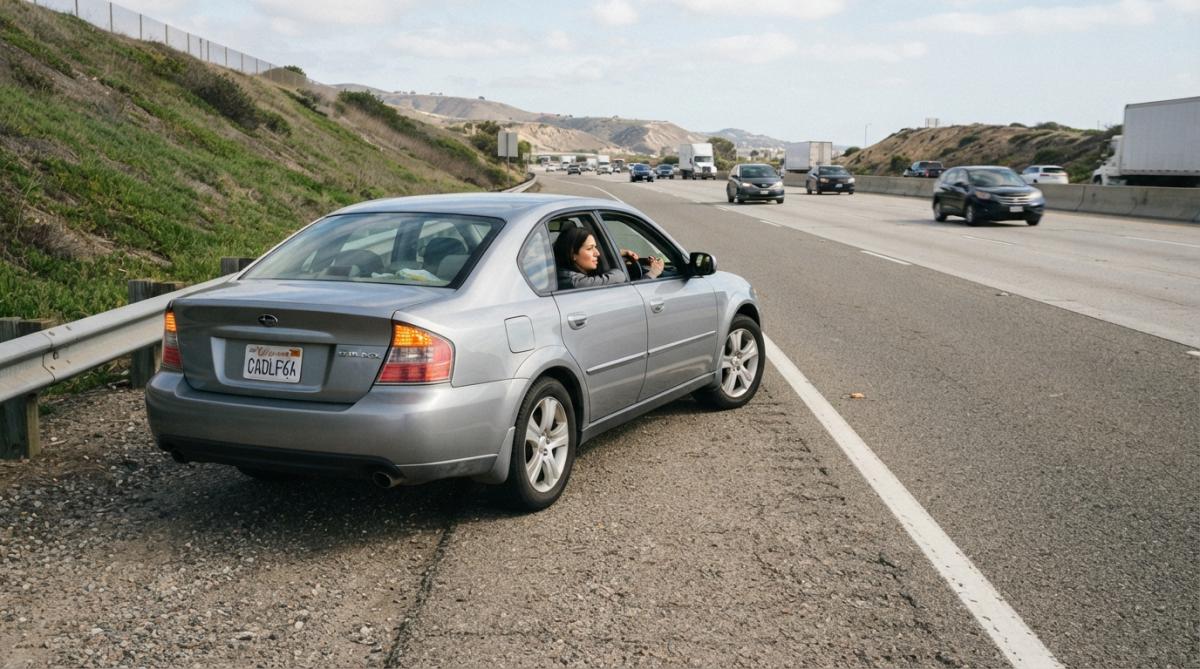
Once on the shoulder, position your vehicle at least 10 feet away from the driving lanes. The greater the distance between your car and moving traffic, the safer you are.
Engage your parking brake to prevent rolling. Turn off the engine to reduce fire risk.
Stay inside your car with doors locked while you assess the situation. This is critical. You’re safer inside your vehicle than standing on the roadside.
Using Hazard Lights and Visibility Signals
Turn on hazard lights immediately when you sense trouble. They alert other drivers that your vehicle is disabled.
In low-light conditions or bad weather, hazard lights alone may not be enough. Place a warning triangle 100 feet behind your vehicle on the shoulder to give drivers extra time to see you.
Wear your reflective vest if you exit the vehicle. Make yourself visible. Drivers need to see you before they can avoid you.
If another vehicle stops to help, be cautious. Keep your doors locked. Talk through the window. Ask what they’re offering before you unlock anything. If you feel unsafe, politely decline and wait for professional help.
When to Stay in Your Car During a Breakdown
The safest default is to stay inside your locked vehicle unless there’s immediate danger: fire, smoke, or a collision risk. Inside your car, you’re protected from traffic and weather.
The exceptions to staying inside: Your car is actively on fire, smoke is entering the cabin, another vehicle is about to hit you, or you’re in extreme weather where shelter inside the car is worse than your current situation. For electric vehicles, exit immediately if you smell a chemical or acrid odor from the battery pack or see visible damage to the battery housing, do not wait for smoke or flames.
Use your smartphone as a safety tool: Share your real-time location with a trusted family member or friend using built-in features (iPhone’s Find My app or Android’s Google Maps location-sharing). Send a text with your exact location (mile marker, highway number, direction of travel). This creates a digital safety net if you lose cell service.
Call for professional help immediately and keep your phone nearby. Keep your phone charged; enable low-power mode if battery is low. Carry a portable power bank (at least 10,000 mAh) in your vehicle.
If you must exit your vehicle: Move away from traffic and stand behind your vehicle or in a safe area off the shoulder. Never stand between your car and oncoming traffic or in a blind spot. Wear your reflective vest to make yourself visible.
Keep your seatbelt on while you’re waiting inside the vehicle. If another vehicle hits you from behind, the seatbelt protects you. This is especially true on high-speed highways where rear-end collisions happen fast and with severe force.
For electric vehicle owners: Do not attempt to manually push-start or tow your EV yourself. EVs have regenerative braking systems and electronic parking brakes that may not function without power, creating rollaway risk. Call for EV-certified towing services specifically. When you call for help, explicitly state that you have an electric vehicle and ask if the service has EV-certified equipment.
How to Signal for Help on the Highway
Call for professional help first. Use your cell phone to call a towing service. Fast Towing San Diego offers 24/7 roadside assistance and can dispatch a truck to your location quickly. Provide your exact location, mile marker, highway number, and direction. This speeds up response time.
Use your hazard lights and stay visible. Other drivers will see your hazard lights and may call for help on your behalf. Many people call 911 when they see a disabled vehicle.
Open your hood slightly. This is a traditional signal that your vehicle needs help. It’s less common now, but some drivers still recognize it.
Emergency Roadside Kit Essentials You Need
An emergency roadside kit turns a crisis into a manageable problem. You should have one in your vehicle at all times.
Your kit should include:
- Jumper cables or a portable jump starter. A dead battery is one of the most common breakdown causes (Double Digits Means Double Trouble for Vehicle Breakdowns). Jumper cables let another driver help you. A portable jump starter works without another vehicle.
- Flashlight with extra batteries. Visibility is critical, especially at night. A bright flashlight helps you see under the hood and makes you visible to other drivers.
- Warning triangle or flares. These alert drivers to your disabled vehicle. Place them behind your car to create a safety zone.
- Reflective vest. Wear this if you must exit your vehicle. It makes you highly visible.
- Basic tools. Include a wrench, pliers, screwdriver set, and adjustable wrench. These help with minor fixes.
- Spare tire, jack, and lug wrench. Most vehicles come with these. Know where they are and how to use them.
- First aid kit. Accidents happen. A basic first aid kit handles minor injuries.
- Phone charger or power bank. Your phone is your lifeline. Keep it charged.
- Water and non-perishable snacks. You might wait a while for help. Stay hydrated and calm.
- Blanket or emergency tarp. Protection from weather matters, especially in cold climates.
Handling Breakdowns in Extreme Weather and Special Situations
Weather changes everything. Rain, snow, ice, and heat all create additional risks during a breakdown.
When to Call Professional Towing Service
Knowing when to call a professional towing service separates safe decisions from risky ones.
Call for professional help if:
- Your car won’t start or won’t move under its own power.
- Your steering or brakes have failed.
- You have a flat tire and don’t feel safe changing it yourself.
- Your engine is smoking or overheating.
- You’re on a busy highway or in heavy traffic.
- You’re in bad weather, rain, snow, ice, or darkness.
- You’re uncertain about what’s wrong with your vehicle.
- You’re alone and uncomfortable with the situation.
Frequently Asked Questions
What should you not do when your car breaks down?
Never leave your vehicle unattended on an active roadway, don’t attempt repairs in heavy traffic, and avoid standing between your car and oncoming traffic. Don’t remove your seatbelt or exit onto the roadway without assessing traffic. Avoid using your phone while standing near the road, and don’t accept help from strangers offering mechanical repairs. Stay visible and keep your hazard lights on at all times during a breakdown.
Is it safer to stay in the car or get out during a breakdown?
On highways and busy roads, stay inside your vehicle with doors locked and seatbelt on unless there’s immediate danger like fire or smoke. Your car provides protection from traffic and weather. Only exit if you need to signal for help from a safe distance behind your vehicle, or if you’re on a quiet road far from traffic. Always stay aware of your surroundings and keep your phone accessible.
What items should be in your emergency roadside kit?
Essential items include jumper cables, a flashlight with extra batteries, a first aid kit, warning triangles or flares, a reflective vest, basic tools (wrench, screwdriver), a spare tire (if not already in your vehicle), tire repair kit, jumper cables, water, blanket, and phone charger. Add medications you take regularly, a list of emergency contacts, and your insurance information. For winter driving, include ice scraper, sand, and extra blankets for warmth.
How do you signal for help during a roadside emergency?
Turn on your hazard lights immediately and position warning triangles or flares at least 300 feet behind your vehicle to alert oncoming traffic. If safe, stand behind your vehicle away from traffic and wave at approaching cars. Raise your hood to signal mechanical trouble. Call emergency services or a towing service for professional help. Stay visible by wearing a reflective vest, especially at night. Never stand in the travel lane or turn your back to traffic.