
Table of Contents
- How to Prepare for Emergency Roadside Help: A Complete Breakdown Strategy
- Build and Maintain Your Roadside Emergency Kit
- What to Do When Your Car Breaks Down
- What to Tell Roadside Assistance When You Call
- How Long Does Roadside Assistance Take to Arrive
- Prepare Your Vehicle Before Trouble Strikes
- Stay Safe While Waiting for Help
- Digital and Communication Readiness
- Frequently Asked Questions
Last Updated: October 10, 2026
How to Prepare for Emergency Roadside Help: A Complete Breakdown Strategy
A flat tire, dead battery, or engine trouble can happen to anyone. Knowing how to prepare for emergency roadside help means you’ll stay safe, get assistance faster, and avoid panic when trouble strikes.
This guide covers what you need to know before an emergency, what to do when your vehicle breaks down, and how to get help effectively.
Build and Maintain Your Roadside Emergency Kit
Your roadside emergency kit is your first line of defense, turning a breakdown into a manageable situation.
Essential supplies every driver needs
Start with these core items that belong in every vehicle:
- Jumper cables, for a dead battery
- Flashlight with extra batteries, for visibility at night
- First-aid kit, for minor injuries
- Blanket or emergency blanket, for warmth and visibility
- Reflective triangles or flares, to warn other drivers
- Work gloves, to protect your hands
- Clean rags or paper towels, for checking fluids
- Tire pressure gauge, to check tire condition
- Spare tire, jack, and lug wrench, for tire changes
- Antifreeze and engine oil, for quick top-ups
- Drinking water, for hydration and radiator emergencies
- Nonperishable snacks, to stay alert while waiting
- Phone charger, to keep your phone powered
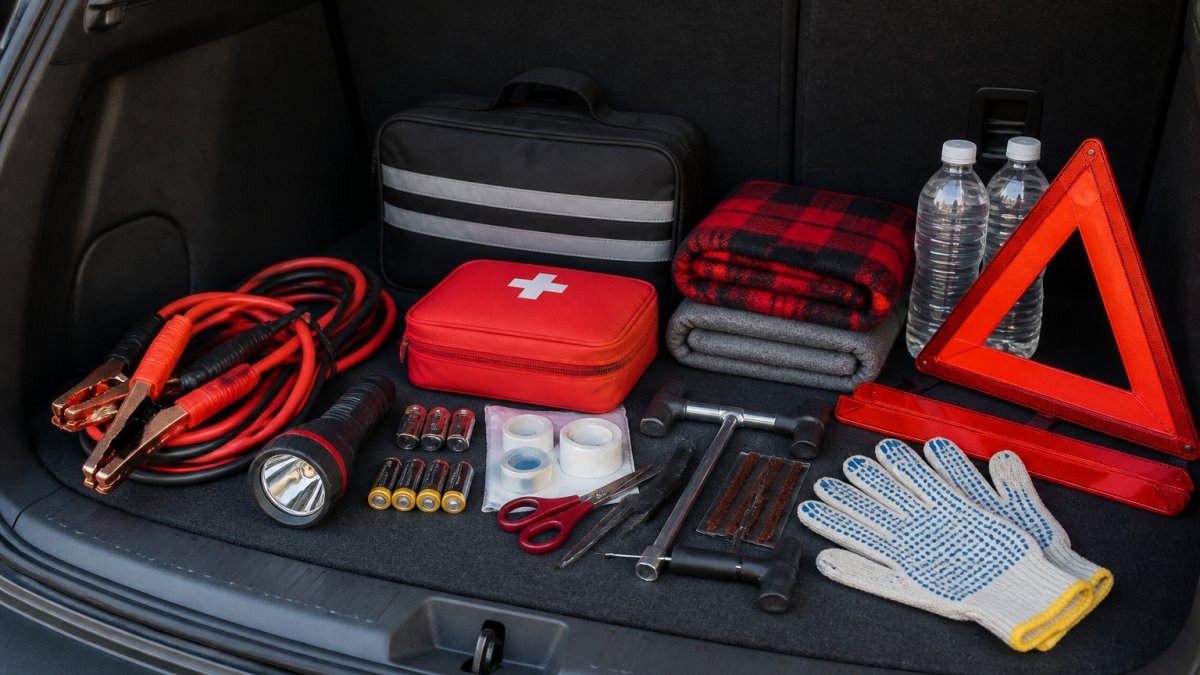
Keep these items in a bag or box in your trunk, accessible and not buried under cargo.
Checking and replacing kit items
Check your supplies every six months: test your flashlight, replace weak batteries, verify jumper cables, and check first-aid supplies for expiration. Keep a checklist in your glove compartment.
What to Do When Your Car Breaks Down
Your immediate actions after a breakdown determine your safety and recovery speed.
The first 60 seconds: activate hazards and assess danger
Activate hazard lights immediately, this alerts other drivers and works even if your engine is off. If hazard lights don’t work, turn on headlights and interior dome light.
Assess your surroundings in 10 seconds: Are you on a highway or quiet street? Is visibility poor? Is your vehicle smoking or leaking? Are you on a curve or hill where drivers can’t see you?
Decision tree: Stay in vehicle, exit safely, or call 911
STAY IN YOUR VEHICLE IF: You’re on a busy highway, traffic is heavy, visibility is poor, you’re on a curve or hill, you’re alone and feel unsafe, or weather is extreme.
EXIT AND MOVE TO SAFETY IF: You’re on a quiet residential or rural road with light traffic, visibility is good, and your vehicle is safely on the shoulder.
CALL 911 IMMEDIATELY IF: Your vehicle is smoking or on fire, you smell gasoline or burning rubber, anyone is injured, you’re stranded in extreme weather, you’re stuck on railroad tracks, another vehicle hit you, or you feel unsafe.
Handle specific breakdown scenarios
Engine won’t start: Try once more; if it fails, use jumper cables if another vehicle stops to help.
Flat tire: Change it yourself on a quiet road if you have a spare, jack, and lug wrench.
Loss of brakes or steering: Don’t drive. If moving, downshift to slow down and use the parking brake gently.
Fluid leak: If small and vehicle runs normally, drive slowly to a repair shop.
Stuck in snow, mud, or ditch: Don’t spin your wheels. Try rocking gently between Drive and Reverse.
Protect yourself while waiting for help
Visibility: Keep hazard lights on continuously. Place reflective warning triangles 100 feet behind and ahead on low-traffic roads. Use flares at night.
Traffic awareness: Watch mirrors for approaching vehicles. On a highway, stay in your vehicle with doors locked.
Communication: Keep your phone charged and nearby. Note the reference number and estimated arrival time. If arrival exceeds 90 minutes, call back to confirm.
Passenger and pet safety: Keep children calm with simple explanations. Keep pets secured and monitor for heat or cold stress. Keep doors locked until help arrives.
What to Tell Roadside Assistance When You Call
Clear communication with dispatchers means faster response times and ensures the service sends the correct type of assistance.
Provide location information first
Provide your location first: Read your exact address, highway number, and mile marker from your phone’s map app. Mention nearby landmarks. Confirm the dispatcher has your location before hanging up.
If you have poor signal: Look for mile markers, describe the road type, and note nearby exits or business names.
Describe your vehicle and situation clearly
Vehicle description: Provide color, make, model, year, and license plate number.
Describe the problem, not your diagnosis: Say what you observe: “The engine won’t turn over and I hear a rapid clicking sound.” Mention warning lights, smells, and sounds.
Safety and weather context: Note whether you’re safely on the shoulder or stuck in a travel lane, traffic volume, weather conditions, and whether there are passengers, children, or pets.
Ask clarifying questions before you hang up
Ask these questions: “What is my reference number?” (Write it down.) “How long until arrival?” “What type of vehicle will arrive?” “Will the driver call 10 minutes before arrival?” “What services are included in my coverage?” “Can they wait if I’m not here?” “Is there a cost if they can’t fix it on-site?”
Stay reachable and update the dispatcher if circumstances change
Once you’ve called, keep your phone charged and nearby. Call back if your vehicle starts smoking, traffic becomes dangerous, weather deteriorates, more than 90 minutes pass with no arrival, or a stranger approaches your vehicle. Provide your reference number when you call back.
Understand what roadside assistance does and doesn’t cover
Typical services include: Towing to a repair facility (usually 5-10 miles), jump-starting, fuel delivery, lockout service, tire change or repair, and winching.
Services usually NOT included: Roadside repairs, towing beyond your mileage limit, parts or fluids, multiple tows in a short period, or towing to a specific repair shop.
Check your coverage: Review your auto insurance policy or membership documents. Note the phone number, coverage limits, and exclusions. Confirm whether your manufacturer includes roadside assistance. If you don’t have coverage, consider purchasing it. Save your membership or policy number in your phone and glove compartment.
How Long Does Roadside Assistance Take to Arrive
Response time typically ranges from 30-90 minutes depending on location, traffic, and service availability. Urban areas are faster; rural areas take longer. Bad weather slows everything down. If you’re in a dangerous situation, mention it when you call for prioritization.
While you wait: Stay in your vehicle with doors locked, keep hazard lights on, don’t accept help from strangers, keep your phone charged, and stay calm. If more than two hours pass without arrival, call back with your reference number and ask for an update.
Prepare Your Vehicle Before Trouble Strikes
Prevention is better than dealing with breakdowns. Regular maintenance catches problems before they strand you on the road.
Monthly maintenance checks
Once a month, spend 10 minutes checking your vehicle. This catches small issues before they become big ones.
Check these items:
- Tire pressure and condition, use your tire pressure gauge. Look for uneven wear or damage.
- All fluid levels, engine oil, coolant, brake fluid, transmission fluid. Top up if low.
- Battery terminals, look for corrosion or loose connections.
- Lights, headlights, taillights, brake lights, and hazard lights.
- Windshield wipers, replace if they’re worn or streaking.
- Belts and hoses, look for cracks or leaks.
Keep records of what you check. Note any problems. Address them before they get worse.
Seasonal preparation for different weather
Summer: Check air conditioning, verify coolant level, inspect tires for wear, and keep extra water.
Winter: Switch to winter or all-season tires, check battery, keep antifreeze at proper level, pack blankets and warm clothing, and keep sand or kitty litter for traction.
Spring and fall: Check wipers, verify all lights work, and check tire tread.
Stay Safe While Waiting for Help
The time between your breakdown and help arriving is when you’re most vulnerable. Your actions during this period determine your safety.
Visibility and traffic awareness on the roadside
Make yourself visible to other drivers. Many accidents happen at the scene of breakdowns because other drivers don’t see the disabled vehicle.
- Keep hazard lights on, this is your primary warning
- Place reflective triangles or flares, put one about 100 feet behind your vehicle, one at your vehicle, and one 100 feet ahead if safe to do so
- Stay inside your vehicle, don’t stand in the road or between your car and traffic
- Wear bright clothing, if you must exit, wear a reflective vest or bright jacket
- Don’t use your phone while standing near traffic, stay alert to approaching vehicles
If you’re on a busy highway, don’t try to fix your vehicle yourself. The risk isn’t worth it. Wait for professional help.
Protecting passengers, children, and pets
For children: Keep them seated and calm, explain what’s happening in simple terms, bring activities to keep them occupied, and make sure they stay inside the vehicle.
For pets: Keep them secured, don’t leave them alone in extreme heat or cold, bring water, and crack windows if it’s extremely hot.
For all passengers: Keep doors locked, don’t open for strangers, stay together, and keep emergency contact numbers.
Digital and Communication Readiness
Store these numbers in your phone: your insurance company’s roadside assistance number, a trusted mechanic, family members or emergency contacts, and Fast Towing San Diego‘s number (24/7 availability). Charge your phone before long trips and bring a portable charger. Text-to-911 is available in many areas if you can’t call.
Being prepared for emergency roadside help isn’t complicated. Stock your vehicle with essential supplies, maintain it regularly, and know what to do when trouble strikes. Fast Towing San Diego is available 24/7 with professionally trained drivers ready to help. Keep our number saved in your phone for when you need us most.
| Preparation Step | What to Do | When |
|---|---|---|
| Stock your kit | Gather jumper cables, flashlight, first-aid supplies, blankets, triangles | Before your first long drive |
| Check supplies | Test batteries, replace expired items, inspect cables | Every 6 months |
| Monthly checks | Inspect tires, fluids, lights, wipers, belts | First of each month |
| Seasonal prep | Switch tires, check battery, add weather-specific items | Before each season |
| Keep numbers | Save roadside assistance and mechanic contacts | Before you need them |
Frequently Asked Questions
What should I do first if my car breaks down on the highway?
First, stay calm and assess your situation. Turn on your hazard lights immediately to alert other drivers. If you’re on a busy highway, move your vehicle to the shoulder or a safe location if possible. Turn off the engine and stay inside your vehicle with the doors locked unless you’re in immediate danger. Once you’re safe, call roadside assistance or 911 if needed. Do not attempt to fix the problem yourself on a live roadway.
What essential items should I keep in my roadside emergency kit?
Your roadside emergency kit should include jumper cables, a flashlight with extra batteries, a first-aid kit, blankets or warm clothing, work gloves, a tire pressure gauge, a jack and lug wrench, reflective triangles or road flares, drinking water, nonperishable snacks, clean rags, and a basic tool set. Store these items in a waterproof container in your trunk and check them every six months to replace expired supplies like batteries and first-aid items.
What information should I provide when calling roadside assistance?
Tell the dispatcher your exact location, including highway name and mile marker if visible. Describe your vehicle’s make, model, year, and color, plus your license plate number. Explain what happened and the vehicle’s current condition, such as engine won’t start, flat tire, or accident damage. Provide your phone number and let them know if you have passengers, children, or pets in the vehicle. If you’re unsure of your exact location, enable location sharing on your phone or look for nearby landmarks or mile markers.
How long does roadside assistance typically take to arrive?
Response times vary based on your location, traffic conditions, and current demand for assistance. In urban and suburban areas, you may expect arrival within 30 minutes to an hour. Rural or remote locations may take longer. When you call, ask the dispatcher for an estimated arrival time. While waiting, stay in your vehicle with doors locked, keep your hazard lights on, and stay alert to your surroundings. Do not accept help from strangers; wait for the official service provider you called.