
Table of Contents
- Preparing Your Vintage Motorcycle for Transport
- Best Motorcycle Tie-Down Techniques for Secure Transport
- Choosing Between Enclosed and Open Transport
- Motorcycle Shipping Insurance Requirements
- Cost of Shipping a Motorcycle Long Distance
- DIY vs. Professional Transport: What’s Right for Your Bike
- Post-Transport Mechanical Checklist
- Frequently Asked Questions
Last Updated: August 22, 2026
Preparing Your Vintage Motorcycle for Transport
Transporting a vintage motorcycle requires more than rolling it onto a trailer. Your classic bike has unique vulnerabilities: brittle fuel lines, delicate chrome, carburetors sensitive to vibration, and mechanical systems that haven’t been stress-tested in decades. Proper pre-shipment inspection and preparation prevent thousands of dollars in damage.
Document your bike’s current condition with photos from multiple angles, including close-ups of existing damage or patina you want to preserve. This protects you in disputes with the transport provider and gives you a baseline for post-transport comparison. Note the fuel level, battery condition, and any mechanical quirks that need addressing before transport.
Drain the fuel tank completely or fill it to just a quarter tank. Most carriers prefer minimal fuel for safety and weight distribution. If your bike has been sitting for months, run it for 15-20 minutes to circulate fresh fuel and prevent carburetor gumming during transit (peer-reviewed research).
Check tire pressure to manufacturer specifications, overinflated tires can rupture during temperature fluctuations. Remove loose accessories like mirrors, turn signals, and windscreens. Secure the handlebars straight ahead using a handlebar lock or gentle cloth wrapping to prevent fork stress during loading.
Document the odometer reading and fuel level in writing. Ensure the ignition is off and the kill switch is in the run position so the engine won’t accidentally start if jostled.
Best Motorcycle Tie-Down Techniques for Secure Transport
Improper tie-downs can bend frames, crack engine cases, and damage suspension components. The goal is to anchor your bike firmly without applying direct pressure to fragile parts.
Soft Tie-Downs vs. Hard Points
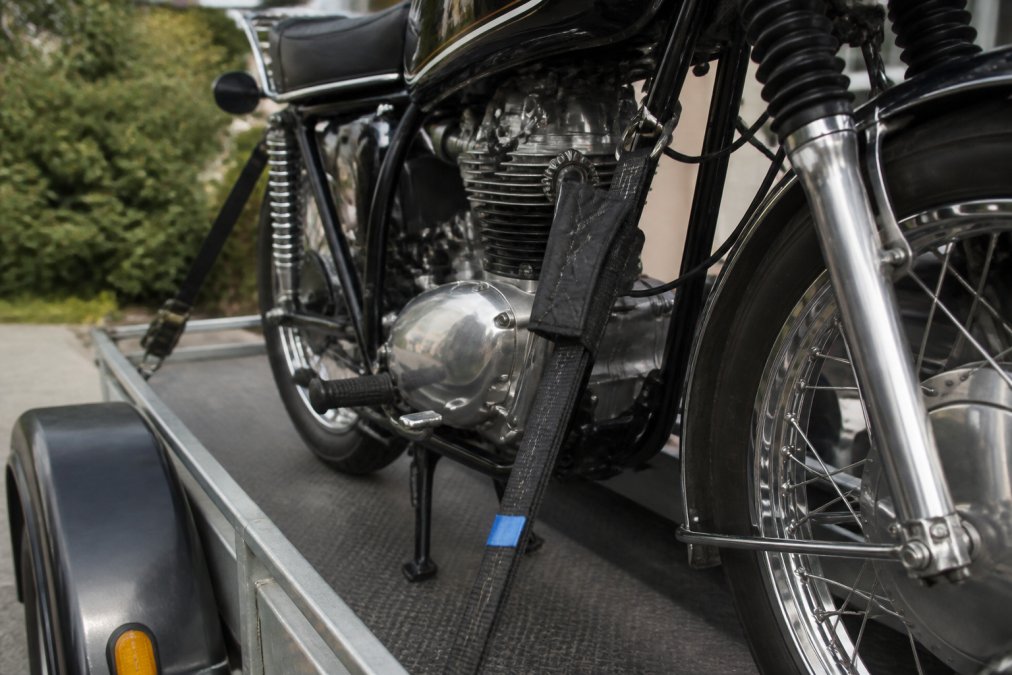
Soft tie-downs, padded straps made from nylon or canvas, are the industry standard for vintage motorcycles. They distribute pressure across a wider area than metal chains or ratchet straps, reducing the risk of denting fuel tanks or cracking paint.
Never attach tie-down straps directly to handlebars, footpegs, or exhaust pipes. These components aren’t designed for highway transport forces. Instead, secure straps to the frame itself, ideally to main frame tubes near engine mounting points or to dedicated tie-down loops. If your bike lacks factory tie-down points, ask the transport provider about frame-safe attachment methods.
Proper Securement Procedures
A four-point tie-down system is standard: two straps securing the front frame and two securing the rear. Each strap should be snug but not over-tightened. The bike should not rock side-to-side or shift forward and backward. Push on the seat, the entire bike should move as one unit with the trailer.
Straps should run from frame anchor points toward the trailer’s hard points at roughly a 45-degree angle. Straps that are too vertical create excessive downward pressure; straps that are too horizontal don’t prevent forward or backward movement effectively.
Tension should be applied gradually and evenly in a cross-pattern to prevent tilting. Check all tie-down connections after the first 30 minutes of transport, as vibration can cause straps to settle or shift.
Choosing Between Enclosed and Open Transport
The choice between enclosed and open transport depends on protection level, cost, and your bike’s specific vulnerabilities.
Open transport exposes your motorcycle to road debris, weather, and UV light. Gravel can chip paint and chrome; rain can seep into electrical connections. Open carriers are typically more affordable because they consolidate multiple vehicles.
Enclosed transport protects against weather, debris, and UV damage. The bike travels inside a fully enclosed trailer, sometimes with climate control options. This costs more but eliminates weather exposure and reduces vibration-related wear. For bikes with original paint, rare finishes, or humidity-sensitive mechanical systems, enclosed transport is the safer choice.
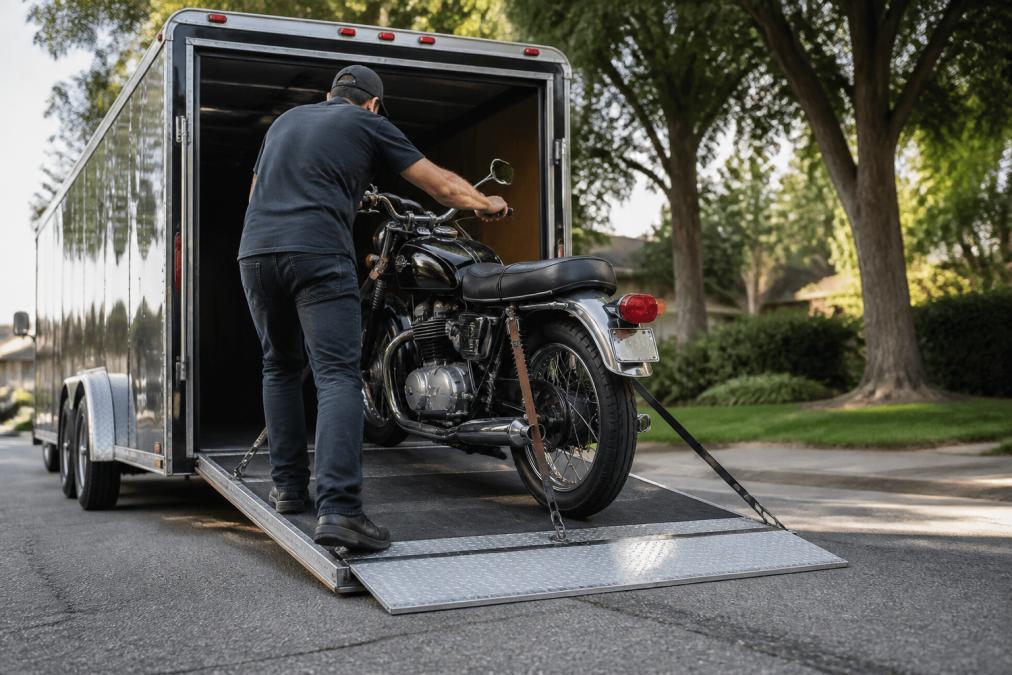
Consider the route and season. A vintage motorcycle traveling through the Southwest in summer faces intense sun and dust; enclosed transport makes sense. Winter travel through the Midwest faces road salt, sleet, and temperature swings that damage delicate fuel systems; enclosed is nearly essential. Short regional transport on clear days might justify open transport savings.
Ask about climate control options within enclosed carriers. Some premium services maintain temperature and humidity stability, ideal for original finishes or rust-prone mechanical systems.
Motorcycle Shipping Insurance Requirements
Insurance for motorcycle transport is not optional, it’s a legal and practical necessity. The transport provider’s liability coverage typically covers damage caused by negligence, but gaps can leave you exposed.
Most professional carriers carry liability insurance covering physical damage during transport, loading, and unloading. However, coverage often has limits and exclusions. Insurance typically does not cover pre-existing damage, damage from improper bike preparation, or acts of God unless the carrier was negligent.
Before booking, request the carrier’s insurance certificate and review coverage limits. A typical policy covers up to $50,000 per vehicle, but vintage motorcycles worth more may be underinsured (iii.org). Ask about additional coverage options or whether you should extend your personal motorcycle insurance to include transport coverage.
Contact your insurer and confirm coverage before the bike ships. Some policies automatically extend to professional transport; others require a rider or additional premium. Document the bike’s condition before and after transport with photos for any insurance claim.
Cost of Shipping a Motorcycle Long Distance
The cost of shipping a vintage motorcycle long distance depends on distance, transport method, bike weight, and fuel prices.
Distance is the primary cost driver. Regional transport of 200-300 miles costs less than cross-country transport of 2,000+ miles. Open transport over long distances is cheaper than enclosed because carriers consolidate multiple bikes, spreading costs across customers.
Bike weight and dimensions affect pricing. A lightweight vintage motorcycle (under 400 pounds) costs less than a heavy cruiser (600+ pounds). Oversized bikes or those with wide saddlebags may require special handling, increasing costs.
Seasonal demand influences pricing. Summer is peak season with higher transport costs; winter is often cheaper but carries weather risks, which is why many owners choose enclosed carriers despite added expense.
Get quotes from multiple carriers and request itemized breakdowns of fuel surcharges, base fees, and handling charges. Be wary of quotes significantly cheaper than others, they may reflect less experienced carriers or lower insurance coverage. Fast Towing San Diego can connect you with trusted transport partners and help you understand what’s included in each quote.
DIY vs. Professional Transport: What’s Right for Your Bike
The decision to transport your vintage motorcycle yourself or hire a professional depends on your experience, the bike’s value, and distance involved.
DIY transport means renting a trailer and driving it yourself. The primary advantage is cost savings. For short regional trips (under 300 miles) with a bike you know intimately and have trailer experience, DIY transport can work.
The risks are substantial. Improper tie-down techniques can damage the frame or suspension during the first hour of highway driving. Trailer accidents put your bike at total loss risk. Most personal auto insurance policies do not cover cargo damage, so you’re liable for repairs (naic.org).
Professional transport eliminates these risks. Experienced carriers know how to load vintage motorcycles safely, have proper insurance, and handle logistics. For valuable vintage motorcycles or long-distance transport, professional carriers are the standard choice.
The cost-benefit analysis depends on bike value. A vintage motorcycle worth $15,000 or more justifies professional transport, even at $1,500-2,500 for cross-country shipping. A less valuable bike worth $5,000 might justify DIY transport if you have the skills.
Fast Towing San Diego offers professional motorcycle transport with over 100 years of combined experience securing vintage bikes. We offer enclosed and open transport options, and our professionally trained drivers ensure your vintage motorcycle arrives in perfect condition.
Post-Transport Mechanical Checklist
After transport, a thorough inspection prevents damage from going unnoticed until it causes bigger problems.
Start with a visual inspection. Compare the bike to your pre-transport photos. Look for new dents, scratches, or paint chips. Check chrome for corrosion. Inspect the frame, fork, and swing arm for cracks or bending. Document any new damage immediately.
Check the fuel tank for leaks or damage. Inspect fuel lines for cracks or separation. Start the engine and listen for unusual noises. Let it run for 10 minutes to warm up.
Test the brakes by squeezing the front lever and spinning the wheel, it should slow smoothly without binding. Check the rear brake by rolling backward and applying pressure. Listen for leaks or soft lever feel indicating air in the lines.
Inspect the electrical system. Check that all lights work and the battery is charged with clean connections. Check tire pressure and condition, topping up to manufacturer specifications. Inspect sidewalls for cracks or bulging.
Test the transmission and clutch by shifting through all gears while running. The clutch should engage smoothly without slipping or grabbing. Take a short test ride on familiar roads to verify everything feels normal.
Transporting a vintage motorcycle safely requires planning, proper preparation, and often professional help. Work with a carrier you trust, one with experience handling classic bikes and insurance coverage that protects your investment. Fast Towing San Diego has helped countless vintage motorcycle owners transport their prized machines. Contact us for a transport quote and let our experienced team handle the logistics while you focus on getting your classic bike to its destination in perfect condition.
Frequently Asked Questions
What is the safest way to transport a vintage motorcycle?
The safest method combines proper preparation, enclosed transport, and professional handling. Start with a pre-shipment inspection to document the bike’s condition. Use soft tie-downs attached to the frame’s securement points rather than handlebars or fenders. Enclosed transport protects against road debris and hazardous weather. If you’re transporting long distance, professional carriers with experience handling vintage bikes minimize vibration and movement. Always verify transit insurance covers the full replacement value before transport begins.
How much does it cost to ship a motorcycle long distance?
Pricing for long-distance motorcycle shipping depends on distance, transport method, and bike condition. Enclosed transport typically costs more than open transport but provides better protection for vintage bikes. Door-to-door service costs more than terminal-to-terminal delivery. Factors affecting cost include fuel, carrier experience level, and whether the bike requires special handling due to fragile components. Contact a professional carrier for a shipping quote tailored to your specific route and bike specifications.
Do I need special insurance for shipping a vintage motorcycle?
Yes, motorcycle shipping insurance requirements differ from standard motorcycle coverage. Your personal policy typically doesn’t cover the bike during transport by a third party. Transit insurance protects against damage during loading, transport, and unloading. Coverage should match the bike’s actual replacement value, especially for antique motorcycles. Verify the carrier’s liability coverage and whether it covers road debris, weather damage, and mechanical issues. Document your bike’s condition with photos before shipment and review the bill of lading carefully.
Should I use an enclosed trailer for a classic motorcycle?
Enclosed transport is strongly recommended for vintage and antique motorcycles. Enclosed trailers protect against road debris, weather exposure, and UV damage that can harm original paint and chrome. They also reduce vibration dampening concerns and provide climate control options for bikes with sensitive components. Open transport is cheaper but exposes the bike to dust, rain, salt spray, and temperature fluctuations. For high-value classic bike restoration projects or irreplaceable vintage machines, enclosed transport is worth the additional cost to preserve mechanical integrity and appearance.