
Jump Start vs Battery Replacement
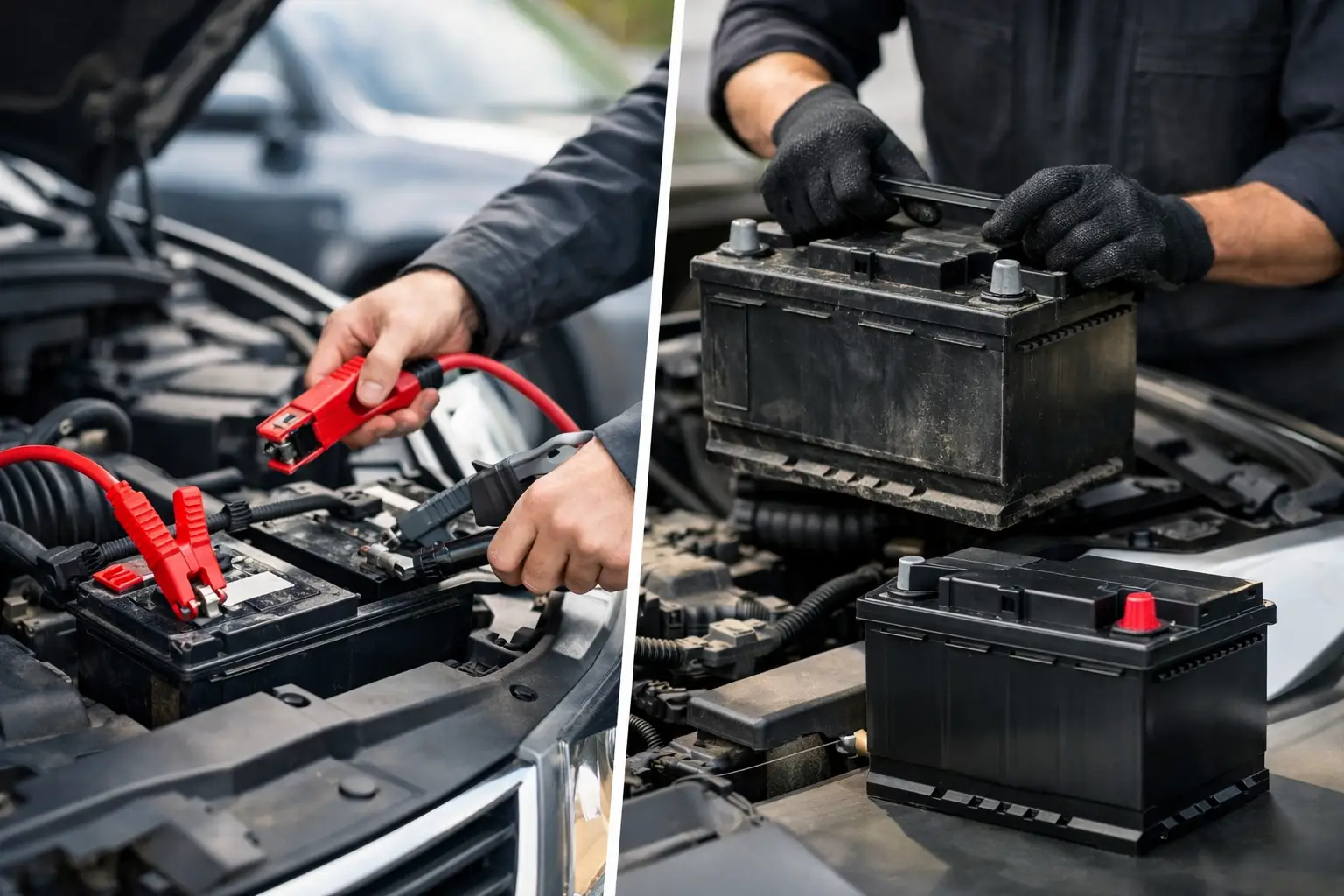
⏱️ Read Time: 5 mins
📍 Service Area: San Diego County
⭐ By: Fast Towing San Diego
You turn the key, hear a click, and now you are stuck deciding between a jump start vs battery replacement. That decision matters more than most drivers think. Sometimes a quick boost gets you back on the road in minutes. Other times, a jump start only delays the next breakdown until later today, tomorrow morning, or in the middle of traffic.
If your battery is dead in San Diego, the real question is not just how to start the car. It is whether the battery still has life left in it. A lot of drivers waste time and money treating a worn-out battery like it only needs a recharge. Others replace a battery that could have been saved with a proper jump and a little diagnosis. The smart move is knowing the difference.
Jump start vs battery replacement: what is the real difference?
A jump start is a temporary solution. It gives your battery enough outside power to crank the engine so the alternator can take over. If the battery is still in decent shape and was only drained by something like lights left on, an open door, short trips, or sitting too long, a jump start may be all you need.
Battery replacement is different. That is what you do when the battery can no longer hold a charge, deliver enough cranking power, or recover reliably after being drained. In plain terms, the battery is done. You might get it started one more time with jumper cables, but you cannot trust it.
That is why this is not really an either-or question. A jump start tells you whether the car can start right now. Battery replacement solves the reason it keeps failing.
When a jump start is probably enough
A battery can go dead for reasons that do not mean it is bad. If your headlights were left on overnight, if the interior light stayed on, or if the vehicle sat for a week or two without being driven, the battery may simply be discharged. That is very different from a battery that has reached the end of its life.
If the car starts normally after a jump and then keeps starting fine later that day and the next day, there is a good chance the battery was just low. The same goes if the battery is fairly new and has not shown any other warning signs before now.
Cold starts are less of a factor in San Diego than in colder parts of the country, but heat is hard on batteries too. High temperatures speed up battery wear and fluid loss. So even if your battery was only drained once, age still matters.
A jump start is most likely to help when the problem came from a clear one-time mistake or temporary drain. It is less convincing when the battery has been acting weak for weeks.
Signs you need battery replacement, not another jump
This is where drivers get burned. The vehicle starts after a jump, so they assume the problem is solved. Then it dies again at the gas station, in a parking lot, or before work the next morning.
If your engine has been cranking slower than usual, that is a warning sign. If the dash lights flicker, the electronics seem weak, or you have needed more than one jump in a short period, the battery is probably failing. If the case is swollen, leaking, cracked, or corroded heavily around the terminals, stop guessing. It is time to replace it.
Battery age matters too. Most car batteries last around three to five years, but San Diego heat can shorten that timeline. If your battery is pushing that range and now needs a jump, replacement is often the safer call.
A dead battery after driving for a while can also point to a charging system issue, not just the battery itself. If the alternator is weak, the battery may not be getting recharged properly. That is another reason repeated jump starts are a bad strategy. You want the actual cause identified, not just enough power to get moving.
How to tell what happened after the jump
What the car does after a jump tells you a lot. If it starts quickly, runs normally, and starts again later after being shut off, that suggests the battery may have only been discharged. If it dies immediately after the cables come off, the battery may be too far gone to hold a charge, or the charging system may have a bigger issue.
If it starts but struggles again after a short stop, that is a red flag. A healthy battery should handle a restart without drama once the engine has run long enough to recover some charge. If it cannot, there is a good chance you are looking at replacement.
Pay attention to the pattern, not just the first result. One successful jump does not automatically mean the battery is healthy.
Why repeated jump starts can cost you more
Drivers often try to squeeze a few more days out of a weak battery. We get it. Nobody wants surprise car costs. But repeated jump starts come with trade-offs.
First, they waste time. Second, they increase the chance you get stranded somewhere inconvenient or unsafe. Third, constant deep discharge can damage the battery further. In some cases, repeated attempts to start with a failing battery can also put extra strain on the starter and charging system.
The cheap option is not always the low-cost option. If the battery is already failing, replacing it early is usually less expensive than dealing with a tow, missed work, or a no-start situation in traffic or a dark parking lot.
Common battery problems that are not actually battery failure
Not every no-start means the battery needs replacement. Corroded terminals can block good electrical contact. Loose battery connections can make a healthy battery act dead. A parasitic drain, like an electrical component that stays on after the car is off, can kill even a newer battery overnight.
Then there is the alternator. If the battery keeps going low after driving, the charging system should be checked. Replacing the battery without fixing the alternator only gives you a fresh battery that will also go dead.
That is why honest diagnosis matters. A good roadside tech does more than clip on cables and hope for the best. They look at the condition of the battery, the connections, the symptoms, and what happens after the jump.
What about EVs, hybrids, and newer vehicles?
This matters more than people realize. On many hybrids and EVs, the issue may involve the 12-volt battery, not the main high-voltage pack. That smaller battery still controls startup functions and electronics. When it fails, the vehicle can act completely dead.
The fix is not always the same as with a standard gas vehicle. Some newer vehicles also have battery management systems, sensitive electronics, or manufacturer-specific jump points. Using the wrong method can create bigger problems.
That is one reason many drivers would rather call a professional than risk doing damage in a parking lot. If you drive something high-end, electric, or unusual, careful handling matters.
When roadside help is the better call
If you are in a driveway with tools, daylight, and another car available, you might try a jump yourself. But if you are on the side of the road, in a garage, in traffic, or unsure whether the battery is safe to handle, get help.
A fast roadside response takes the guesswork out of it. The right technician can jump the vehicle correctly, check for obvious battery failure signs, and help you decide whether you can keep driving or need replacement and repair. If the car still will not start, you are already connected to the next step instead of starting over.
That is where a local urgent-response company like Fast Towing earns its keep. Speed matters, but so does knowing when a jump is enough and when the vehicle needs more than that.
The smarter way to think about jump start vs battery replacement
Think in terms of reliability, not just immediate movement. A jump start gets you going if the battery was drained. Battery replacement restores dependability when the battery is worn out. If you only care whether the engine starts once, a jump may seem like the answer. If you care whether the car starts tomorrow, next week, and when you really need it, battery condition is the real issue.
There is no prize for squeezing the last breath out of a dying battery. If the signs point to failure, replace it before it leaves you stranded somewhere worse than your driveway. And if the battery is simply drained, a proper jump and a little attention to the cause can save you from replacing a part you did not need to replace.
The best call is the one that gets you back on the road without setting you up for the same problem again two hours later.
Licensed, insured, and rapid response units on standby across all San Diego corridors.