
Light Duty Towing Guide for San Diego Drivers
⏱️ Read Time: 5 mins
📍 Service Area: San Diego County
⭐ By: Fast Towing San Diego
A stalled car on I-5, a dead battery in a downtown garage, or accident damage on a busy San Diego street can turn into a bigger problem fast. This light duty towing guide gives you the straight answer on what light towing covers, when you need it, and what a professional tow operator should do to protect your vehicle from pickup to drop-off.
What Is Light Duty Towing?
Light duty towing is built for passenger vehicles and smaller personal-use vehicles. That includes most sedans, coupes, minivans, compact SUVs, motorcycles, and standard pickup trucks. The tow truck, equipment, and loading method are selected for the size, weight, condition, and drivetrain of the vehicle.
“Light duty” does not mean careless or basic. A late-model SUV with all-wheel drive needs a different approach than a front-wheel-drive sedan. An EV has battery and weight considerations. A lowered sports car needs clearance and careful loading. The right tow operator checks the vehicle before hooking up, then uses the equipment that fits the job.
For many San Diego drivers, light towing is the service they need after a breakdown, collision, mechanical failure, flat tire, or a vehicle that simply will not start. It can also be the right choice for scheduled transport to a shop, home, dealership, storage facility, or body shop.
When to Call for a Light Duty Tow
The question is not always, “Can my car move?” It is, “Can it move safely without creating more damage?” If there is any doubt, a tow is usually cheaper than a ruined transmission, damaged wheel, overheated engine, or a second accident.
Call for light duty towing when your vehicle has collision damage, will not start after a jump attempt, has overheated, has a flat with no safe spare, or has a mechanical issue that makes driving risky. A tow is also the smart move when a warning light is flashing, fluids are leaking, steering feels wrong, or you smell burning rubber or electrical wiring.
Here are a few situations where drivers should stop trying to “make it home” and call now:
- The vehicle has been in an accident, even if it appears drivable.
- A wheel, tire, axle, bumper, or suspension component is damaged.
- The engine is overheating or losing oil, coolant, or transmission fluid.
- The vehicle is stuck in a parking garage, driveway, soft ground, or an unsafe roadside location.
- An EV, all-wheel-drive vehicle, motorcycle, or low-clearance car needs transport.
A short drive with the wrong mechanical problem can become an expensive repair. That is not being overly cautious. It is protecting your vehicle and getting yourself out of danger.
The Right Tow Method Depends on Your Vehicle
A good tow starts before the truck arrives. Dispatch should ask what you drive, where it is located, what happened, whether it can roll, and where it needs to go. Those details help send the correct truck instead of sending a one-size-fits-all solution.
Flatbed Towing
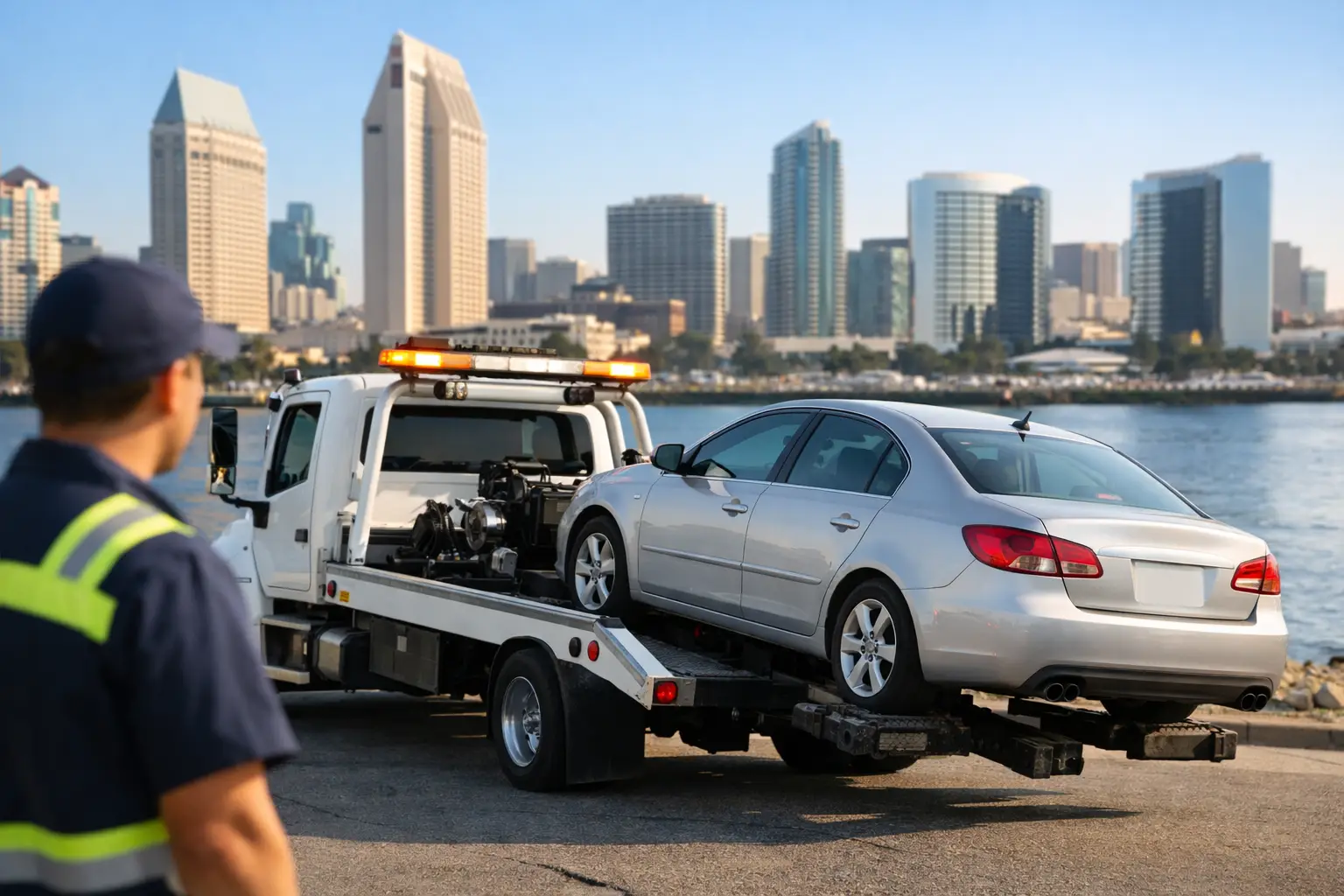
Flatbed towing is often the best option for vehicles that cannot safely roll on their own wheels. The entire vehicle is loaded onto the bed, keeping all four tires off the road. It is a strong choice for accident-damaged vehicles, all-wheel-drive cars, EVs, luxury vehicles, motorcycles, low-clearance cars, and vehicles with major mechanical issues.
Flatbeds provide added control during loading and transport. That matters when a car has body damage, a locked wheel, or a broken suspension part. It also helps reduce unnecessary mileage and wear on the vehicle.
Wheel-Lift Towing
Wheel-lift towing raises either the front or rear wheels, depending on the vehicle’s drivetrain and condition. It can be efficient for certain local tows, tight-access locations, and vehicles that are mechanically sound enough for the proper wheels to remain on the road.
The trade-off is simple: wheel-lift towing is not right for every vehicle. It may not be appropriate for all-wheel-drive vehicles, vehicles with severe collision damage, or cars with low front ends. A knowledgeable operator will make that call based on your vehicle, not based on what is fastest for the truck.
Specialty Handling for EVs and Low-Clearance Cars
Electric vehicles are often heavier than comparable gas-powered cars and may require specific handling procedures after an accident or battery issue. They should not be treated like an ordinary sedan. The same goes for exotic cars, lowered imports, and performance vehicles with limited ground clearance.
Proper loading may require ramps, careful winching, soft straps, and extra attention to the vehicle’s designated tow points. If someone promises to hook up and go without asking what kind of vehicle you have, that is a red flag.
What to Do While You Wait for the Tow Truck
Your first priority is safety. If you are on a freeway shoulder or near fast-moving traffic, move yourself and your passengers to a safe location when possible. Turn on your hazard lights. If the vehicle is unsafe to exit, stay belted inside unless emergency responders direct you otherwise.
Before the truck arrives, gather your driver’s license, registration, insurance information, and destination address. Remove valuables, work equipment, medication, garage remotes, and anything you will need before the vehicle reaches the shop. If you are leaving keys with the operator, keep a spare set if you have one.
Take a few clear photos of your vehicle, especially after an accident. Photograph the damage, the license plate, and the surrounding scene if it is safe. This gives you a record for your insurance claim and helps avoid confusion later.
If the vehicle is being towed from a parking structure, gated complex, or narrow street, tell dispatch before the truck is sent. Height limits, access codes, steep driveways, and tight turns can affect which truck is needed. A fast response is great. Sending the right equipment the first time is even better.
Questions Worth Asking Before the Tow Begins
You do not need to become a towing expert in the middle of a stressful breakdown. Still, a few direct questions can give you confidence that your vehicle is in capable hands.
Ask where the vehicle will be taken, whether the quoted price includes the full transport, and what tow method will be used. If you have an all-wheel-drive vehicle, EV, motorcycle, luxury car, or accident damage, say so clearly. Tell the operator if the wheels are locked, the keys are missing, or the vehicle is in neutral only intermittently.
For accident towing, ask whether the destination is your preferred body shop, a repair facility, or a storage yard. You have a say in where your vehicle goes. Do not let confusion at the scene force you into a destination you did not choose unless law enforcement or immediate safety conditions require it.
A professional operator should explain the plan in plain language. You should know what is happening to your vehicle, where it is going, and what the next step is before the truck pulls away.
Choosing a Tow Company When Time Matters
When your car is blocking traffic or stranded after dark, response time matters. But speed alone is not enough. You want a company that answers the phone, asks the right questions, provides clear pricing, and has the equipment to handle the actual vehicle in front of them.
Look for a tow provider that handles roadside assistance as well as transport. Sometimes a jump start, tire change, fuel delivery, or lockout service gets you back on the road without a tow. Other times, the honest answer is that driving would be a bad idea. The right team gives you the service you need, not the service that creates a bigger bill or more risk.
Fast Towing serves San Diego drivers around the clock with light duty towing, roadside help, accident recovery, and careful specialty transport. Whether your vehicle is a daily driver, a motorcycle, an EV, or a low-clearance performance car, the goal is the same: get there fast, handle it correctly, and get you moving toward a solution.
A Tow Should Lower the Stress, Not Add to It
Nobody plans a breakdown, crash, or no-start situation. What you can control is the next call. Give clear details, get yourself to a safe spot, and choose a towing team that treats your vehicle like it matters.
If your car is not safe to drive, do not gamble on one more mile. Call for the right light duty tow and let a professional get it where it needs to go.
Licensed, insured, and rapid response units on standby across all San Diego corridors.