
Table of Contents
- What Is the Minimum Cost for a Tow?
- Breaking Down Towing Charges: Base Rates and Hook-Up Fees
- Factors Affecting Towing Rates
- Average Cost of Towing a Car
- Hidden Surcharges and What to Watch For
- How to Choose a Reliable Towing Company
- Negotiation Tactics and Cost Control
- Insurance and Roadside Assistance Coverage
- Frequently Asked Questions
Last Updated: August 28, 2026
What Is the Minimum Cost for a Tow?
The minimum cost for a tow typically starts with a base rate or hook-up fee, the flat charge a towing company applies before adding distance-based surcharges. Understanding these costs helps you anticipate expenses and avoid surprises. At Fast Towing San Diego, we believe transparency in pricing is essential; you should know what you’re paying for before a tow truck arrives.
Most towing services charge a base fee covering the dispatcher’s time, fuel to reach your vehicle, and the initial hook-up process. This minimum cost varies significantly depending on the time of day, your vehicle type, and local market conditions. The difference between a standard daytime tow and an emergency after-hours call can double or triple your final bill, even if the distance traveled is identical (the FTC).
Many vehicle owners call for a tow expecting a simple transaction, only to receive an invoice with unanticipated charges: mileage surcharges, vehicle weight premiums, winch-out fees, and impound lot expenses. This guide breaks down each cost component so you can make informed decisions and negotiate better rates.
Breaking Down Towing Charges: Base Rates and Hook-Up Fees
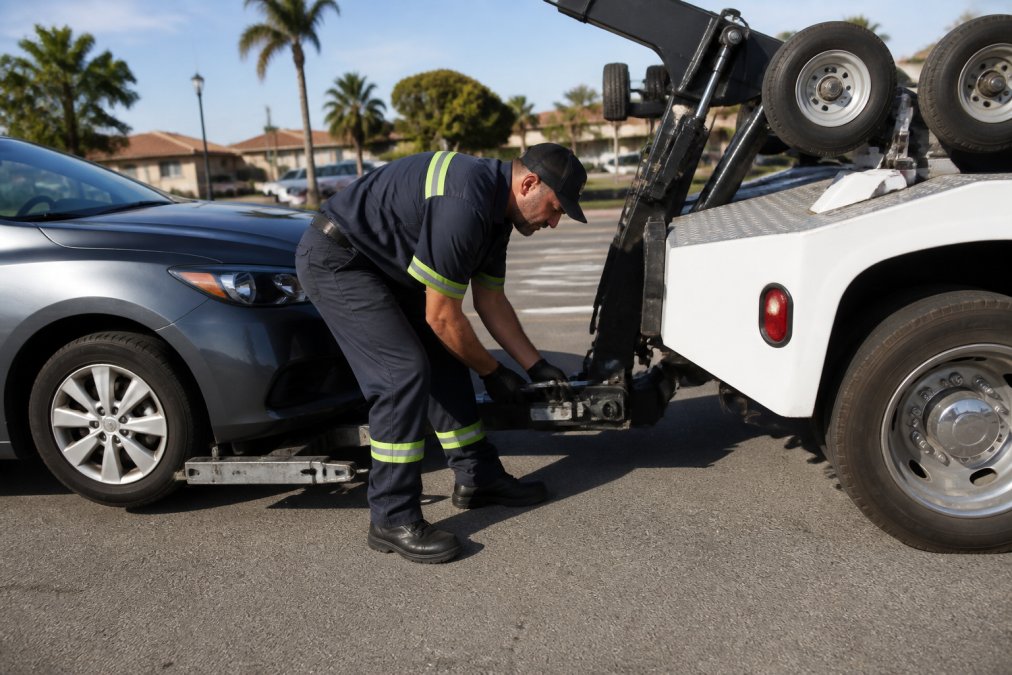
A hook-up fee is the base charge a towing company applies to initiate service. This flat rate covers the dispatcher’s coordination, the driver’s arrival at your location, and the initial connection of your vehicle to the tow truck. The hook-up fee is separate from mileage charges and represents the minimum cost for a tow before any distance-based pricing kicks in.
Base rates vary by service type. Standard daytime tows have lower base rates than emergency after-hours calls. A roadside assistance membership or insurance-backed tow may have a different hook-up structure than a direct cash payment to an independent operator. Comparing quotes between service providers is worth the effort.
One critical detail: the hook-up fee doesn’t include positioning your vehicle for transport. If your car is wedged in a ditch or stuck in mud, you’ll face additional winch-out charges on top of the base rate. Many vehicle owners assume the hook-up fee covers extraction, when it actually covers only straightforward attachment to standard towing equipment.
Fast Towing San Diego charges transparent base rates and clearly explains what’s included in each hook-up fee.
Factors Affecting Towing Rates
Several variables influence what you’ll ultimately pay for a tow.
Distance and Mileage Surcharges
Mileage surcharges are the per-mile cost added to your base rate once the tow truck begins moving your vehicle. Most towing companies charge a flat rate per mile after the initial hook-up, though some use tiered pricing where the per-mile cost decreases for longer distances (bbb.org). A short local tow of 5 miles costs significantly less than a 50-mile tow, but the per-mile rate itself is the real cost driver.
Some operators charge differently for the first mile versus subsequent miles, creating a tiered structure. Others use a simple flat-rate model: the same price per mile regardless of distance. Long-distance towing may involve different pricing entirely, sometimes negotiated as a flat fee rather than per-mile surcharges.
Distance-based pricing can be negotiated, particularly for longer tows. If you’re moving a vehicle 100 miles, asking for a discounted per-mile rate or a flat quote for the entire distance often yields savings compared to the standard tiered structure.
Vehicle Type and Weight Class
Your vehicle’s weight and type significantly affect towing costs. A standard sedan requires different equipment and effort than a full-size pickup truck, SUV, or specialty vehicle. Heavier vehicles require more powerful tow trucks and consume more fuel, which translates to higher mileage surcharges.
Specialty vehicles, motorcycles, exotic cars, boats, or vintage vehicles, often incur premium rates because they require specialized equipment or extra care during transport. A motorcycle needs a dolly or specialized wheel lift to prevent damage. An exotic car may require a flatbed tow rather than a standard wheel lift, increasing the base rate.
Vehicle weight class determines which tow truck is dispatched to your location. A lightweight sedan might be handled by a standard rollback truck, while a full-size SUV requires a heavier-duty vehicle. This decision directly affects your final bill.
Emergency and After-Hours Charges
Towing services available 24/7/365 charge premium rates for emergency calls outside standard business hours. A tow at 2 AM on a Sunday costs more than the same tow at 2 PM on a Tuesday. After-hours surcharges can range from 25% to 100% above the standard daytime rate.
Emergency towing, where your vehicle is blocking traffic or creating a safety hazard, may incur additional charges beyond the after-hours premium. Understanding the difference between scheduled and emergency towing helps you budget appropriately.
Average Cost of Towing a Car
The average cost of towing a car locally depends on several variables. A short local tow of 5-10 miles with a standard hook-up fee and mileage surcharge typically costs less than a 50-mile tow across town.
Factors that determine your cost include the time of day, your vehicle type, the towing distance, and whether the service is routine or emergency-related. A straightforward daytime tow of a standard sedan 10 miles costs considerably less than a midnight tow of a heavy-duty truck 50 miles with winch-out service required.
Getting multiple quotes before committing to a service is the best way to understand pricing in your area. Call three or four local towing companies, provide identical vehicle information and destination, and compare their quotes. Fast Towing San Diego provides transparent quotes upfront so you know exactly what you’ll pay before we dispatch a truck.
Hidden Surcharges and What to Watch For
Beyond the base rate and mileage charges, several additional fees can surprise vehicle owners.
Impound lot and storage fees are charged by the facility where your vehicle is stored after towing. These are separate from the towing company’s charges. If your vehicle is towed to an impound lot, you’ll pay daily storage fees until the vehicle is claimed. These fees can accumulate quickly, sometimes reaching hundreds of dollars per week.
Winch-out service is charged when your vehicle requires extraction from a ditch, mud, or other difficult position. This is a significant additional charge, sometimes doubling or tripling the total cost.
Dispatch fees are charged by some towing companies to cover the cost of the dispatcher coordinating your call. This is separate from the hook-up fee.
After-hours surcharges apply to calls outside standard business hours and can add 25-100% to your total bill.
Vehicle weight surcharges apply when your vehicle exceeds standard weight limits. Heavy-duty vehicles require specialized equipment and more powerful tow trucks.
Flatbed versus wheel lift charges differ in price. A flatbed tow costs more than a standard wheel lift tow. Specialty vehicles often require flatbed service, increasing the cost.
A hidden surcharges checklist helps you anticipate these costs:
- Confirm the hook-up fee and what it includes
- Ask about per-mile mileage surcharges
- Inquire about after-hours premiums if calling outside business hours
- Confirm your vehicle type won’t trigger weight surcharges
- Ask if winch-out service is needed and what it costs
- Clarify whether dispatch fees are included in the quote
- Ask about impound lot fees if applicable
- Confirm flatbed versus wheel lift pricing
How to Choose a Reliable Towing Company

Choosing a reliable towing company goes beyond finding the cheapest quote. You need a service provider who will arrive promptly, handle your vehicle with care, and communicate transparently about costs.
Response time is critical. Ask potential providers about their average response time and whether they guarantee arrival within a specific window. Check online reviews to see whether customers report fast arrivals or long waits. Fast Towing San Diego maintains rapid response times across our service area because being stranded on the roadside is stressful, you need help quickly.
Professional training and experience matter. Verify that the company employs professionally trained drivers with proper licensing and insurance. Ask whether drivers are trained to handle specialty vehicles if that’s relevant to your needs.
Transparency in pricing is essential. A reliable company provides written quotes that break down all charges before dispatching a truck. If a company is vague about pricing, that’s a red flag.
Insurance and licensing verification protects you if something goes wrong. Confirm that the towing company carries liability insurance and is properly licensed to operate in your area.
Customer reviews and reputation reveal how a company actually performs. Read reviews on Google, Yelp, and industry-specific platforms. Look for patterns in response times, fair pricing, and professional service.
Specialty capabilities matter if you have a non-standard vehicle. Confirm the company has experience and proper equipment for that vehicle type before calling in an emergency.
Negotiation Tactics and Cost Control
You have more negotiating power than you might realize when it comes to towing costs.
Get multiple quotes before committing. Call three or four towing companies and provide identical information. Compare their quotes and ask whether any will match a competitor’s lower price.
Negotiate mileage rates for longer distances. If you’re arranging a tow of 50+ miles, ask for a discounted per-mile rate or a flat quote for the entire distance.
Ask about membership or discount programs. AAA members, insurance policyholders, and roadside assistance members may qualify for discounted rates.
Schedule tows during business hours when possible. If your situation isn’t truly an emergency, calling during daytime hours avoids the after-hours surcharge, cutting costs by 25-50%.
Confirm what’s included in your roadside assistance coverage. Understanding your coverage prevents paying out of pocket for charges your policy should cover.
Negotiate payment terms if you’re a repeat customer. If you manage a fleet or regularly need towing services, ask about volume discounts or preferred customer rates. Fast Towing San Diego works with fleet managers to provide discounted rates for regular service.
Ask about insurance claim processes. If your tow is covered by insurance, ask whether the towing company can bill your insurance directly or if you’ll need to pay upfront and seek reimbursement.
Insurance and Roadside Assistance Coverage
Understanding your towing coverage prevents unexpected out-of-pocket expenses.
Auto insurance policies often include towing coverage as an optional add-on. Check your policy to see whether towing is included and what distance is covered. Many policies cover tows up to 10 miles at no cost, with additional mileage charged to you (iii.org).
Roadside assistance memberships like AAA provide towing coverage as part of membership. These memberships typically cover a certain distance (often 100 miles) at no cost to the member.
Extended roadside assistance programs offered by some insurance companies cover multiple tows per year and longer distances. These programs are worth considering if you drive an older vehicle or frequently travel long distances.
Fleet and government accounts often have specialized coverage arrangements. If you manage multiple vehicles, ask about fleet towing programs that provide discounted rates and simplified billing.
What’s typically covered: Most roadside assistance covers the tow itself, the hook-up fee, and mileage charges to transport your vehicle to a repair facility. What’s typically NOT covered includes impound lot fees, storage charges, winch-out service, or tows to destinations other than repair shops.
Filing an insurance claim for a covered tow requires documentation. Ask the towing company for a detailed invoice showing the service date, distance, charges, and vehicle information. Provide this to your insurance company along with your claim.
Towing costs add up quickly when you’re unprepared, but understanding the components, hook-up fees, mileage surcharges, vehicle weight factors, and emergency premiums, gives you control over expenses. The minimum cost for a tow starts with the base rate, but your final bill depends on distance, vehicle type, time of day, and whether additional services like winch-out are needed. Fast Towing San Diego provides transparent quotes, rapid response times, and professional service for any towing situation. Contact us for a quote today and experience the difference professional, reliable towing makes when you need it most.
Frequently Asked Questions
Q: What is the minimum cost for a tow?
A: The minimum cost for a tow typically starts with a base hook-up fee, which covers the service dispatch and initial connection of your vehicle to the towing equipment. Beyond this base rate, costs increase with distance traveled, vehicle weight, equipment type (flatbed versus wheel lift), and whether the service is emergency or scheduled. Most tows include the base fee plus mileage charges. For exact pricing on your specific situation, contact a towing provider directly for a quote based on your location and vehicle details.
Q: How do factors affecting towing rates change my bill?
A: Several factors significantly impact your final towing cost. Vehicle weight class determines which equipment is needed, a heavy-duty truck requires different handling than a sedan. Distance is crucial: longer tows incur higher mileage surcharges. Emergency service at night or on holidays often adds surcharges. The type of towing equipment used (flatbed, wheel lift, or dolly) affects the rate. Specialized services like winch-outs for stuck vehicles or recovery from difficult terrain cost more. Understanding these variables helps you anticipate charges and avoid surprises.
Q: What is the average cost of towing a car, and what’s included?
A: The average cost of towing a car includes a base hook-up fee plus mileage charges calculated from your location to the destination. A standard tow for a typical sedan covers the dispatch, equipment hook-up, and transport to a repair shop or impound lot. Costs vary based on distance, time of day, and your vehicle type. Insurance or roadside assistance plans may cover part or all of this cost, reducing your out-of-pocket expense. Always ask what’s included in the quoted price before confirming service.
Q: Are there hidden charges I should know about before calling for a tow?
A: Yes. Common hidden surcharges include after-hours or emergency service fees, impound lot storage fees if your vehicle is held, dispatch fees separate from the tow itself, and surcharges for specialty equipment like winch-outs or heavy-duty flatbed service. Some providers charge extra for vehicles requiring special handling (motorcycles, exotic cars, boats). To avoid surprises, ask the towing company upfront about all applicable fees, what the base rate covers, and whether storage or additional services will incur extra charges. Request a full breakdown before they arrive.