
Mobile Mechanic Versus Towing: Which Call?
⏱️ Read Time: 5 mins
📍 Service Area: San Diego County
⭐ By: Fast Towing San Diego
Your car will not start in a grocery store parking lot. Or it starts, but a warning light is flashing and the engine is shaking. In a stressful moment, the mobile mechanic versus towing decision comes down to one question: can the vehicle be repaired safely where it sits, or does it need to move now?
The wrong call can waste time, money, and patience. The right call gets you moving again or gets your vehicle to a qualified repair facility without adding damage. Here is how to make the call fast when you are stranded in San Diego.
Mobile Mechanic Versus Towing: The Real Difference
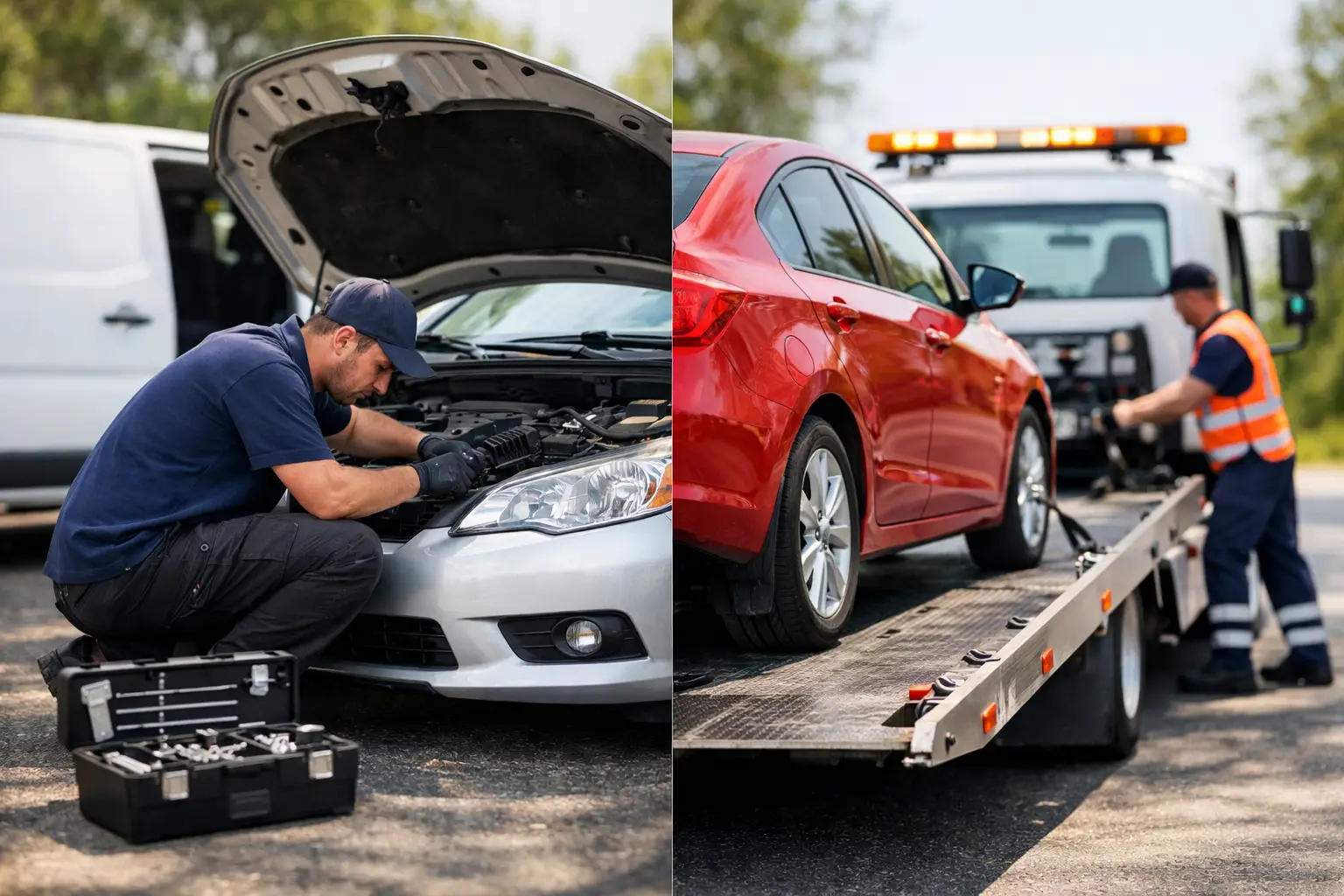
A light mobile mechanic service is built for practical repairs that can be completed on-site. Think dead batteries, basic no-start diagnosis, tire changes, minor roadside fixes, and situations where the vehicle is otherwise safe to drive once the issue is corrected. The benefit is simple: if the fix is straightforward, you may avoid a tow and get back on the road sooner.
Towing is for vehicles that cannot be safely driven, cannot be reliably repaired where they are, or should not remain at the roadside. A tow truck moves the vehicle to your home, a shop, a body shop, a dealership, or another safe destination. It is also the right answer when a crash, drivetrain problem, overheating issue, or major electrical fault makes further driving a bad gamble.
Neither service is automatically better. A mobile mechanic can be the faster, more affordable answer for a minor issue. Towing is the smarter choice when safety, vehicle protection, or a full shop diagnosis is needed.
Call a Mobile Mechanic When the Fix Is Simple and Safe
A mobile mechanic is often the right first call when your vehicle has a problem that is clear, contained, and likely repairable with roadside equipment. A dead battery is the obvious example. If you left a light on, have a weak battery, or need a jump start, you may not need a tow at all.
The same goes for a flat tire when you have a usable spare and no wheel or suspension damage. A professional can install the spare, check for obvious safety concerns, and help you get to a tire shop. Lockouts, minor battery terminal issues, and certain basic no-start conditions can also be handled on location.
That does not mean every no-start is a mobile repair. A dead battery is one thing. A vehicle that cranks but will not fire, has a fuel-system issue, has an immobilizer problem, or shows multiple warning lights may require deeper diagnostic equipment and a repair bay. A good operator will tell you the truth instead of forcing a roadside repair that will not hold.
Mobile service works best when the vehicle is parked in a safe, accessible place. A driveway, parking lot, or wide shoulder is far better than a narrow freeway lane, a blind curve, or an active crash scene. If traffic is flying past your door, the priority is getting you and the vehicle out of danger.
When Towing Is the Only Smart Move
Some vehicle problems are not roadside problems. They are tow problems. If your car has been in an accident, has visible damage, is leaking fluids, is overheating, or will not stay running, do not try to nurse it home. One more mile can turn a manageable repair into a much larger bill.
A tow is also the right call when the transmission is slipping, the steering feels loose, a wheel is damaged, the engine has severe knocking, or the brakes are not working normally. These are not situations to test your luck. Get the vehicle transported safely and let a proper shop inspect it.
For many San Diego drivers, towing is also the better choice when a warning light comes with reduced power, smoke, a burning smell, or strange noises. Modern vehicles can enter limp mode for a reason. EVs, hybrids, and late-model cars have complex electrical and battery systems that should not be guessed at on the roadside.
Specialty vehicles need even more caution. An exotic car, lowered vehicle, motorcycle, EV, motorhome, boat trailer, or commercial truck may require the right equipment and loading method. Improper towing can cause expensive damage, but improper driving after a failure can be worse. Flatbed transport and knowledgeable handling protect the vehicle from the start.
Ask These Questions Before You Decide
You do not need to diagnose the vehicle yourself. You only need to give clear information so the dispatcher can send the right help. Before you call, think through four things:
- Is the vehicle in a safe place, or are you exposed to traffic?
- Is there visible damage, leaking fluid, smoke, or a burning smell?
- Did the problem happen suddenly, or has the vehicle been acting up for days?
- Can the vehicle move, steer, brake, and run normally enough to be driven safely?
If the answer to the safety question is no, request towing. If you see crash damage, a damaged wheel, fluid leaking beneath the car, or smoke from the engine bay, request towing. If the issue is a flat tire, dead battery, or simple lockout and you are safely parked, roadside or light mobile mechanic help may be the best first move.
Be specific about your location. A parking-lot name, cross streets, freeway direction, mile marker, vehicle color, make, model, and whether you are blocking traffic all help speed up the response. If you are in a garage, mention the clearance height. If you are hauling a trailer or driving a motorhome, say so upfront. The right truck matters.
The Cost Question: Repair Now or Transport First?
Cost matters, especially when a breakdown was not in the budget. A mobile mechanic visit can cost less than a tow plus a shop visit when the repair is quick and the vehicle can safely return to service. That is why a jump start, tire change, or straightforward roadside fix makes sense when conditions are right.
But choosing mobile service only because it sounds cheaper can backfire. If the vehicle needs parts, a lift, extensive testing, or a repair that cannot be completed safely in a parking lot, you may still need a tow afterward. In that case, towing first is often more efficient.
Insurance coverage can affect the decision, too. Many policies and roadside plans include towing limits or reimbursement. After a collision, your insurer may have procedures for a claim, but you still need to get the vehicle out of harm’s way. Document the damage, take photos if it is safe, and make sure the vehicle is transported to a place you trust.
Do Not Let a Minor Breakdown Become a Roadside Emergency
The biggest mistake drivers make is continuing to drive because the vehicle can technically still move. A car can move with a low tire, overheating engine, failing alternator, damaged suspension, or transmission issue. That does not mean it should.
If you are on a freeway or busy road, turn on your hazard lights and move as far from traffic as safely possible. Stay aware of passing vehicles. If getting out puts you in danger, stay buckled inside with the doors locked and call for help. Do not stand near the traffic side of the vehicle, and do not attempt repairs beside high-speed lanes.
Fast Towing handles both urgent roadside needs and safe transport, so you do not have to guess whether a simple fix or a tow truck is the better dispatch. The goal is not to sell you a service you do not need. The goal is to get the right equipment to you fast and keep a bad day from getting worse.
When the issue is minor and the vehicle is safe, a mobile mechanic can save the day. When there is any doubt about safety, damage, or drivability, choose the tow. Your vehicle can be repaired later. Getting everyone home safely is the part that cannot wait.
Licensed, insured, and rapid response units on standby across all San Diego corridors.