
Table of Contents
- What to Do Immediately When Running Out of Gas
- Emergency Towing Services Near Me: Your Fastest Option
- 24/7 Roadside Assistance Cost: What You’ll Pay
- Safety Precautions While Waiting for Help
- Emergency Fuel Delivery: How It Works
- Prevent Future Fuel Emergencies
- Frequently Asked Questions
Last Updated: October 3, 2026
What to Do Immediately When Running Out of Gas
Running out of gas can happen suddenly. If you find yourself running out of gas, the first 60 seconds determine your safety and how quickly you get help.
Your immediate priority is getting your vehicle out of traffic and making yourself visible to other drivers.
Turn on hazard lights and move to safety
The moment your engine dies, activate your hazard lights immediately. If you’re on a highway or busy road, turn your steering wheel gently and coast toward the shoulder with controlled movement.
Once you reach the shoulder, shift into Park and keep your hazard lights flashing. Stay inside your vehicle with the doors locked. The shoulder of a highway is not a safe place to stand, especially at night or in poor weather.
Call for help right away
Call for roadside assistance immediately. Professional help arrives faster and handles the situation safely. Have your location ready: your street name, mile marker if you’re on a highway, or nearby landmarks.
Provide your vehicle’s make, model, and color, and let them know if you have passengers. Explain that you’re running out of gas and need fuel delivery or a tow to the nearest gas station.
Fast Towing San Diego operates 24/7 and responds to fuel emergencies across the region. Our team understands the urgency of being stranded and prioritizes fast arrival times. When you call, we’ll ask for your exact location and dispatch help immediately.
Emergency Towing Services Near Me: Your Fastest Option
When running out of gas leaves you stranded, towing services offer the quickest path to a working vehicle, transporting you to the nearest gas station or repair facility in minutes.
How to find and contact a service
Search online for “emergency towing services near me” or “24/7 roadside assistance.” Verify they operate in your area, as some services have geographic limitations.
Have these details ready: your exact location, vehicle’s make and model, whether anyone needs medical attention, and whether your car is drivable. This helps dispatchers send the right equipment and estimate arrival time.
What to expect when they arrive
A tow truck typically arrives quickly. The driver will either provide fuel delivery on-site or tow your car to the nearest gas station or repair facility.
24/7 Roadside Assistance Cost: What You’ll Pay
The cost of emergency fuel delivery or towing varies based on distance, time of day, and location. Services typically charge a base fee plus mileage, with higher rates for nighttime and weekend calls.
Many insurance policies include roadside assistance coverage at no extra charge. Check your auto insurance documents and credit card benefits, as you may already have access to free towing and fuel delivery.
Membership programs like AAA offer discounted emergency services. If you frequently take long road trips, membership may pay for itself after one emergency call.
Contact local services directly for specific pricing. Getting a quote before you need it helps you understand what to expect in an actual emergency.
Safety Precautions While Waiting for Help
The time between calling for help and arrival is when most accidents happen. Stay visible, protected, and make informed choices about whether to leave your vehicle.
Stay visible and protected while in your vehicle
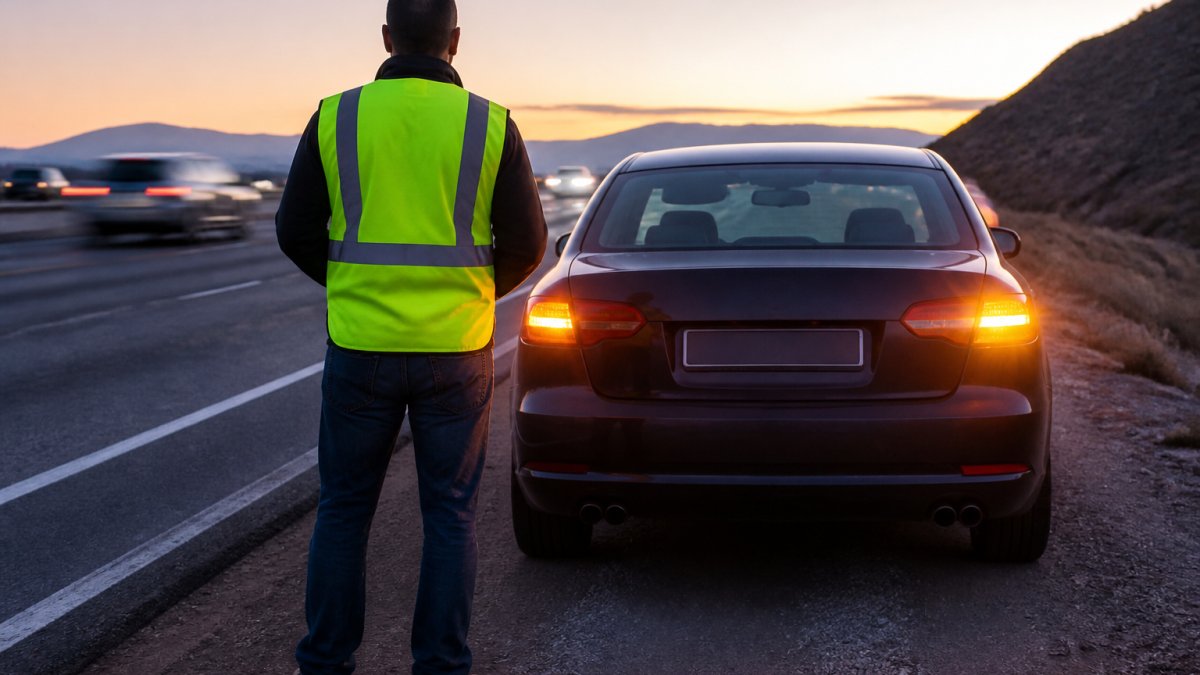
Keep your hazard lights on continuously. If it’s dark, turn on your interior dome light. Wear bright clothing or a reflective vest if you have one.
Never stand in the traffic lane. Stay in your vehicle with doors locked and windows cracked just enough to hear rescuers approaching.
If someone stops to help, ask them to call professional services on your behalf rather than accepting a ride.
Know when it’s safe to leave your vehicle and walk to a gas station
Leave your vehicle only if it’s in immediate danger, smoke, fire, or gas smell, or if a professional rescuer instructs you to.
On freeways and highways: Do not walk. Law enforcement and safety experts advise against walking on freeway shoulders or traveling lanes under any circumstances. High-speed traffic, limited visibility, and driver inattention make freeway shoulders one of the most dangerous places to stand.
On city streets and local roads: Walking to a nearby gas station is generally legal and safer than on highways, but only if:
- The gas station is within a short, safe walking distance
- The route has sidewalks or safe pedestrian paths
- It is daylight or well-lit evening hours
- You are not alone (bring a passenger if possible)
- You leave a note on your vehicle with your location and expected return time
Check your phone’s GPS or a map app to confirm the distance and route before deciding to walk. Many drivers overestimate how close a gas station is; what looks nearby on a map may be a 20-minute walk through unsafe areas.
If you decide to walk: Carry your phone, wear bright or reflective clothing, and stay on sidewalks. Walk facing traffic so you can see approaching vehicles. Do not use headphones. Return to your vehicle immediately after purchasing fuel; do not linger or explore the area.
If you have children or pets: Do not leave them unattended in the vehicle under any circumstances, even if you’re walking to a nearby station.
On isolated stretches (desert highways, rural areas): Walking is not safe. Long distances between towns, extreme heat, limited cell service, and sparse traffic make walking a dangerous choice. Professional fuel delivery or towing is your only safe option.
Emergency Fuel Delivery: How It Works
Mobile refueling services bring gasoline directly to your vehicle, eliminating the need for a tow. This option works when your car is mechanically sound and simply out of fuel. The process is straightforward and takes minutes.
Mobile refueling services available 24/7
Fuel delivery companies operate 24/7. When you call, dispatch sends a mobile refueling truck to your location. The driver arrives with fuel and pumps it into your tank.
Specify how much fuel you need, typically 5 to 10 gallons to reach the nearest gas station. The driver handles all pumping and safety protocols.
Mobile refueling is faster and often cheaper than towing when your vehicle is mechanically sound. Weather and traffic are the main factors affecting arrival time.
What happens after fuel arrives
Once the driver tops off your fuel tank, start your engine and let it run for a minute to ensure the fuel system is working properly. If your engine starts immediately and runs smoothly, you’re ready to drive to the nearest gas station and fill up completely.
If your engine doesn’t start even after refueling, the driver will call for a tow truck. This prevents you from attempting to start the car repeatedly, which can drain your battery further. A professional assessment determines whether the problem is fuel-related or mechanical.
Most drivers proceed directly to a gas station after fuel delivery. Fill your tank completely rather than adding just a few gallons. This prevents running out of gas again before you reach home or your destination.
Prevent Future Fuel Emergencies
Running out of gas once teaches a hard lesson. Preventing it from happening again requires awareness, specific habits, and tools that track your fuel consumption in real time.
Fuel management and preventative maintenance
Never let your fuel tank drop below one-quarter full. The lower your fuel level, the greater the risk of running out, especially if traffic delays prevent you from reaching a gas station. On long drives, refuel whenever you pass a gas station, even if your tank is half full. This habit eliminates the stress of searching for fuel on empty.
Check your fuel gauge before every drive. Make it as automatic as checking your mirrors. A quick glance at the gauge takes one second and prevents hours of inconvenience.
Your fuel gauge itself requires maintenance. If the gauge reads empty but your car starts fine, the gauge may be faulty. Have a mechanic inspect it. A broken fuel gauge is a common cause of running out of gas unexpectedly.
Keep your fuel pump and fuel filter clean. A clogged filter reduces fuel flow and makes your engine less efficient, causing you to burn through fuel faster. Regular maintenance, oil changes, filter replacements, and fuel system checks, keeps your vehicle running efficiently. Regular maintenance, including fuel filter replacement, keeps your vehicle running efficiently. Check your owner’s manual for your vehicle’s specific interval.
Driving habits that improve fuel efficiency
Aggressive acceleration and speeding are the fastest ways to drain your fuel tank. Maintaining a steady speed on highways uses significantly less fuel than high speeds.
Idling burns fuel without moving you forward. If you’re stopped in traffic for an extended period, turning off your engine can save fuel.
Reduce excess weight in your vehicle. Remove roof racks, cargo carriers, and unnecessary items from your trunk. Extra weight forces your engine to work harder, reducing fuel economy.
Use cruise control on highways to maintain a consistent speed, which improves fuel efficiency. Plan routes to avoid heavy traffic and rush hours; stop-and-go driving consumes far more fuel than steady-state highway driving.
Apps and tools to track fuel levels and plan routes
Real-time fuel tracking: Consider using smartphone apps that track fuel levels and prices. These tools can help you find affordable fuel and monitor your vehicle’s efficiency, providing alerts when you’re running low on fuel.
Onboard vehicle displays: Modern vehicles with onboard computers display real-time fuel economy on the dashboard. Watch this number during your drive. If it drops significantly, your driving habits or vehicle condition needs adjustment.
Route planning for long trips: Before driving long distances, use Google Maps or Apple Maps to identify gas station locations along your route. Search for “gas stations” along your route and note their locations. On rural highways or desert routes, identify the longest stretch between stations and plan to refuel before entering that section.
Set reminders for long drives: Use your phone’s timer or calendar app to set alerts every 200 miles on long trips. A simple alarm reminds you to check your fuel level and refuel if necessary. This low-tech solution works surprisingly well for preventing emergencies on road trips.
Identify high-risk zones: Certain routes in the region have longer stretches between gas stations. Certain routes toward the desert and rural mountain roads have significant gaps between fuel stops. If you frequently travel these routes, identify the gas stations before you need them and refuel proactively.
Frequently Asked Questions
What should I do immediately if I run out of gas on the highway?
Turn on your hazard lights immediately and safely move your vehicle as far onto the shoulder as possible. Stay inside your vehicle with doors locked and windows up if you’re on a busy freeway. Call emergency roadside assistance or towing services right away. If you must exit the vehicle, wear a reflective vest and stay well away from traffic. Never attempt to walk to a gas station on a highway, wait for professional help to arrive.
How much does emergency towing services near me typically cost?
Costs for emergency towing services vary depending on distance, time of day, vehicle type, and your location. Service fees depend on quantity, dates, and delivery circumstances. Contact Fast Towing San Diego directly for current pricing or a quote tailored to your situation. Many roadside assistance memberships or insurance policies cover towing costs, so check your coverage before paying out of pocket.
Can I call the police if I run out of gas?
You can contact law enforcement if you’re in immediate danger or stranded in a hazardous location, but police typically cannot provide fuel delivery. Instead, call a roadside assistance service or towing company that offers 24/7 availability. Police can help if you’re unsafe on a highway or need traffic control while waiting for help, but they’ll likely direct you to professional fuel or towing services for the actual assistance.
How long does 24/7 roadside assistance take to arrive?
Response times depend on your location, current demand, and traffic conditions. Professional roadside assistance services aim for quick arrival, with many operating 24/7/365 to serve drivers at any hour. Provide your exact location and vehicle details when you call to help dispatchers locate you faster. Urban areas typically see quicker response times than remote locations. Ask the service for an estimated arrival time when you call.