
Table of Contents
- Why Emergency Towing Costs So Much
- 1. Check Your Auto Insurance Policy for Towing Coverage
- 2. Review Credit Card Roadside Assistance Benefits
- 3. Join an Auto Club Membership for Affordable Towing
- 4. Understand Average Cost of Towing a Car Before You Call
- 5. Compare Local Towing Service Rates and Ask for Discounts
- 6. Negotiate Your Towing Bill: Scripts That Work
- 7. Avoid Peak Time and Hidden Fees to Save Money on Emergency Towing
- The Bottom Line on Saving Money on Emergency Towing
- Frequently Asked Questions
Last Updated: September 5, 2026
The average emergency tow can wipe out a small emergency fund in a single phone call. Between the hook-up fee, the mileage rate, and the after-hours surcharge, a breakdown on the highway often costs far more than the repair itself. The good news is that most drivers overpay because they call the first number they find without checking the coverage they already own. This guide breaks down seven proven ways to save money on emergency towing before you ever need to make that call.
Emergency towing is a service you hope you never need but should always be prepared to pay for smartly. Most drivers do not realize that their auto insurance policy, credit card benefits, or cell phone plan may already include roadside assistance. We will show you exactly how to check each one, what to ask for when you call a towing service provider, and which hidden fees to watch for on your final bill. The strategies below have helped countless drivers cut their out-of-pocket costs significantly, sometimes to zero.
Why Emergency Towing Costs So Much
Towing companies charge a premium for emergency dispatch because they are providing on-demand assistance at any hour. Unlike a scheduled transport, an emergency call requires a driver to drop everything, travel to your location, and often work in unsafe conditions on the roadside. That urgency is built into the price through several line items you should understand before you sign anything.
The typical bill breaks down into three main components: a hook-up fee to attach your vehicle, a per-mile rate for the towing distance, and any additional charges for after-hours service or special equipment. A flatbed tow costs more than a wheel-lift because the equipment is more expensive to operate and provides safer transport for your vehicle. Many companies also add a fuel surcharge or an environmental fee that has nothing to do with the actual service provided.
Understanding this structure matters because it gives you negotiation use. When you know the average cost of towing a car is built from these components, you can ask pointed questions about each one before agreeing to the service. A reputable company will break down its pricing clearly; one that hesitates is likely hiding something.
1. Check Your Auto Insurance Policy for Towing Coverage
Your auto insurance policy is the first place to look for potential savings because you may already be paying for coverage you never use. Many insurers offer roadside assistance as an inexpensive add-on endorsement, often costing just a few dollars per year per vehicle. This coverage typically includes towing up to a set mileage limit, jump starts, flat tire changes, and lockout assistance.
Check your declarations page or call your agent to confirm whether roadside coverage is included. For example, Erie Insurance’s roadside assistance coverage is available as an add-on that covers towing up to 20 miles with unlimited service calls. Similarly, State Farm’s roadside assistance options can be added to your existing policy and billed directly to your insurer, meaning no out-of-pocket expense at the scene.
The key advantage of insurance-based coverage is the reimbursement process. When your policy covers the tow, the provider bills your insurance company directly, so you never handle the payment. If you do pay upfront, you submit the receipt for reimbursement later, which still beats paying the full emergency rate yourself.
Do not assume your policy includes towing just because you have comprehensive or collision coverage. Roadside assistance is almost always a separate endorsement that requires an explicit opt-in. A quick call to your agent takes five minutes and could save you hundreds later.
2. Review Credit Card Roadside Assistance Benefits
Many premium credit cards include roadside assistance as a built-in perk, and most cardholders never realize it exists. This benefit often covers towing up to a certain distance, usually around 10 miles, along with jump starts, tire changes, and fuel delivery. The best part is that you have already paid for this coverage through your annual fee or the card’s benefits package.
Call the number on the back of your card or check your benefits guide online to see what towing services are included. Some cards partner with major roadside networks and will dispatch a service provider directly to your location. Others reimburse you after you pay the towing bill yourself, so keep every receipt and document the service carefully.
One limitation to note: credit card roadside assistance typically covers the driver, not the vehicle. If you are driving someone else’s car or a rental, the benefit may not apply. Also, coverage is usually limited to vehicles under a certain weight, so motorcycles and larger trucks may not qualify for the standard benefit.
3. Join an Auto Club Membership for Affordable Towing
An auto club membership is the most reliable way to save money on emergency towing if you do not already have coverage through insurance or credit cards. Memberships like AAA’s roadside assistance plans provide 24/7 dispatch, towing up to a set mileage based on your tier, and a network of vetted service providers. The annual fee is modest compared to a single emergency tow, making it a smart investment for anyone who drives regularly.
AAA offers coverage tiers ranging from Basic to Premier, with higher tiers providing longer towing distances and additional perks like battery service and fuel delivery. For RV owners, Good Sam’s specialized roadside plans cover heavy-duty vehicles and trailers that standard memberships will not touch. These specialized plans cost more but are far cheaper than paying for a commercial tow of a large vehicle out of pocket.
The tradeoff with any membership is that you pay annually regardless of whether you use the service. For drivers who have never needed a tow, that feels like wasted money. But consider it insurance: one emergency tow without coverage can easily cost more than several years of membership dues.
Before renewing your auto club membership, check whether your insurance or credit card already provides towing. If you have overlapping coverage, cancel the duplicate membership and keep the money. If you drive an older vehicle or commute long distances, the membership is worth every penny.
4. Understand Average Cost of Towing a Car Before You Call
Knowing the average cost of towing a car in your area gives you a baseline for evaluating any quote you receive. Towing rates vary by region, but the structure is consistent: a hook-up fee plus a per-mile rate. The hook-up fee covers the driver’s time and equipment deployment, while the mileage rate covers the distance from your breakdown location to the repair shop.
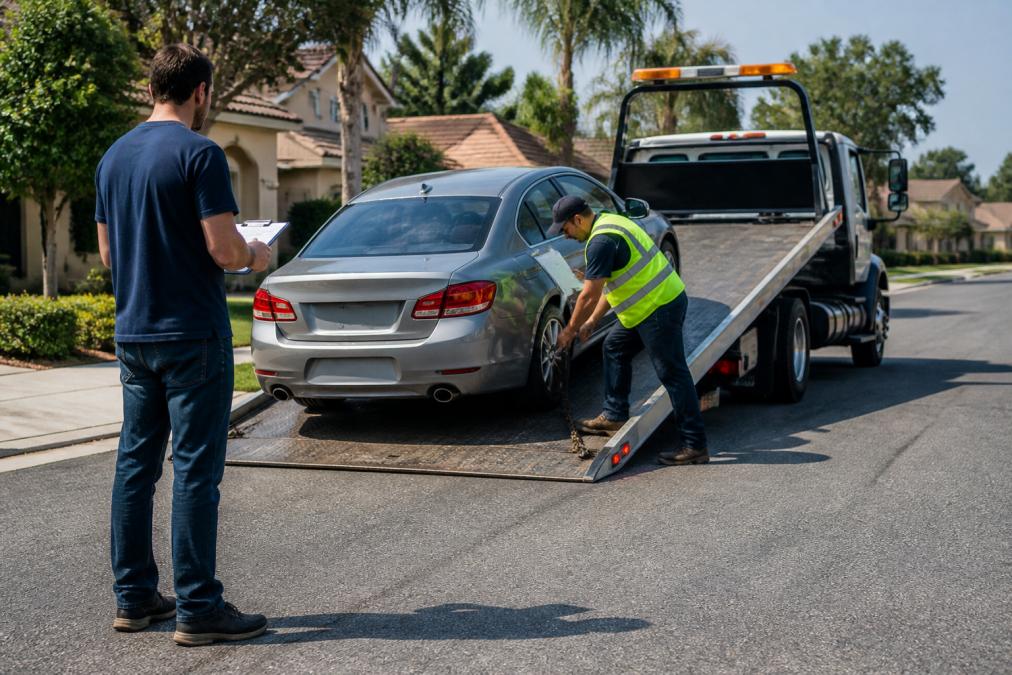
When you call for a tow, ask for a towing estimate before the truck arrives. A reputable dispatcher can give you a ballpark figure based on your location and destination. If the quote seems high, ask whether the rate includes the hook-up fee or if that is charged separately. Some companies quote a low mileage rate but add a hefty hook-up fee that doubles the final bill.
The towing distance is the single biggest factor in your total cost. If your car breaks down near home, you might pay only the hook-up fee and a short mileage charge. If you are stranded far from your preferred repair shop, the mileage charges add up quickly. In an emergency, consider towing to the nearest reputable shop rather than your usual mechanic across town.
| Cost Component | What It Covers | How to Reduce It |
|---|---|---|
| Hook-up fee | Driver time and equipment deployment | Ask if it is waived with membership or insurance |
| Mileage rate | Distance from pickup to drop-off | Tow to the nearest qualified shop |
| After-hours surcharge | Service during nights and weekends | Wait until morning if safe to do so |
| Special equipment | Flatbed or heavy-duty towing needs | Confirm your vehicle type before dispatch |
5. Compare Local Towing Service Rates and Ask for Discounts
Comparing local towing rates before you need service is the smartest move you can make. Emergency situations do not allow time for shopping around, so research providers in your area during a calm moment. Save the contact information for two or three reputable companies in your phone, along with notes on their quoted rates and any membership perks they offer.
When you do call, ask directly about discounts. Many towing companies offer reduced rates for seniors, military members, first responders, and fleet accounts. At Fast Towing San Diego, we provide special discounts for First Responders, Military, and fleet accounts, recognizing the service these groups provide to the community. If you qualify for any of these categories, mention it when you call.
Do not be afraid to mention a competitor’s quote if you have one. Towing is a competitive business, and many dispatchers have flexibility to match or beat a published rate. The key is to ask politely and have the specific numbers ready. A vague request for a discount is easy to decline; a concrete comparison is harder to ignore.
6. Negotiate Your Towing Bill: Scripts That Work
Negotiation is the most underused tool for saving money on emergency towing. Most drivers accept the first quote they hear because they feel trapped at the roadside. The reality is that dispatchers have some flexibility, especially when you ask the right questions in the right order.
Start by asking for the complete breakdown: “Can you give me the total cost including the hook-up fee, the mileage rate, and any surcharges before you send the truck?” This single question signals that you understand the pricing structure and are comparing options. If the quote includes an after-hours surcharge, ask: “Is there any way to waive that surcharge if I can wait until regular business hours?”
If you have roadside assistance through any source, mention it early: “I have towing coverage through my insurance, so I need you to bill them directly.” This changes the conversation because the provider knows they will be dealing with an insurance adjuster who scrutinizes rates. You can also ask about a cash discount, since some providers prefer immediate payment over processing insurance paperwork.
The most effective negotiation script is simple: ask for the full breakdown, mention any coverage you have, and ask if the rate is negotiable. Dispatchers hear these requests daily, and many have authority to adjust pricing to secure the job.
7. Avoid Peak Time and Hidden Fees to Save Money on Emergency Towing
Timing your tow can save you more money than any other single strategy. Emergency towing rates spike during peak hours, typically nights, weekends, and holidays, when demand is highest and fewer drivers are on duty. If your vehicle is in a safe location and you can wait until morning, the after-hours surcharge disappears from your bill.
Consumer guidance on towing and roadside scams from the Federal Trade Commission warns drivers to watch for hidden fees and bait-and-switch pricing. Reputable companies provide written estimates before service; others quote a low rate and add charges for “unforeseen complications” once your vehicle is hooked up. Always ask for the total price in writing before you agree to the tow.
Common hidden fees include charges for winching if your car is in a ditch, charges for unloading at the destination, and administrative fees for processing payment. Ask specifically about each of these before the truck arrives. Also confirm the payment methods accepted, since some providers charge a convenience fee for credit card payments.
The mobile app alternative is worth mentioning. Several apps now connect drivers directly with nearby towing providers, allowing you to compare quotes side by side before committing. These platforms often show driver ratings and estimated arrival times, giving you more information than a blind phone call. The tradeoff is that app-based pricing sometimes excludes the hook-up fee, so confirm the total before the driver departs.
The Bottom Line on Saving Money on Emergency Towing
Saving money on emergency towing comes down to preparation and asking the right questions. Check your auto insurance policy and credit card benefits before you need them, join an auto club if you drive regularly, and research local towing rates during calm moments. When an emergency does happen, ask for a full price breakdown, mention any coverage you have, and do not accept hidden fees without question.
At Fast Towing San Diego, we believe transparent pricing and fast response times should be the standard, not the exception. Our team brings over 100 years of combined experience, operates 24/7/365, and handles everything from motorcycles to exotic cars. We also help connect you with trusted repair shops after an accident, so you are never left figuring out the next step alone. Get a quote from Fast Towing San Diego and know exactly what your tow will cost before the truck arrives.
Frequently Asked Questions
How can I negotiate a lower towing fee?
Call the dispatcher directly and ask for a breakdown of the hook-up fee and mileage rate before the truck arrives. Mention you’ve received quotes from other providers and ask if they can match the rate. Ask about discounts for cash payment, first responders, military, or fleet accounts. If the bill seems inflated after service, request an itemized invoice and dispute any charges you didn’t approve in advance.
Does my auto insurance cover emergency towing costs?
Standard auto insurance policies don’t include towing, but many providers offer roadside assistance as an add-on endorsement for a few dollars per year. Check your policy documents or call your agent to confirm. Coverage typically includes towing up to a set mileage limit, like 20 miles, plus jump starts and tire changes. If you have this coverage, file a claim with your insurer and keep the receipt for reimbursement.
Is it cheaper to use roadside assistance or a private towing company?
Roadside assistance memberships like AAA charge an annual fee, which costs less than a single emergency tow if you use it more than once a year. Insurance add-ons are even cheaper upfront but may have mileage limits. Private towing companies charge per service, which is best if you rarely need help. For occasional drivers, a membership pays for itself after one tow. For rare emergencies, paying a local provider directly may be cheaper.
What hidden fees should I watch out for on my towing bill?
Watch for charges beyond the standard hook-up fee and mileage rate. Common add-ons include after-hours surcharges for nights and weekends, fuel surcharges, environmental fees, and charges for using a flatbed instead of a wheel-lift. Ask for a written estimate before service starts and confirm whether the quoted rate includes all fees. Refuse any charges you didn’t approve in advance.