
Table of Contents
- What Determines Towing Costs in San Diego
- Police-Ordered vs. Private Property Tows
- San Diego Impound Lot Fees and Daily Storage Charges
- Private Property Towing Laws in California
- Understanding Your Rights as a Vehicle Owner
- How to Dispute a Tow Fee in San Diego
- Insurance Coverage and Roadside Assistance Options
- Frequently Asked Questions
Last Updated: August 5, 2026
What Determines Towing Costs in San Diego
Towing costs in San Diego explained depends on several interconnected factors that compound quickly once your vehicle needs transport. The price you’ll pay isn’t arbitrary, it’s built from specific service charges, distance calculations, and vehicle-specific considerations that operators use to quote jobs.
Understanding these components matters because they’re the difference between a manageable $150 tow and an unexpected $400+ charge. When you call for help, knowing what drives pricing helps you ask the right questions and avoid surprises.
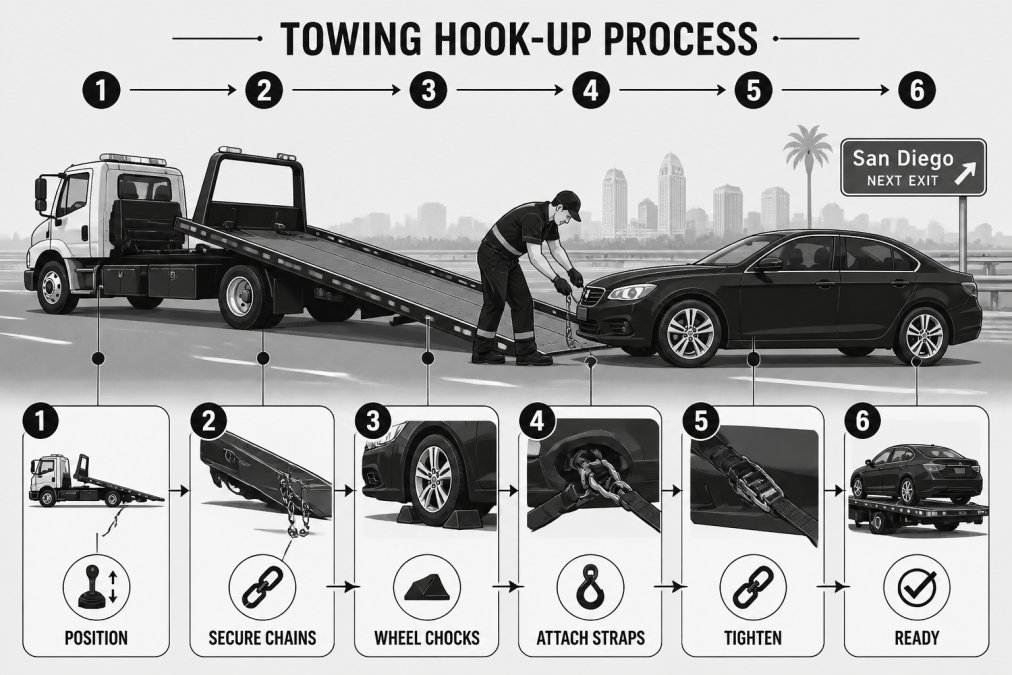
Hook-Up and Service Fees
The hook-up fee is the starting charge every tow begins with. This covers the dispatcher’s time, the driver’s arrival, and the actual connection of your vehicle to the truck. Most towing services in California charge a base service fee that applies regardless of distance.
This isn’t a negotiable component, it’s the cost of having a trained professional arrive at your location and safely secure your vehicle. The fee varies depending on whether your vehicle requires special equipment. A standard passenger car uses different rigging than a motorcycle or luxury vehicle.
Mileage-Based Pricing
Once your vehicle is hooked up, distance becomes the second major cost driver. Towing companies charge per mile, and this rate applies to the entire journey, from your location to the impound lot, repair shop, or destination you specify.
San Diego’s geography matters here. A breakdown on I-5 near the Mexican border versus one in North County involves dramatically different mileage. A 2-mile tow costs far less than a 15-mile transport, but both follow the same per-mile rate structure.
Mileage charges are calculated from the towing company’s nearest dispatch location, not from their main office. This is why calling a local operator matters, they may have a closer staging area, reducing your total distance cost.
Vehicle Type and Weight
Your vehicle’s specifications directly impact pricing. The towing industry classifies vehicles by weight category, and heavier vehicles require more powerful equipment, more fuel, and longer setup time.
A motorcycle tow differs fundamentally from towing a full-size pickup truck or SUV. Motorcycles require special cradles and securing equipment to prevent damage. Exotic cars, boats, and specialty vehicles demand experienced operators and specialized rigs, services that cost more.
The gross vehicle weight rating (GVWR) determines equipment requirements. A standard sedan might use a wheel-lift tow, while a heavy truck requires a flatbed. Flatbed towing costs more because the equipment is more expensive to operate and maintain.
Police-Ordered vs. Private Property Tows
Not all tows are created equal. The circumstances triggering the tow dramatically affect your rights, costs, and options for recovery.
A police-ordered tow happens when law enforcement initiates the removal, typically following an accident, traffic violation, or abandoned vehicle situation. These tows are governed by California Vehicle Code regulations that set specific rules about notification, storage, and your ability to retrieve the vehicle.
Private property tows occur when a property owner (apartment complex, parking lot, business) authorizes removal. These follow different legal frameworks. Private property operators must follow California’s strict requirements for signage, notification, and fee schedules, but the process differs significantly from police-ordered tows.
The cost structure remains similar, but police tows often include additional administrative fees and mandatory storage at city-designated impound lots. Private tows may offer more flexibility in where your vehicle goes, sometimes directly to a repair shop rather than an impound facility.
Understanding which type applies to your situation is critical because it determines your next steps and your options for disputing charges.
San Diego Impound Lot Fees and Daily Storage Charges
Once your vehicle arrives at an impound lot, storage fees begin accumulating immediately. These charges compound daily and can exceed your original towing cost within a week.
San Diego impound facilities charge daily storage rates that vary slightly by location and facility type. The longer your vehicle sits, the faster costs escalate. A vehicle impounded for three days incurs minimal storage fees. A vehicle abandoned for two weeks can rack up hundreds in storage charges alone.
Administrative and Release Fees
Beyond storage, impound lots charge administrative fees for processing your vehicle’s intake, maintaining records, and preparing release documentation. These fees are separate from daily storage and apply once regardless of how long the vehicle remains impounded.
California law permits impound facilities to charge for administrative processing, but the amounts are capped by regulation. San Diego’s administrative fees fall within state guidelines, typically ranging based on the type of impound (police-ordered vs. private property).
Release fees apply when you finally retrieve your vehicle. These cover the paperwork processing and lot attendant time required to authorize your vehicle’s departure. You’ll pay this fee even if you’re retrieving the vehicle after just a few hours.
How to Retrieve an Impounded Vehicle
The retrieval process involves specific steps and required documentation. You cannot simply show up and drive away, impound lots require proof of ownership and authorization before releasing any vehicle.
Start by contacting the impound facility directly to confirm your vehicle’s location and obtain an exact cost estimate. Ask for a breakdown: towing fee, administrative fee, daily storage charges, and any additional charges. This gives you the total amount needed for release.
Bring your driver’s license, vehicle registration, and proof of insurance. Some facilities require additional documentation depending on the impound reason. If someone other than the registered owner is retrieving the vehicle, bring a signed authorization letter from the owner.
Payment must be made in full before release. Most San Diego impound facilities accept cash, check, and credit card. Confirm payment methods when you call, as some facilities have restrictions.
The actual release process typically takes 30 minutes to an hour once you’ve arrived with complete documentation and payment. The lot staff will inspect your vehicle for damage, document its condition, and authorize your departure.
Private Property Towing Laws in California
California’s private property towing regulations exist specifically to protect vehicle owners from predatory practices. These laws set clear rules about signage, notification, and fee structures.
Before a private property tow can legally occur, the property must display proper signage warning that unauthorized vehicles will be towed. The signage must meet specific requirements: minimum size, legible text, and clear visibility from parking areas. A sign hidden behind a dumpster or posted in tiny letters doesn’t meet legal standards.
The property owner or their authorized agent must provide written notice to the towing company authorizing removal. The towing company must attempt to contact the vehicle owner within a specific timeframe. If the owner cannot be reached, the company must document the attempt.
Towing companies operating on private property must be licensed and insured. They cannot charge excessive fees beyond what California law permits. The state sets maximum allowable charges for hook-up, mileage, storage, and administrative fees.
If a private property tow violates these regulations, improper signage, failure to notify the owner, excessive charges, the vehicle owner has grounds to dispute and potentially recover damages. Documentation of the signage, notification attempts, and charges becomes critical evidence.
Fast Towing San Diego operates within these legal frameworks, ensuring that every private property tow follows California’s protective regulations. This protects both property owners and vehicle owners by establishing clear, enforceable rules.
Understanding Your Rights as a Vehicle Owner
Your rights as a vehicle owner extend to how your vehicle is towed, stored, and released. California law provides specific protections that prevent towing companies and impound facilities from operating without oversight.
You have the right to inspect your vehicle before and after towing. Document any existing damage with photos before the tow occurs. When you retrieve your vehicle, inspect it again and report any new damage to the impound facility immediately. This creates a record if you need to file a damage claim.
You have the right to know the exact charges before committing to a tow. Reputable operators provide a quote that breaks down each fee. Hidden charges that appear only on the final invoice violate consumer protection standards.
You have the right to dispute charges you believe are illegal or excessive. California law caps the amounts towing companies and impound facilities can charge. If your bill exceeds these limits, you have grounds to challenge it.
You have the right to retrieve your vehicle without unnecessary delay. Impound facilities must release vehicles promptly once you’ve paid and provided required documentation. Unreasonable delays can constitute a violation of your rights.
You have the right to be notified if your vehicle is towed. For police-ordered tows, the law requires notification within specific timeframes. For private property tows, the company must attempt to reach you. Failure to notify can be grounds for disputing the entire charge.
How to Dispute a Tow Fee in San Diego
Disputing a tow fee requires documentation, clear communication, and understanding which agency handles your specific complaint. The process differs depending on whether the tow was police-ordered or private property initiated.
Gathering Documentation
Start by collecting every piece of paper related to the tow. Your towing invoice, impound receipt, photographs of signage (if applicable), and any communication with the towing company or impound facility become your evidence.
Review the invoice line by line. Identify which charges you believe are incorrect or excessive. Check the mileage calculation against the actual distance traveled. Verify that storage charges match the number of days your vehicle was impounded. Confirm that administrative and release fees fall within California’s legal limits.
Take photographs of the impound lot’s location, any signage, and the condition of your vehicle when you retrieved it. If the tow was from private property, photograph the warning signs (or lack thereof) and document the property’s location.
Write down the date and time of the tow, the location where it occurred, and the name of the towing company. Document any conversations with towing company staff or impound facility employees. These details strengthen your dispute.
Filing a Complaint
For police-ordered tows, file a complaint with the San Diego Police Department’s non-emergency line or through their online complaint system. Provide your documentation and explain which charges you dispute and why.
For private property tows, file a complaint with the California Department of Consumer Affairs. They oversee towing company licensing and can investigate violations of state law. You can also file a complaint with the San Diego County District Attorney’s office.
If the towing company violated signage requirements or failed to notify you, emphasize this in your complaint. These violations often invalidate the entire tow, potentially making you eligible for a full refund.
Send a formal letter to the towing company disputing the charges. Reference specific regulations you believe they violated. Request a detailed explanation of each charge. Keep a copy for your records and send it via certified mail so you have proof of delivery.

If the towing company refuses to adjust charges, consider consulting with a consumer protection attorney. Many offer free initial consultations and can determine if you have grounds for a lawsuit.
Insurance Coverage and Roadside Assistance Options
Your vehicle insurance may cover towing costs under specific circumstances. Understanding your policy’s coverage prevents out-of-pocket expenses and ensures you use covered services.
Comprehensive and collision coverage often include towing as an add-on benefit. The coverage typically provides a set amount, often $100 to $500, toward towing and roadside assistance. Check your policy documents or call your insurance agent to confirm your coverage limits.
Roadside assistance plans through your insurance company or as standalone memberships offer towing coverage with specific providers. These plans often cover multiple tows per year and may include jump starts, lockout assistance, and fuel delivery. The benefit is that your out-of-pocket cost may be minimal or zero if you use a network provider.
Some credit card companies offer roadside assistance as a cardholder benefit. American Express and premium cards often include towing coverage. Check your card’s benefits guide to see if this applies.
AAA membership includes towing coverage for members. The amount varies by membership tier, but AAA members typically receive discounted or free towing from affiliated providers. If you’re a member, calling AAA first can save money compared to calling a non-affiliated towing company.
When you call for towing, ask if the company participates in your insurance network or roadside assistance plan. Using a network provider often means lower out-of-pocket costs. Non-network providers may require you to pay upfront and submit receipts to your insurance for reimbursement.
Fast Towing San Diego works with major insurance companies and roadside assistance programs, making it easier for customers to access covered benefits.
Getting towed is stressful, but understanding what drives costs removes some of the uncertainty. When you need professional towing in San Diego, knowing these factors helps you ask informed questions and avoid surprises. Fast Towing San Diego’s 24/7 availability and experience handling everything from standard sedans to exotic vehicles and boats means you get transparent pricing and professional service when you need it most. Call Fast Towing San Diego for a straightforward quote and fast response, no hidden fees, just reliable towing support backed by over 100 years of combined team experience.
Frequently Asked Questions
How much does it cost if your car gets towed in San Diego?
Towing costs in San Diego vary based on the type of tow, distance, vehicle weight, and whether it’s a police-ordered or private property tow. Most tows include a hook-up fee plus mileage charges. Storage fees accumulate daily at the impound lot. For an accurate quote on your specific situation, contact Fast Towing San Diego directly for current pricing and availability.
What are my rights if my car is towed in San Diego?
California law requires towing services to provide written notice of towing charges, storage fees, and your right to dispute the tow. You have the right to request an itemized invoice, inspect your vehicle before paying, and file a complaint with the California Department of Consumer Affairs if fees are unreasonable. Private property tows must follow specific signage and notice requirements under California Vehicle Code.
Does insurance cover towing costs in San Diego?
Many auto insurance policies include roadside assistance coverage that covers towing, though limits and conditions vary. Some policies cover only accident-related tows, while others cover mechanical breakdowns. Check your policy or contact your insurer to confirm coverage. AAA membership and some credit cards also offer towing benefits. Fast Towing San Diego works with insurance companies and can help with the claims process.
How can I dispute an unfair towing fee in San Diego?
Gather your towing invoice, photos of signage at the property, and any communication with the towing company. File a complaint with the City of San Diego Consumer Protection Division or the California Department of Consumer Affairs. Document that proper notice was not given or that fees exceed legal limits. Request mediation if available, and keep records of all correspondence. An attorney can advise on civil claims if the tow was unlawful.