
Table of Contents
- What Happens When Your Car Battery Dies
- Immediate Steps: What to Do When Your Car Won’t Start
- How to Jump-Start Your Dead Car Battery Safely
- Mobile Car Battery Replacement: When Jump-Starting Isn’t Enough
- What Happens After a Jump-Start
- When to Call for Professional Roadside Assistance
- Preventing Dead Battery Problems
- Frequently Asked Questions
Last Updated: October 12, 2026
What Happens When Your Car Battery Dies
Your car won’t start. The engine cranks but doesn’t turn over. The lights dim or go completely dark. These are the signs that your car battery has died, and it’s one of the most common roadside emergencies we handle at Fast Towing San Diego.
When a car battery dies, it means the battery no longer holds enough electrical charge to power your vehicle’s starter motor. The battery is responsible for providing the initial burst of electricity needed to crank your engine. Without it, nothing happens. No ignition. No dashboard lights. No radio. Just silence.
A dead battery can happen for several reasons. You left your headlights on overnight. The alternator isn’t charging properly. Your battery is simply old and worn out. Cold weather drains battery power faster. Or you have a parasitic drain, something in your vehicle drawing power even when the car is off.
The good news: a dead battery is almost always fixable. In many cases, a simple jump-start gets you back on the road in minutes. In others, you’ll need a replacement. Either way, knowing what to do in the moment makes a huge difference.
Immediate Steps: What to Do When Your Car Won’t Start
When your car won’t start, stay calm. Your safety comes first. Here’s exactly what to do.
Move to safety. If you’re on a busy road or freeway, turn on your hazard lights immediately. If it’s safe to do so, move your vehicle out of traffic. If you can’t move safely, stay inside your car with your seatbelt on and call for help right away.
Don’t keep trying to start the engine. Repeated attempts to start a dead battery drain it further and can damage your starter motor. Try once or twice. If nothing happens, stop.
Call for roadside assistance. This is the safest option, especially if you’re in traffic or unsure about jump-starting yourself. At Fast Towing San Diego, we respond quickly and handle the job safely. We’re available 24/7/365.
If you’re in a safe location, you have two options:
- Attempt a jump-start if you have jumper cables and another vehicle nearby
- Wait for professional help to arrive
Don’t leave your car running unattended while waiting for assistance. Keep your doors locked. Stay alert to your surroundings.
How to Jump-Start Your Dead Car Battery Safely
Jump-starting a car battery is straightforward if you follow the right steps. A jump-start works by using another vehicle’s battery to provide the electrical power your battery needs to start the engine.
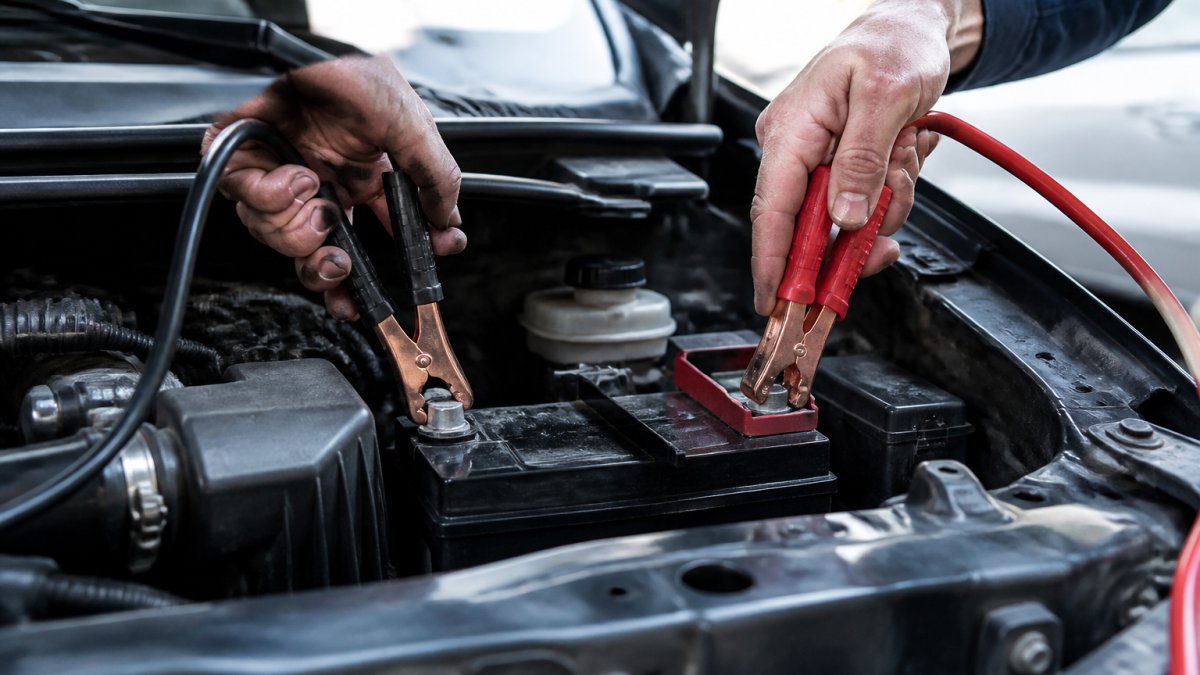
What you need:
- Jumper cables (at least 4 to 6 gauge)
- Another vehicle with a working battery
- Both vehicles parked close enough for cables to reach
The steps:
-
Position both vehicles. Park the working vehicle close to yours, but not touching. Turn off both engines.
-
Locate the batteries. Open both hoods and find the battery terminals. The positive terminal is marked with a + sign or red cover. The negative terminal is marked with a − sign or black cover.
-
Connect the red cable. Attach one end of the red (positive) jumper cable to the positive terminal of the dead battery. Then attach the other end to the positive terminal of the working battery.
-
Connect the black cable. Attach one end of the black (negative) cable to the negative terminal of the working battery. Then attach the other end to an unpainted metal surface on your engine block, NOT the negative terminal of the dead battery. This prevents sparks.
-
Start the working vehicle. Let it run for 2-3 minutes. This charges your dead battery.
-
Start your vehicle. Try starting your car. If it starts, let it run for at least 20 minutes to recharge the battery further.
-
Disconnect the cables. Remove them in reverse order: black cable from your engine, black cable from the working vehicle, red cable from the working vehicle, red cable from your battery.
Safety tips:
- Never jump-start a battery that’s cracked, leaking, or visibly damaged
- Wear safety glasses if you have them
- Keep metal objects away from the battery terminals
- Don’t smoke near the battery, batteries release hydrogen gas
How Long to Jump-Start a Car Battery
A jump-start typically takes 5 to 10 minutes from start to finish, assuming both vehicles are positioned close together and you follow the steps correctly.
The process breaks down like this:
- Positioning vehicles and opening hoods: 1-2 minutes
- Connecting cables: 2-3 minutes
- Running the working vehicle: 2-3 minutes
- Starting your vehicle: 1 minute
- Disconnecting cables: 1-2 minutes
After jump-starting, drive your car for at least 20-30 minutes to let the alternator recharge the battery. This is critical. If you drive for only a few minutes and then turn off the engine, the battery may be too weak to start again.
If your car starts but dies again shortly after, the problem isn’t the battery, it’s likely your alternator. The alternator charges the battery while the engine runs. If it’s not working, the battery drains even while you’re driving. Have a mechanic check your alternator before assuming you need a new battery.
Mobile Car Battery Replacement: When Jump-Starting Isn’t Enough
Sometimes a jump-start isn’t enough. If your battery is old, damaged, or won’t hold a charge, you need a replacement.
Signs you need a new battery:
- Your car won’t start even after a successful jump-start
- The battery is more than 3-5 years old
- You see corrosion or leaking around the battery terminals
- The battery case is cracked or swollen
- Jump-starts work temporarily, but your car dies again within hours
Replacing a car battery used to mean a trip to an auto shop. Now, mobile battery replacement services bring the new battery to you.
A new battery is a one-time fix that lasts years.
Never attempt to replace a battery yourself unless you’re confident in your mechanical skills. Batteries contain sulfuric acid. Improper handling can cause burns or damage to your vehicle’s electrical system. Professional installation is safer and comes with a warranty.
What Happens After a Jump-Start
Your car started. Great. But the work isn’t over. What happens next determines whether you’re truly back on the road or heading toward another breakdown.
Immediately after jump-starting:
Drive your car for at least 20-30 minutes without stopping. Longer is better. This gives your alternator time to recharge the battery fully. Think of it like charging your phone, a few minutes of charging gets it to 10%, but you need longer to reach full capacity.
Avoid using power-hungry features during this drive. Keep the air conditioning off. Don’t charge your phone. Don’t use the heated seats. Let the alternator focus on charging the battery.
When you get home:
Turn off the engine and wait 5 minutes. Then try starting the car again. If it starts without hesitation, your battery is recovering. If it struggles, you may have a deeper problem.
The next step:
Have a mechanic test your battery and alternator. A simple test shows whether your battery is healthy or failing. The alternator test confirms it’s charging properly. These tests catch problems before they strand you again.
If the battery is old (3+ years), consider replacing it proactively. A failing battery doesn’t always warn you, it just dies. Replacing it before it fails prevents future emergencies.
When to Call for Professional Roadside Assistance
Not every dead battery situation calls for a jump-start. Some situations require professional help. Knowing when to call saves time and keeps you safe.
Call for roadside assistance if:
You’re on a busy highway or freeway. Jump-starting on a freeway is dangerous. Traffic moves fast. You’re exposed. Professional help gets you to safety.
You don’t have jumper cables or another vehicle nearby. Waiting for a friend to arrive takes time. Professional roadside assistance responds faster.
Your battery is cracked, leaking, or visibly damaged. A damaged battery can’t be jump-started safely. It needs replacement.
You’ve tried jump-starting multiple times and it didn’t work. This signals a bigger problem, likely your alternator or starter motor. Professional diagnosis is needed.
It’s late at night, you’re alone, or you feel unsafe. Your safety matters more than saving money on a service call. Call for help.
You need your car to get somewhere urgent. Professional assistance is faster and more reliable than trying to fix it yourself.
At Fast Towing San Diego, we handle all of these situations. We arrive quickly, assess the problem, and get you moving again or transport your vehicle to a repair shop. Our team has over 100 years of combined experience. We’ve seen every battery problem imaginable.
The best time to call for roadside assistance is when you’re unsure. Guessing wrong can put you in danger or damage your vehicle further. Professional help is faster and safer than a DIY attempt that goes wrong.
Preventing Dead Battery Problems
The best dead battery is the one that never happens. Prevention is simple and saves you from roadside emergencies.
Check your battery regularly. Every 3-6 months, look at your battery terminals. Clean away any corrosion (white, blue, or green buildup). Corrosion reduces electrical flow.
Turn off lights and electronics when parked. Headlights, interior lights, and parasitic drains kill batteries overnight.
Keep your battery terminals tight. Loose terminals reduce electrical connection. Use a wrench to tighten the cable connections to the battery posts quarterly.
Limit short trips. Frequent short drives don’t give your alternator enough time to fully recharge the battery. If possible, combine errands into one longer trip.
Replace your battery before it fails. Most car batteries last 3-5 years. If yours is older, replace it proactively.
Maintain your alternator. A failing alternator won’t charge your battery, no matter how good the battery is. If your dashboard battery warning light comes on, have your alternator tested immediately.
In cold weather, take extra care. Cold reduces battery power by up to 50%. In winter, have your battery tested.
Keep jumper cables in your car. You never know when you’ll need them, either for yourself or to help someone else.
A dead car battery is stressful, but it’s manageable. You now know what to do the moment it happens: stay safe, assess the situation, and call for help if needed.
| Situation | Best Action | Time to Resolution |
|---|---|---|
| Car won’t start, you have jumper cables | Attempt jump-start | 5-10 minutes |
| Car won’t start, no jumper cables | Call roadside assistance | |
| Battery is cracked or leaking | Call for professional assistance | |
| Jump-start works but car dies again | Have alternator tested | Same day |
| Battery is 3+ years old | Proactive replacement |
Frequently Asked Questions
What should you do first when your car battery dies?
First, stay calm and move your vehicle to a safe location away from traffic if possible. Turn off all electrical systems (headlights, radio, air conditioning). Check if the battery terminals are corroded or loose. If you’re on a freeway or in an unsafe area, call for professional roadside assistance immediately. If you’re in a safe location and have jumper cables and another vehicle nearby, you can attempt a jump-start. Always prioritize safety over convenience.
How long does it take to jump-start a dead car battery?
A jump-start typically takes 5 to 10 minutes once you have jumper cables and another vehicle in place. You’ll connect the cables (about 2 minutes), let the working vehicle run for 3 to 5 minutes to charge your battery, then attempt to start your car. If your car starts on the first try, you’re done. If not, wait another 2 to 3 minutes and try again. After a successful jump-start, drive for at least 20 to 30 minutes to recharge the battery.
Can a dead car battery be jump-started, or do I need a replacement?
Most dead batteries can be jump-started if the battery itself is still functional. However, if your battery won’t hold a charge after multiple jump-starts, won’t start the car even with a jump, or is more than 3 to 5 years old, you likely need a replacement. Signs of a failing battery include slow cranking, corrosion on terminals, or a battery that dies repeatedly after being charged. Professional roadside assistance can test your battery to determine if replacement is necessary.
What should you do if your car won’t start after a jump-start?
If your car still won’t start after a jump-start, the problem may not be the battery. Check for a faulty starter, dead alternator, or fuel system issue. Let the working vehicle charge your battery for another 5 to 10 minutes and try again. If it still doesn’t start, do not keep trying, as you risk damaging the starter. Call for professional roadside assistance to diagnose the real issue and tow your vehicle if needed.