
Table of Contents
- Start With Your Shipment, Not the Carrier
- How to Evaluate a Heavy Haul Transport Company
- Questions to Ask a Heavy Haul Company Before You Book
- Verify Heavy Haul Carrier Insurance Before the Truck Rolls
- How to Compare Heavy Haul Transport Quotes and Spot Hidden Costs
- Permits, Escorts, and Route Planning for Oversize Loads
- Your Heavy Haul Shipping Checklist, Start to Delivery
- Frequently Asked Questions
Last Updated: October 19, 2026
Start With Your Shipment, Not the Carrier
Most shippers call five heavy haul transport companies before they even know what their load weighs. At Fast Towing San Diego, we have moved boats, motorhomes, trailers, and oversized vehicles for years, and the pattern holds: the shipper who arrives with clean numbers gets the best rate and the fewest problems.
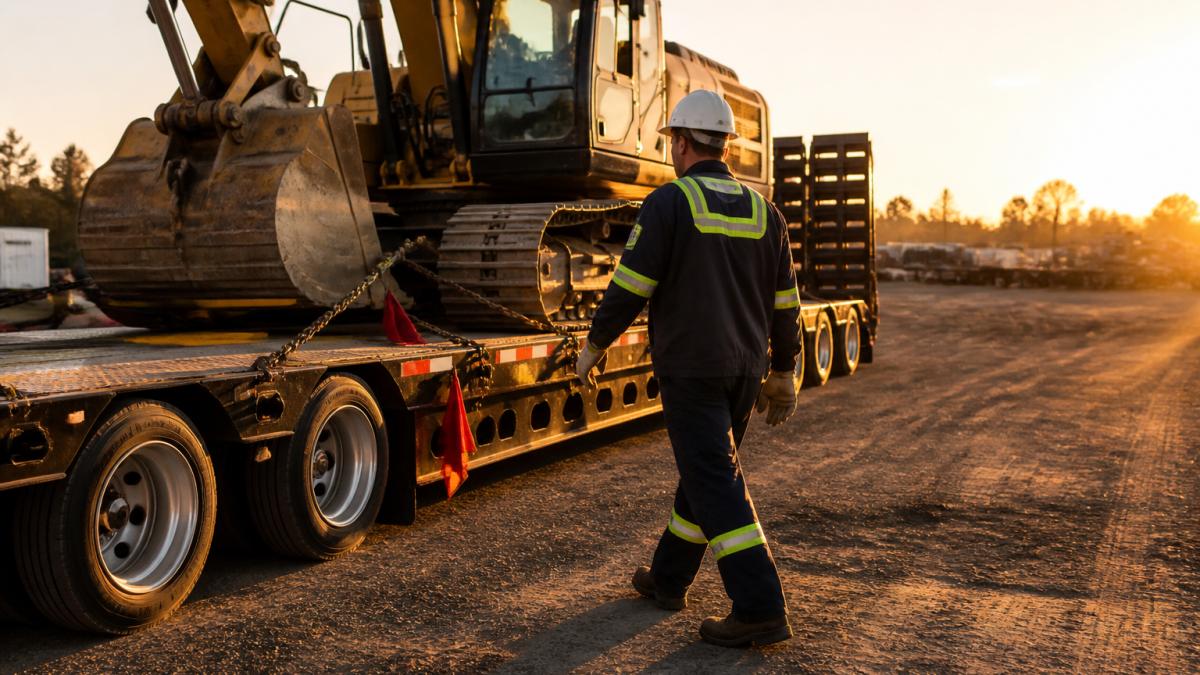
Heavy haul transport is the movement of loads that exceed standard legal size or weight limits, requiring specialized trailers, permits, and often escort vehicles. The job starts with your cargo, not the carrier’s sales pitch.
Below, we’ll show you exactly how to document your load, vet a carrier, and compare quotes so nothing gets left to guesswork.
Document Loaded Dimensions, Gross Weight, and Axle Weight
Get three numbers before you call anyone:
- Loaded dimensions: length, width, and height with the cargo secured to the trailer, not the bare machine
- Gross weight: the total of cargo, trailer, fuel, and driver
- Axle weight: how much sits on each axle group
Height matters most. A load that clears a bridge in one state may not clear one 200 miles away. Measure the tallest fixed point, not the average.
Match the Load to the Right Specialized Trailer
Trailer choice follows directly from your numbers.
| Load Type | Typical Trailer | Why It Fits |
|---|---|---|
| Excavators, dozers | Lowboy | Low deck keeps height legal |
| Long beams, pipe | Flatbed with extenders | Open deck, adjustable length |
| Tall machinery | Step deck or RGN | Extra clearance under bridges |
| Boats, motorhomes | Specialized carrier | Custom cradles and tie-downs |
A carrier who quotes before asking about height is guessing. Move on.
How to Evaluate a Heavy Haul Transport Company
A legitimate heavy haul transport company can prove three things on paper: active authority, adequate insurance, and drivers who have moved loads like yours. Ask for documents, not assurances.
Licensing, Bonding, and Authority Checks
A licensed carrier holds active operating authority from the Federal Motor Carrier Safety Administration and carries the bond and insurance that authority requires. Verify the carrier’s USDOT and MC numbers yourself in the FMCSA database. Don’t take a screenshot as proof.
A broker arranges the move but does not operate trucks. That distinction changes who answers when something goes wrong.
Driver Qualifications and Equipment Selection
Ask two questions: how long has the driver hauled oversize loads, and who inspects the trailer before departure? Experienced drivers walk their own equipment. They check chains, binders, and tires before every trip.
Booking on price alone is the most common mistake we see. A carrier that undercuts everyone usually cuts corners on permits or insurance. When a load shifts or a bridge is misjudged, the cheapest quote becomes the most expensive invoice.
Questions to Ask a Heavy Haul Company Before You Book
The right questions separate real operators from call centers. Ask these before any deposit changes hands:
- Do you hold active authority as a carrier, or are you brokering this load?
- Can you send your certificate of insurance with my company named?
- Who handles oversize permits, and is that cost in the quote?
- Will the same driver handle pickup and delivery?
- What happens if the load is delayed at a weigh station?
- Can you provide two references for similar loads?
- How do you communicate updates during transit?
Vague answers to questions 1 and 3 are your cue to walk away.
Verify Heavy Haul Carrier Insurance Before the Truck Rolls
Heavy haul carrier insurance must cover the cargo, not just the truck. General auto liability protects other drivers on the road. Cargo insurance protects your machine. They are different policies, and some carriers carry only the first. Most competitors stop there. The step that actually protects you is verification, and almost no guide walks through it.
Read the Certificate of Insurance Line by Line
Request a certificate of insurance (COI) naming your company as certificate holder. Then check four fields, not one:
- Motor truck cargo limit, the maximum the policy pays for your freight. Compare it to the replacement value of your load, not the invoice price. A $250,000 cargo limit does not cover a $400,000 machine.
- Auto liability limit, typically shown as combined single limit or split limits. Confirm it meets the minimum your contract or broker requires.
- Deductible, a $10,000 cargo deductible means the carrier pays the first $10,000 of any claim. Ask who absorbs it.
Call the Insurer to Confirm the Policy Is Active
A COI is a snapshot the carrier can generate; it is not proof the premium was paid. Call the insurer’s number printed on the certificate and ask two questions: is the policy in force today, and does it cover oversize or heavy haul freight specifically? Some cargo policies exclude loads above a stated dimension or weight unless endorsed.
Ask whether the carrier’s cargo coverage is primary or excess. If it’s excess, your own policy may pay first, and your rates can climb after a claim. Primary coverage keeps the loss on the carrier’s record.
Understand the Claims Process Before You Need It
Ask the carrier to walk you through a claim from start to finish:
- Who do I notify, and within what window? Most cargo policies require prompt written notice; a phone call alone may not preserve the claim.
- Who inspects the damage, and how is the loss valued, repair cost, actual cash value, or replacement cost?
- How long does a typical claim take to resolve?
- Does the carrier handle the claim, or does the shipper file directly with the insurer?
Get the answers in writing, ideally in the rate confirmation or contract. A carrier that cannot explain its own claims process is telling you something.
Match Coverage to the Load, Not the Average
High-value, custom, or irreplaceable cargo needs more than a standard cargo limit. Options include:
- Shipper’s interest coverage, a policy you buy that insures your cargo regardless of which carrier hauls it, useful when you ship high-value loads regularly.
- Agreed-value endorsement, sets the insured value at a figure you and the carrier agree on in advance, avoiding disputes over depreciation after a loss.
- Carrier cargo limit increase, some carriers will raise their limit for a specific load for an added premium.
If the load’s value exceeds the carrier’s cargo limit, either buy the gap coverage or find a carrier whose limit fits. Do not assume the carrier’s policy will stretch to cover your machine.
How to Compare Heavy Haul Transport Quotes and Spot Hidden Costs
Two quotes for the same load rarely match, and the gap is usually in what’s excluded. Compare line by line, not bottom line.
Watch for these hidden costs:
- Permit fees quoted as “extra” instead of included
- Escort vehicle charges billed per state, per day, or per mile
- Detention fees for waiting time at pickup or delivery
A complete heavy haul transport quote lists every line above. If a carrier won’t itemize, ask why.
Carrier Versus Broker: Who Is Actually Responsible
A carrier owns or operates the truck and answers for the load in transit. A broker arranges the move and passes responsibility to whichever carrier it books. Ask directly: “Are you the carrier or the broker?” If it’s a broker, get the actual carrier’s name and insurance before booking.
Permits, Escorts, and Route Planning for Oversize Loads
Oversize permits are issued state by state, and each state sets its own size and weight thresholds. A route that crosses three states needs three permits, sometimes more for superloads. That is the baseline every competitor covers. What most guides skip is how permits, escorts, and route constraints interact, and what happens when the plan breaks.
Know Which Thresholds Trigger Permits and Escorts
Legal limits vary, but common thresholds give you a working picture:
- Width, most states permit loads up to 8 feet 6 inches without a permit; oversize permits typically cover wider loads, and escort requirements often begin around 12 to 14 feet depending on the state.
- Height, legal height is commonly 13 feet 6 inches to 14 feet; anything taller needs a permit and often a route survey for bridge clearances.
- Length, tractor-trailer combinations are usually legal to about 53 feet; longer combinations need permits, and some states require escorts beyond a set overhang.
These are starting points, not rules of thumb you can rely on. Confirm the current thresholds for every state on the route, because they change and they differ at the border.
Understand How Permits, Escorts, and Route Surveys Fit Together
A permit is permission to move a specific load on specific roads. An escort is a vehicle that warns traffic and, in some states, checks clearances ahead of the load.
Route planning goes beyond permits. Carriers run a route survey to check:
- Bridge height and weight restrictions
- Narrow lanes and construction zones
- School zones and rush-hour limits
Pilot cars escort loads that exceed width or length limits. Some states require one, others require two, and the rules change at the border. A carrier who plans routes on a map app alone will find trouble at the first low bridge.
Build a Contingency Plan for the Load, Not Just the Route
A route survey covers the planned path. A contingency plan covers what happens when the path fails. Ask the carrier how it handles each of these before you book:
- A bridge or overpass that turns out to be lower than the survey showed, who reroutes, who pays for the detour, and how long does a new permit take?
- A permit rejection or a state that requires additional review, does the carrier have a fallback route, and does the quote cover re-permitting?
- Weather, high winds are a hard stop for tall, light loads; ice and snow close mountain passes. What is the carrier’s wind-speed cutoff, and who decides to hold the load?
Put the answers in the rate confirmation. A carrier that has thought through these scenarios will answer quickly; one that has not will improvise at your expense.
A permit is not a guarantee the route works. Permits authorize the move; the route survey proves it. Ask for the survey, not just the permit numbers.
Confirm Who Owns Each Step
Permits, escorts, and route surveys are sometimes handled by the carrier, sometimes by a permit service, and sometimes by the broker. Ask directly which party is responsible for each, and confirm the cost is itemized in the quote. When responsibility is unclear, the shipper usually ends up paying for the gap.
Your Heavy Haul Shipping Checklist, Start to Delivery
Use this checklist from first measurement to final drop-off:
- Measure loaded dimensions, gross weight, and axle weight
- Photograph the load and tie-down points
- Confirm carrier authority and USDOT number
The shipper who arrives with documented dimensions, verified insurance, and an itemized quote controls the conversation. Everything else is noise.
For local moves of boats, trailers, motorhomes, or specialty vehicles, our team at Fast Towing San Diego handles transport with trained drivers and around-the-clock availability.
Frequently Asked Questions
What should I look for in a heavy haul transport company?
Check four things before booking: active operating authority and a clean safety record, cargo insurance that covers the full replacement value of your load, trailers rated for your loaded dimensions and gross weight, and drivers experienced with your specific cargo type. Ask for references from similar shipments and confirm who handles oversize permits and escort vehicles. A carrier that answers these questions with documentation, not just assurances, is the one to hire.
What questions should I ask a heavy haul carrier before booking?
Ask whether they are the carrier or a broker, what their cargo insurance limit is and for a certificate, which trailer they plan to use for your load, who pulls permits and arranges pilot cars, and how they handle route surveys for bridge and clearance restrictions. Also ask for the delivery window in writing, how shipment tracking works, and what happens if the load is damaged in transit. Get answers to these before you sign anything.
How do I compare heavy haul transport quotes fairly?
Make sure every quote covers the same scope: permits, escort vehicles, loading and unloading, and any storage or detention time. A low rate per mile often excludes extras that appear later as accessorial charges. Ask each provider for a line-item breakdown and confirm what triggers additional fees. Compare total delivered cost, not the headline number, and check that insurance limits match your cargo value before choosing on price alone.
How far in advance should I book heavy haul transport?
Book as early as your schedule allows. Oversize and overweight loads need permits, route surveys, and sometimes pilot cars, and those take time to arrange. Specialized trailers such as lowboys are also in limited supply during busy periods. For a straightforward in-state move, a few weeks is often workable; for cross-border transport or loads with clearance restrictions, start planning a month or more ahead so a carrier can secure the right equipment and approvals.
Choosing a heavy haul transport company comes down to proof: verified authority, confirmed insurance, and a quote that lists every cost. Fast Towing San Diego brings over 100 years of combined experience, professionally trained drivers, and 24/7 dispatch to every job, from exotic cars to boats and trailers. We also offer discounts for first responders, military personnel, and fleet accounts. Get started with Fast Towing San Diego and move your load with a team that shows up on time.